

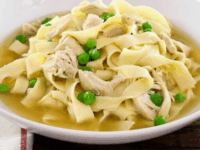
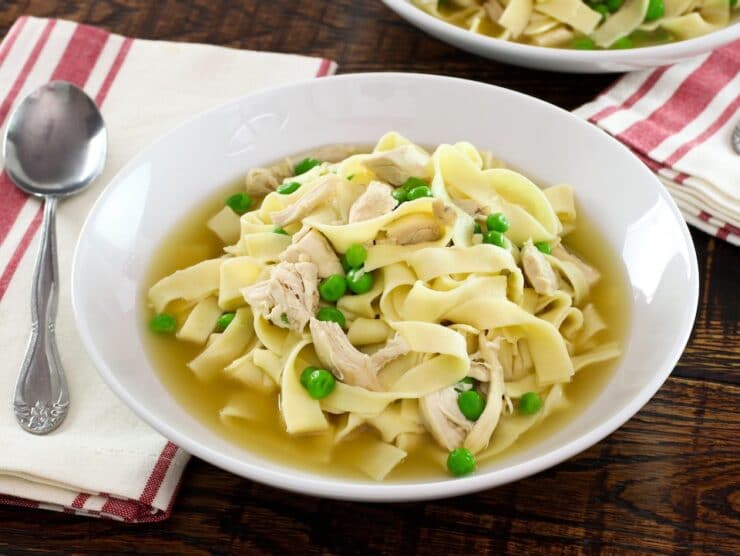
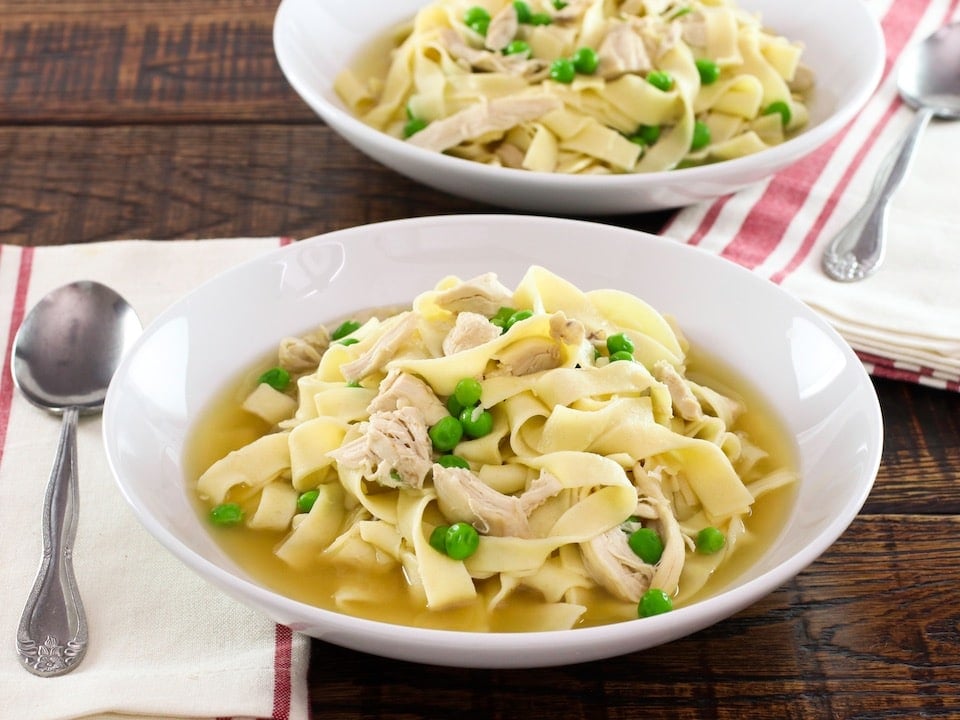
Families often have their own unique culinary traditions during the holidays. In our family, we make homemade chicken and noodles. This recipe, passed down through many generations, can be made on a shoestring budget to feed a large group of people. It’s sort of like a thicker and creamier version of chicken noodle soup (though it contains no cream).
Looking for more comfort food chicken recipes? Try my chicken kreplach and rotisserie chicken rice soup.
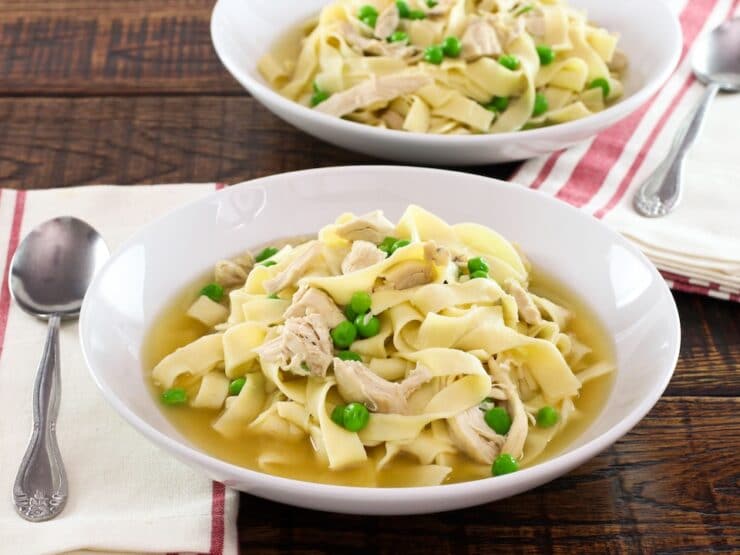
Table of contents
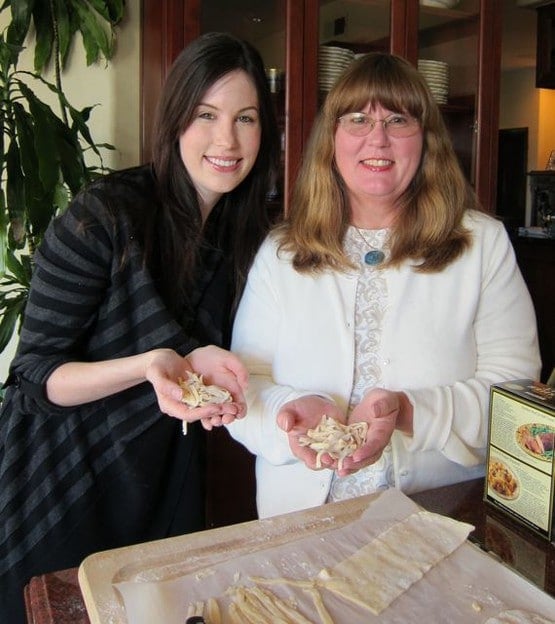
This chicken and egg noodle recipe has been a cherished holiday tradition in my family for generations, passed down from our Swedish ancestors. Each year, usually during the holidays, the women gather in the morning to make the dough, roll it out, and cut the noodles by hand. There’s always flour everywhere, plenty of laughter, and hours of conversation. While the dough dries, we browse Christmas displays at the local drugstore before returning to cook a big pot of homemade chicken and noodles, often served over olive oil mashed potatoes to feed the hungry men who inevitably appear later in the day.
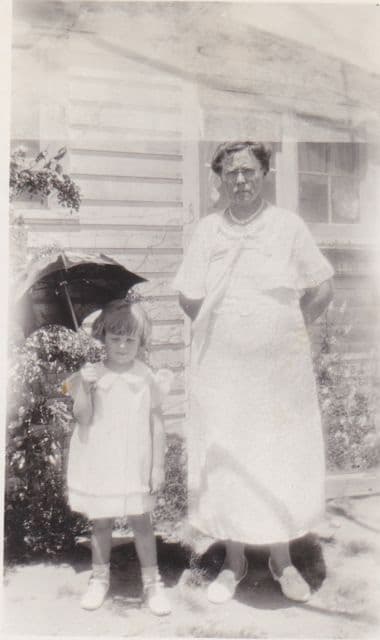
My Grandma Carolyn learned this recipe from the matriarchs before her, and it remains beloved in our family today. It’s simple, economical, and deeply comforting, like a creamier, heartier take on chicken noodle soup (without any actual cream). Making it is just as meaningful as eating it; the slow, hands-on process is part of the joy. I’m delighted to share this old-fashioned favorite that has brought our family together for so many years. I hope it does the same for you!
Ingredients and Notes
Please be sure to scroll down to the recipe card for the complete ingredients and instructions!
- Flour – All-purpose flour forms the base of the homemade noodles. You’ll use part of it to make the dough and keep the rest on hand for rolling, dusting, and adjusting the texture as needed.
- Eggs – Six large eggs create a rich, tender noodle dough. Beating them until frothy helps the dough come together smoothly.
- Whole Chicken – A whole bird provides both the meat and the flavorful chicken stock. As it simmers, it becomes fall-apart tender and infuses the dish with classic comfort-food flavor.
- Celery – Roughly chopped celery stalks (leaves included!) help build a savory, aromatic broth.
- Onion – A chopped onion adds sweetness and depth as it cooks with the chicken.
- Salt and Pepper – Salt is added directly to the noodles, so hold off on seasoning the broth until the end. A final taste-and-season step ensures the dish isn’t overly salty.
- Optional Add-Ins – Frozen peas add a pop of color and sweetness, and serving the chicken and noodles over mashed potatoes stretches the meal even further, just like our family has always done.
Possible Variations
- Herbed Noodles – Add a teaspoon of dried parsley, thyme, or dill to the flour before mixing in the eggs for a subtle herbal flavor.
- Richer Broth – Add a few whole garlic cloves, a bay leaf, or a handful of fresh herbs (like parsley stems) to the stock as the chicken simmers, then strain them out before adding the noodles for a bolder taste.
- Vegetable-Forward Version – Stir in additional vegetables such as sliced carrots, diced potatoes, or parsnips during the last 20-30 minutes of simmering the broth to add more nutrients to the dish.
- Turkey Instead of Chicken – Swap the whole chicken for a turkey breast or turkey legs for a slightly different taste. It’s a great way to use up holiday leftovers!
- Creamier Chicken and Noodles – If keeping the dish kosher isn’t a concern, feel free to stir in a splash of milk or half-and-half after cooking the noodles to make the sauce a little creamier. You can also stir in a pat of butter at the end for a silky finish.
Tori’s Top Tips for Success
- Flour generously! The dough is soft and slightly sticky. So, don’t be shy with the flour when rolling. A well-floured board and rolling pin make the process much easier.
- Roll the dough very thin. The noodles will plump up as they cook. So, keep rolling until the dough is almost translucent for the best texture.
- Let the dough dry fully. Proper drying makes the noodles easier to cut and helps them hold their shape in the broth. If the dough still feels tacky, give it more time.
- Stir frequently while cooking. Homemade noodles love to stick together. Gentle, regular stirring helps them cook evenly and prevents clumping.
- Taste before seasoning. Because the noodles contain salt, always wait until the very end to adjust the broth. Add salt gradually to avoid oversalting your chicken and noodles.
Homemade Chicken and Noodles
Ingredients
- 4 cups flour
- 6 large eggs
- 4 pounds whole chicken
- 4 stalks of celery, roughly chopped including leaves
- 1 onion, peeled and roughly chopped
- Salt and pepper
Optional Ingredients
- Frozen green peas
- Mashed potatoes
Instructions
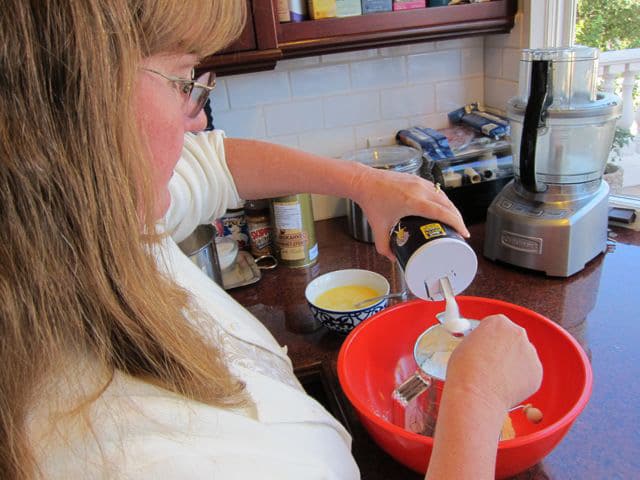
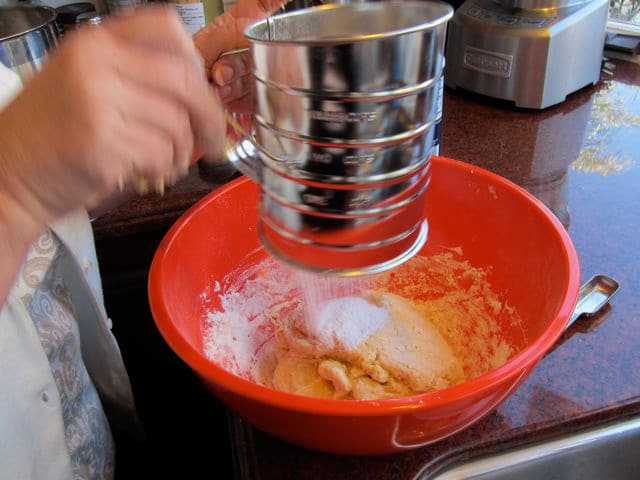
- Beat 6 eggs in a small bowl till frothy. Reserve.Sift 2 cups of flour with 1 heaping tbsp of salt into your mixing bowl. Reserve 2 more cups of flour in another bowl.

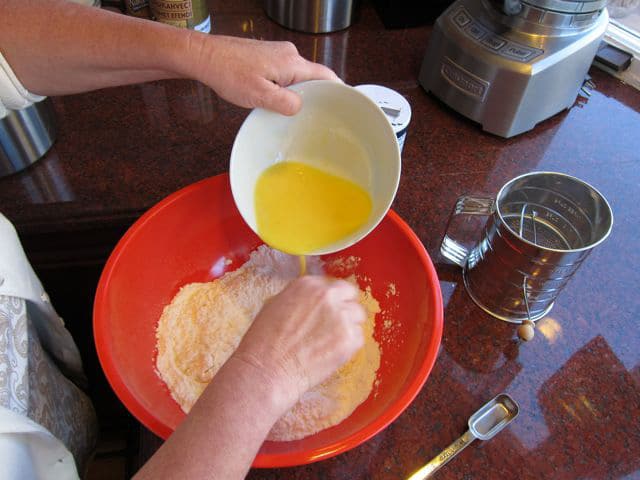
- In your mixing bowl, make a “well” in the center of the sifted flour and pour the beaten eggs in. Use a fork to mix the eggs into the flour until it is evenly moistened.
- Sift more flour into the bowl, a couple of tablespoons at a time, and continue to stir until a soft dough forms.
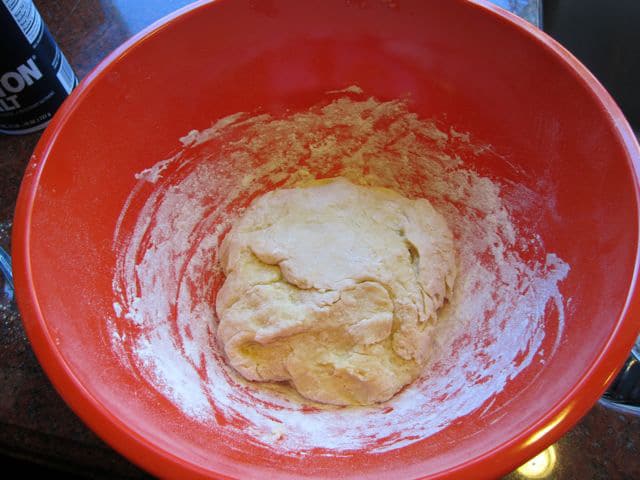
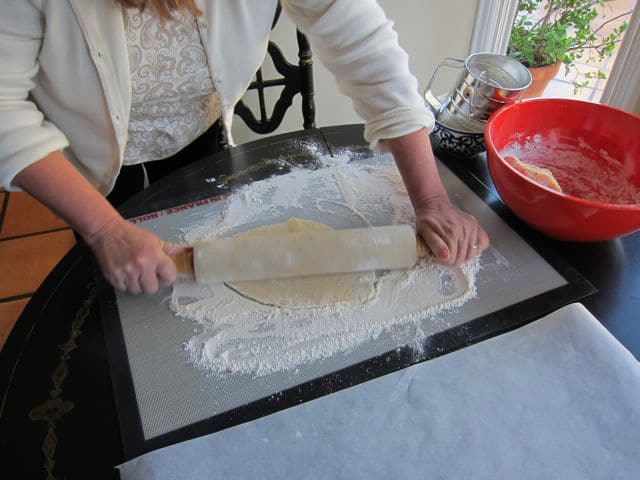
- When the dough gets too thick to stir, use your hands to knead. Stop adding flour when the dough holds together and is only slightly sticky to the touch (it will be soft). Let the dough rest uncovered for 15 minutes.Coat your rolling surface generously with sifted flour. Scoop up a small handful of dough from the bowl (a little more than ½ cup of dough). Dip it in the flour on the board and pat it down to flatten it.
- Flour your rolling pin and roll out the dough till it’s very thin.
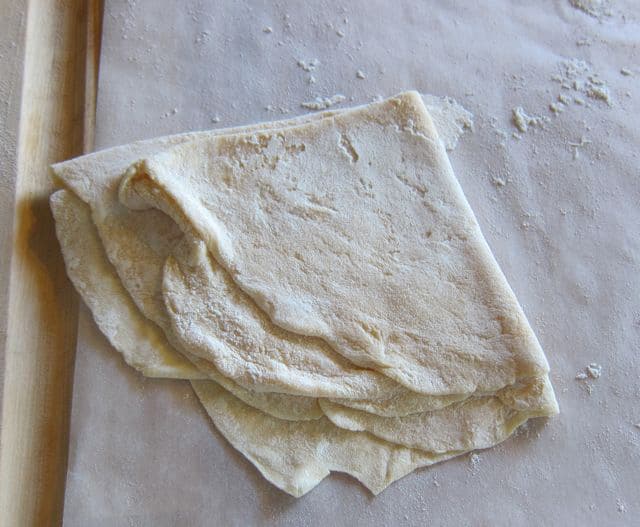
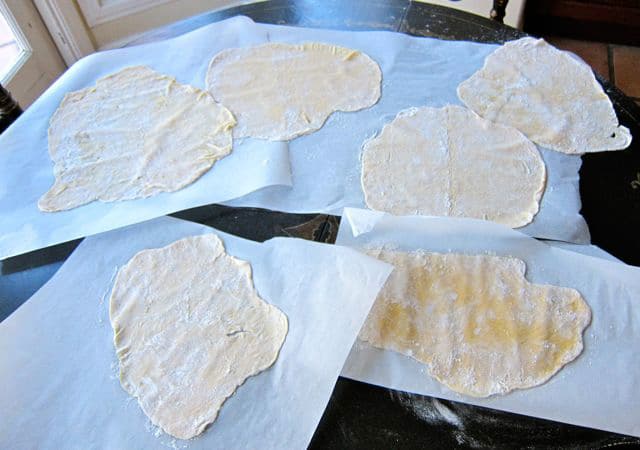
- Fold the rolled dough into quarters and move it to a sheet of parchment paper.Unfold it and leave it to dry.

- Repeat this process until all of the dough has been rolled out.Let the noodle dough dry for about 2 hours, flipping the dough pieces over once halfway through drying. This amount of time can vary based on the weather—if it’s hot outside, the drying may go faster. Check the dough’s texture periodically by touching it with clean fingers. The dough is ready to cut when it is dry to the touch, but not hard. If you’re in a hurry you can cut the dough when it is half-dry, but it won’t be as easy to cut or manage.

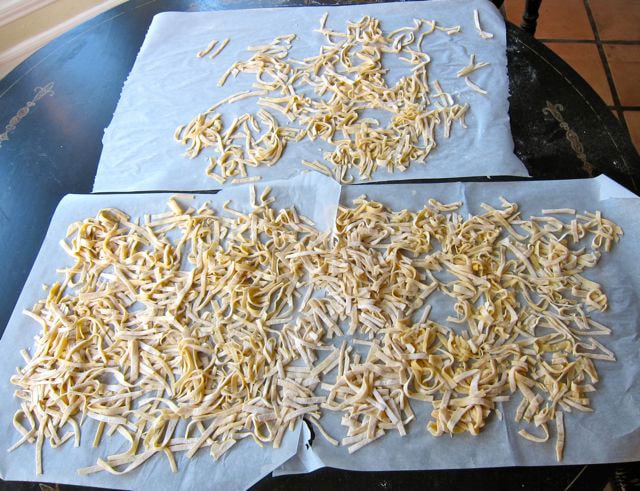
- Slice each flattened piece of dough into three long strips. Cut those strips into noodles. We usually cut them about a centimeter wide, but you can cut them thicker or thinner depending on your personal preference.
- Scoop up the noodles and scatter them on a piece of parchment paper to finish drying.Once you have cut the noodles, you can immediately proceed with making the chicken and noodles. If you’d rather store the noodles for future use, let them dry completely (this can take 24-48 hours depending on the weather). Once the noodles are totally dry, place them in an airtight container or sealing bag (reusable or disposable) bag and store them in a dark, cool place. They will last about 1 month; discard them if they start to darken or turn black.

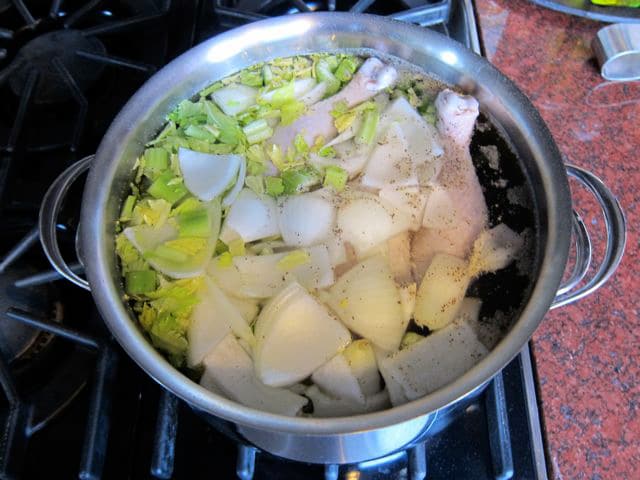
- Rinse your whole chicken (giblets removed) and place it into a large stockpot. Cover the chicken with water by about 2 inches. Bring to a boil and simmer for about 15 minutes. Skim the foam that rises to the top. Add chopped celery, onions, and black pepper to the broth. You do not need to add any salt, the noodles contain a lot of salt so it’s best to hold off adding more at this point.
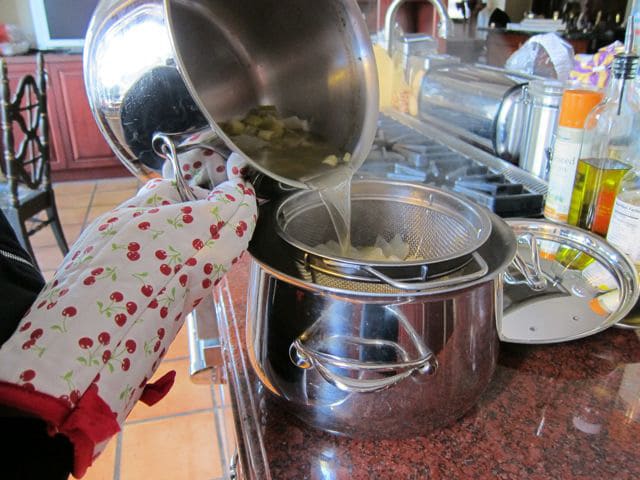
- Let the chicken simmer for 1 ½ to 2 hours until the meat softens and begins to fall off the bone. Remove the chicken from the pot and place it on a roasting pan or platter. Strain the chicken broth, removing all the celery and onions. Return broth to the stockpot.If you want to cut down on fat, you can let the broth cool completely and skim the fat that collects on the surface. Pull meat from the chicken in bite-sized pieces and return it to the broth; discard bones. Bring broth back to a slow boil.
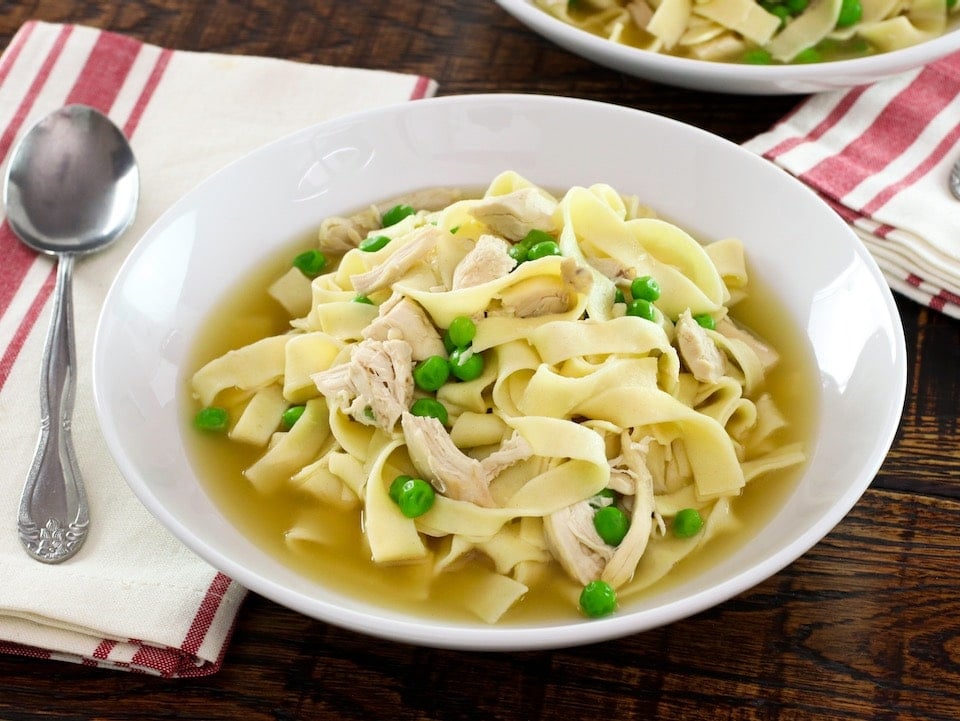
- Add noodles to the broth. Let them boil gently, stirring frequently, until tender. For an al dente texture, cook for 10-12 minutes. For a softer texture (which I prefer), cook 15-16 minutes. The noodles will soak up most of the broth and produce a thick, starchy, salty sauce.If you want to add some frozen green peas, put them in during the last 10 minutes of cooking. Taste the noodles when they are completely cooked and season with additional salt and pepper, if desired.

- Serve in bowls plain or over mashed potatoes (if you’re keeping kosher, make sure the mashed potatoes are parve). This, as my mother says, is the ultimate comfort food. Yum!



NOTES
Nutrition

tried this recipe?
Let us know in the comments!
Food Photography and Styling by Kelly Jaggers.
If you liked this recipe, I’d love it if you left me a star rating and a comment below. Also, don’t forget to share and tag us on Facebook and Instagram!
FAQs
Yes! You can prepare the noodles in advance and let them dry completely before storing. The broth and chicken can also be made a day ahead. Simply refrigerate them in an airtight container, skim any fat that rises to the top, and reheat before adding the noodles. For the best texture, cook the noodles just before serving. They will become soggy if left to sit in the broth.
You can freeze the cooked chicken and broth, but it’s best to freeze the noodles uncooked. Let the noodles dry fully, then store them in an airtight container or freezer-safe bag for up to two months. If frozen after cooking, the noodles may become mushy when thawed.
You can serve this dish on its own, but my family pairs it with mashed potatoes for a heartier meal and to soak up all the broth. For a well-rounded option, include a sprinkle of peas. Or, add a side of skillet-seared green beans or roasted broccoli.

your good… keep it up.
Chef Dick
Hi Tori, This is indeed the ultimate comfort food – the mashed potatoes bring it to a whole level of “comfort now – guilt later” – I will have to try it! I add carrots to the broth to give it a “sweeter” taste. Happy Chanukah.
Happy Hanukkah Shlomit!
Wow…This looks delicious. I am going to prepare it. Thanks for sharing this recipe.
You have THE GREATEST BLOG. Thanks so much for doing this. And Happy New Year to you and your family.
Aww thanks Fran! Happy New Year to you and yours! xo
I make chicken and beef broths all the time and freeze them in containers so am always ready for a warming noodle soup (or in the case of beef broth, barley/vegetable soup). Your recipe for the noodles is similar to what I use to make just about any pasta,anegg here or there less or more – I use my “Atlas” rotary cutter to make noodles, spaghetti fettucini, etc., much easier than with a rolling pin. I don’t always let the pasta dry as you prescribe, however, unless I’m making enough for more than one use, finding it simpler to just add the fresh pasta to soup as it cooks much faster. As always, I so appreciate your sharing – thank you and Happy New Year!
Tori, thank you so much for this recipe! There are “chicken and noodle experts” in our family, but I never learned to make them until I saw your method. You explained everything so well, and the photos help so much. Now I enjoy taking them to family gatherings at least once a year. Blessings to you and yours.
So happy to hear this!
Tori- thank you so much this recipe. I was born and raised in Nebraska …. your description of the noodles matched the stories I had heard about how my grandmother’s chicken and noodles were made. Unfortunately, she never wrote the recipe down nor taught any of us how to make it prior to her passing. My niece and I made these last weekend and except for the use of a “fat old hen” (according to my dad) it was near exact to my memories. Next time we will use the same size chicken, split into two kettles of broth and double the noodles. Thanks for bringing a childhood memory back to life for me!
This brought a big smile to my face!! Thanks for sharing your story.
Is it possible to reduce the salt in the noodles? Some of my family is on a limited sodium diet, and I was hoping they would also be able to enjoy the soup.
Hi Rose– no problem, you can cut the salt. A lot of the flavor in this dish comes from the salt, so I wouldn’t omit it completely, but you can cut it in half and then salt the finished product to taste.
I made this for dinner tonight and it was delicious! All four us liked it. Mine definitely had more liquid than yours but we ate it in bowls and there is plenty left over for lunch tomorrow
I haven’t made this recipe in so long. I am craving it now!
i LOVE swedish egg noodles with chicken! one of my favorite comfort foods. I’ve never tried making the noodles myself, but I think i just might have to give it a try now. My family will be so impressed!
This recipe needs to be tried by all! Some labor of love involved but so simple and delicious!
Just happened on your blog and will now be checking it out regularly. Had to click on the Swedish Chicken & Noodles — a childhood favorite (minus the Swedish) that has continued to be a special treat throughout my life (now 71 years). BUT I’ve never made noodles from scratch, and now I want to! My mother made them until she discovered “convenience food” sometime in the 60s, I think. After that, forget anything truly homemade! Ha! Now of course I do just the opposite. Anyway . . . what I wanted to share is my childhood memory of her noodle drying process: Once the dough was rolled out, she would hang flour-sack dish towels over the backs of all the dining room chairs, and the sheets of noodle dough would be hung carefully over the towels. Picture it! I still can, more than six decades later, as clear as a photograph. As a child, I thought this was just the “normal” way to make noodles! And I assure you that IF I follow through with my plan to make your noodles, that is exactly how I will dry mine! Thanks so much for your stories; I, too, am a convert — not due to marriage, but just because it felt like the best fit for me. The only down sit to this path is that I have no Jewish family, and thus no food heritage. So I use books (and now, blogs) to try to create my own.
Norma, your comment warms my heart. Thank you for sharing your childhood memory with us, I will try drying them that way next time! It might speed the process up a bit, because the noodles are more exposed to the air. Welcome to our cooking community! 🙂
I just love your reciepes. But the history and your journey make it so special. I keep telling my friends about you as well. Happy Mother’s Day.
Great recipe, beautiful presentation. I really love the plate; it looks good enough to eat also! Thanks for your site and I’m wishing you many more years in your endeavors!
2-6-2011
I love your web site because it is so nice to see that someone really cares about the jewish tradition and culture. You bring the greatest recipes on this web site and go step by step to make sure you do not miss anything.
I thoroughly enjoy all the recipes you post and also give a history of each recipe you prepare and the origin of where it came from.
I also enjoy the step by step pictures and the colorful pictures you also attach with your recipes.
Even though I am not jewish you bring a sense of culture and organility to the recipe.
Much continued success to your web site.
Sincerely,
Sandra Geraci
Chicken soup with matzo balls
Because the recipes that i have made have been delicious.
I like your commentary.
Just made the noodles to go into my Homemade Chicken soup, they are amazing. My husband and I loved them, I even had two bowls of the soup. My Grandmother made these noodles when I was a child and I remember helping her make them and now I finally found a good recipe I can make on my own, they remind me of helping her in the kitchen.