

One of my favorite root veggies is the sweet, earthy, colorful beet. I use them in a variety of recipes, from salads to sides to vegetarian entrees. For many years I boiled them, which drains out a lot of the flavor. Then one day, a friend served me her favorite beet salad. The beets were rich and firm, bursting with juicy flavor. “I roast them,” she explained. Brilliant! I’ve been roasting beets ever since.
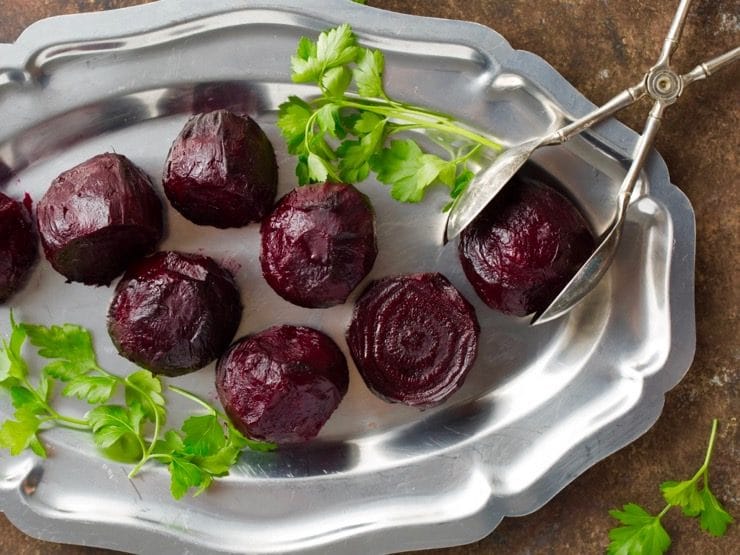
This is one of the first “how to” recipes that I posted on the blog back in 2010. Throughout the years this tutorial has helped countless people learn how to prepare beets in their own ovens.
Naturally I have refined the process as years go by. I have refreshed this post with new photos, tips and tricks I have learned, as well as a video to show you the steps in action.
I also thought it would be helpful to link to some of my favorite roasted beet recipes. Here are a few delicious ideas:
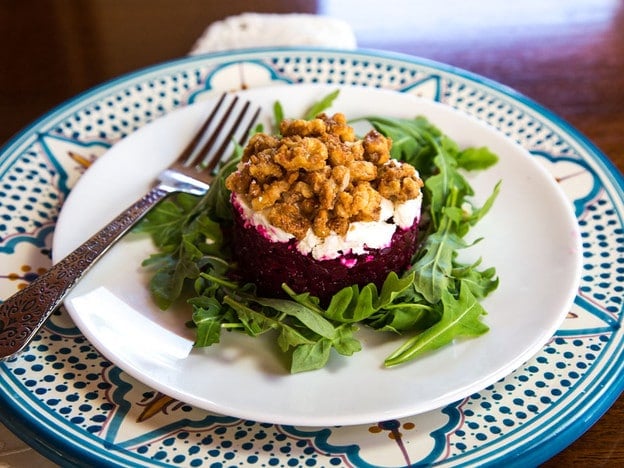
Beet Tartare with Goat Cheese & Candied Nuts | Tori Avey
Richard Simmons Beet Bowl Salad | Tori Avey
Roasted Beet Salad with Blue Cheese | Recipe Girl
Middle Eastern Roasted Beet & Red Onion Salad | Tori Avey
Green Bean Beet & Pistachio Salad | Tori Avey
Orange & Beet Salad | Simply Recipes
Roasted Beets with Tahini & Pine Nuts | Tori Avey
In addition to being tasty, beets are very nutritious. They contain powerful nutrient compounds that help protect against cardiovascular disease, high blood pressure, birth defects and colon cancer. They are rich in folate, potassium, and fiber too.
In this post I will walk you through how to roast beets with a step-by-step video and photo tutorial. My friend taught me to roast them in the oven, wrapping each beet individually in foil. Over time I have simplified her process by placing the beets in a covered baking dish.
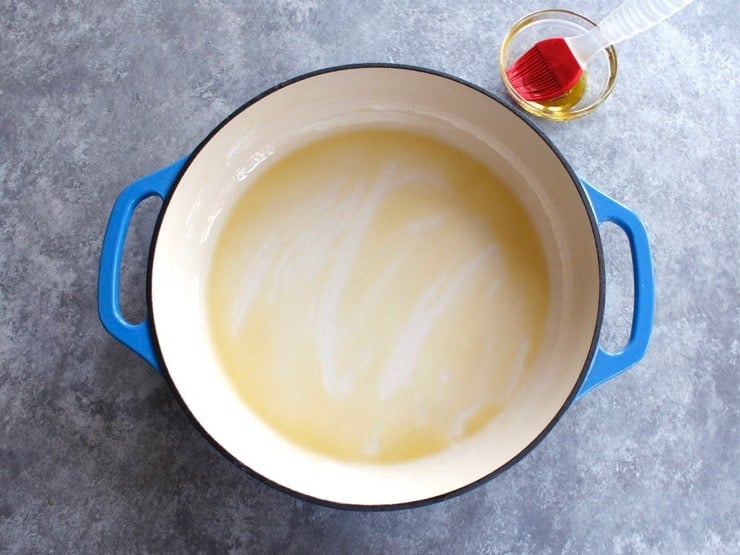
I am working to remove aluminum foil from the majority of my recipes, and I learned that a heavy covered casserole or Dutch oven brushed with olive oil works just as well for this type of roasting.
Same tasty results, less hassle and waste. Let me know if you have a chance to try it!
Hungry for more? Find me on Facebook, Twitter, Pinterest, YouTube and Instagram for all the latest updates!
Recommended Products:
Stoneware Covered Casserole Dish
We are a participant in the Amazon Services LLC Associates Program, an affiliate advertising program designed to provide a means for us to earn fees by linking to Amazon.com and affiliated sites. As an Amazon Associate I earn from qualifying purchases.
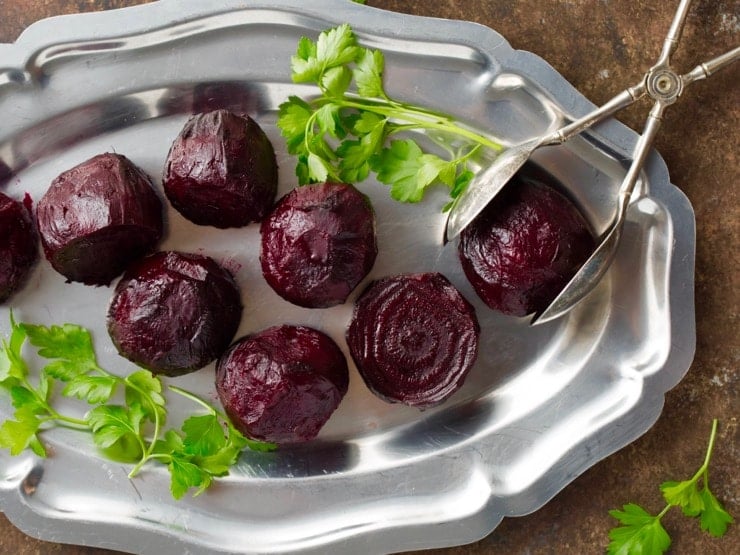
How to Roast Beets
Ingredients
- 4 pounds beets, any color - you can roast more or less as needed
- 2 tablespoons olive oil, or as needed
Instructions
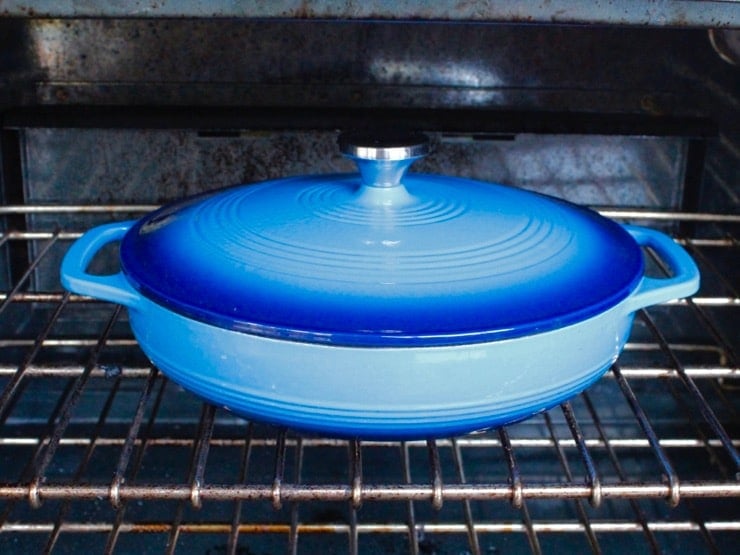
- Place a rack in the center of your oven and preheat the oven to 450 degrees F. If using a covered oven-safe casserole dish or Dutch oven, brush the inner surface of the dish liberally with olive oil. If using a 9x13 baking dish, brush it liberally with olive oil.

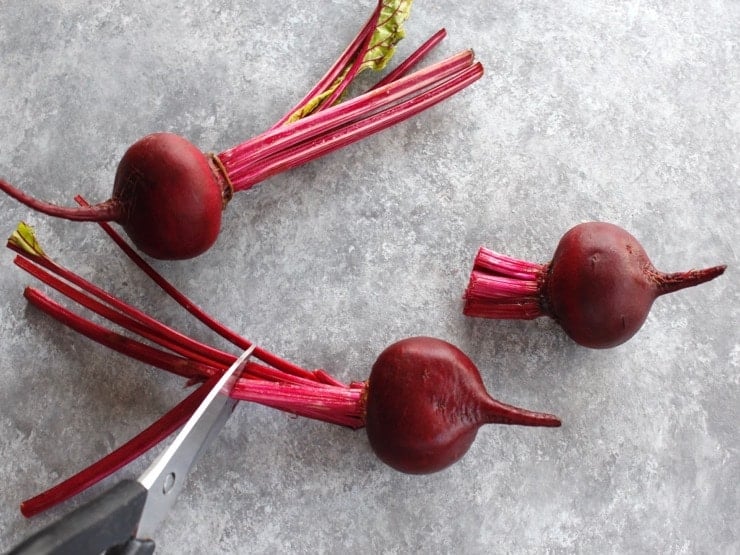
- As the oven is heating up, use kitchen shears to trim leaves and upper stems of the beets, leaving about 2 inches of the stems intact at the top of each beet. Do not trim the tails of the beets; if you do, you’ll lose precious juicy flavor that will drizzle out of the trimmed tails during roasting.
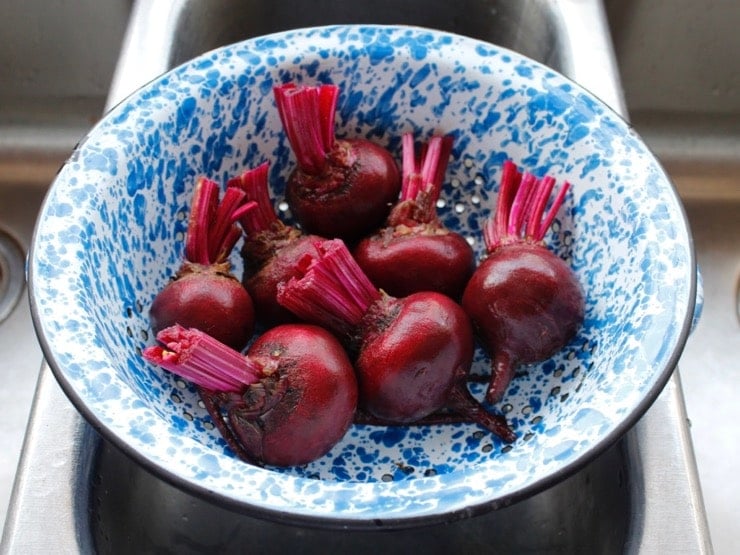
- Scrub the beets clean. You want to get the dirt off of them, but you don't want to scrub the skin off-- it will help to hold the juices in while the beets roast.
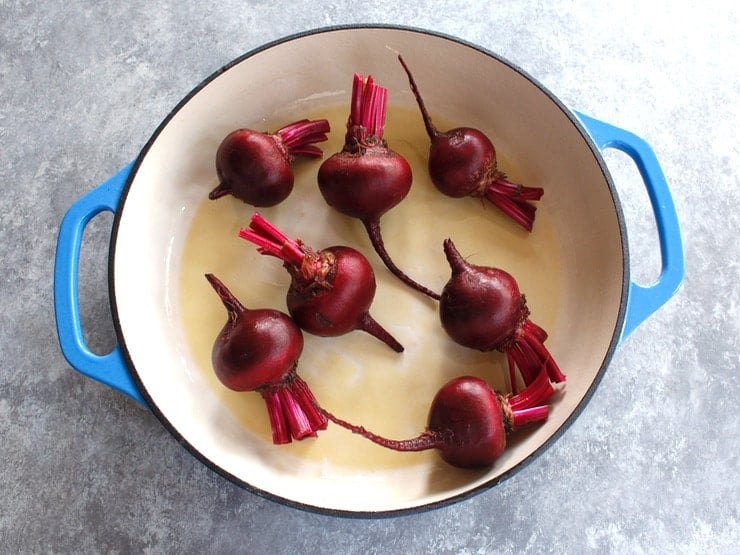
- Place the beets in the a single layer in the bottom of casserole or baking dish. Cover with lid. If using a 9x13 baking dish, you will need to cover it with foil. I am transitioning out of using foil in my cooking, so I prefer the covered dish.
- Place the covered dish in preheated oven. Roast the beets in the oven for 45 minutes to 2 hours (very large beets may take even longer).
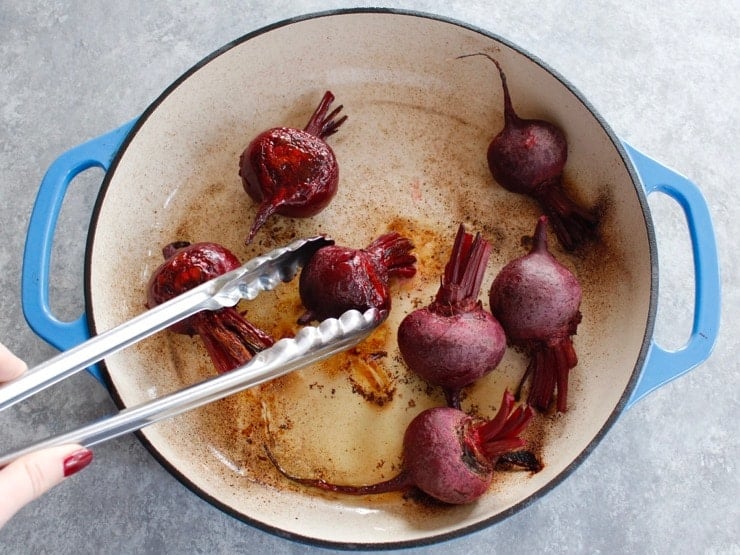
- Use a pair of tongs to flip the beets every 30 minutes to make sure they roast evenly on all sides. Roasting time will depend on the size of your beets; small young beets are more tender and take less time to roast, while larger beets take longer.
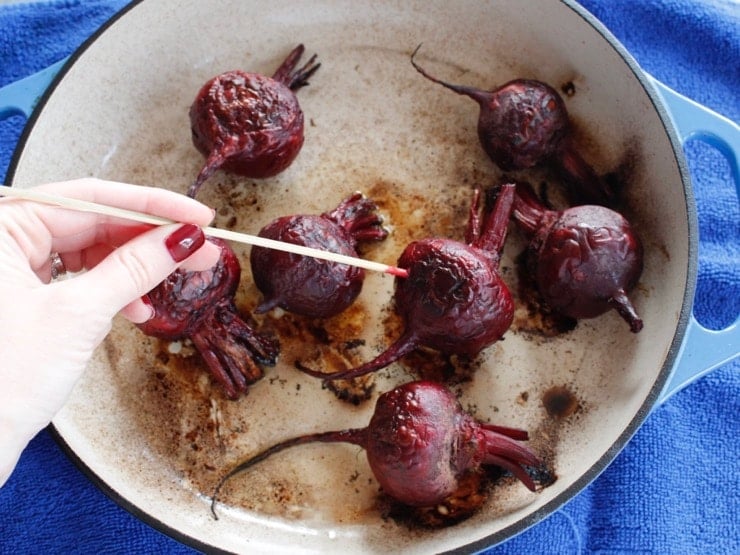
- Start checking your beets for doneness at 45 minutes by piercing the largest beet in the bunch with a wooden skewer. If the skewer easily and smoothly glides through the center of the beet, they’re ready. If not, roast another 10 minutes and test again. Continue to test until they are tender.
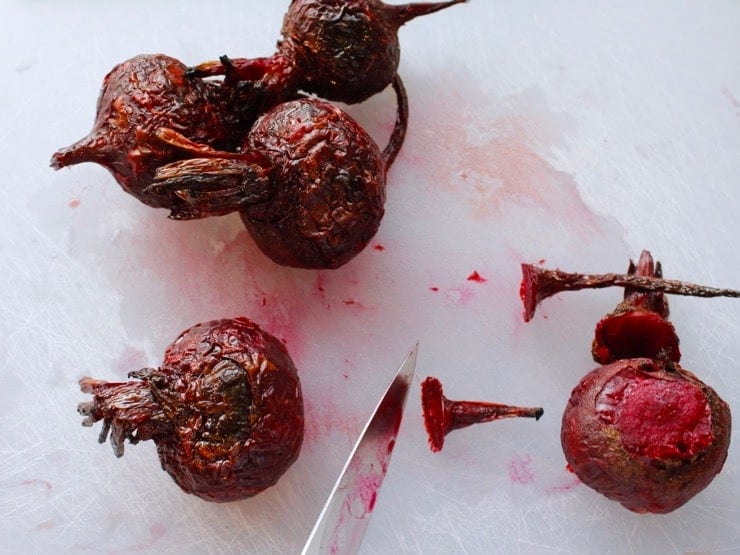
- After cooking, uncover the beets and allow to cool for 5-10 minutes until you can easily handle them. Cut off the beet stems and tails.Peel the skin from the beets while they are still warm. There are many different ways to peel, all of them are messy. Beets have a lot of pigment, which tends to stain everything it comes into contact with, including your hands. You might want to wear an apron when peeling your beets, to protect your clothes from stray beet juice droplets.
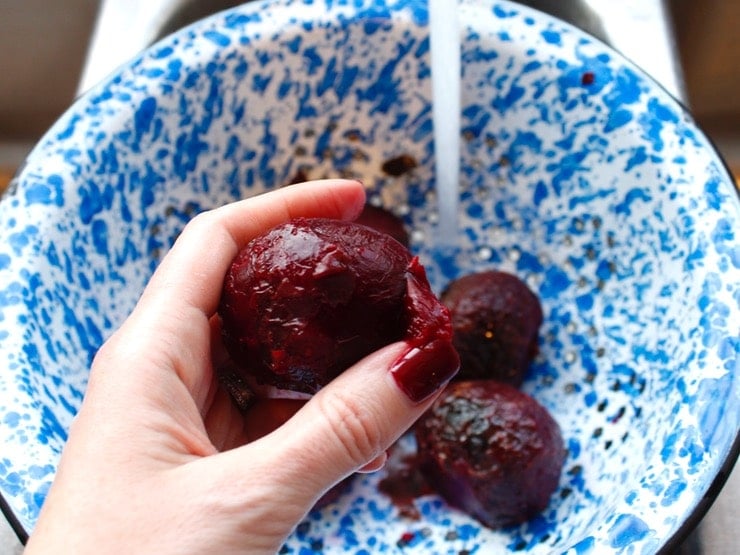
- Some cooks recommend scrubbing the beets gently with a kitchen towel (that they don't mind staining) to remove the skin. Others use plastic gloves to protect the hands. I prefer simply removing the skin with my bare fingers under cold running water; the skin slides off easily this way, and the red beet juice comes off of my hands with a few soap-and-water washes. For stubborn skin stains, apply lemon juice.
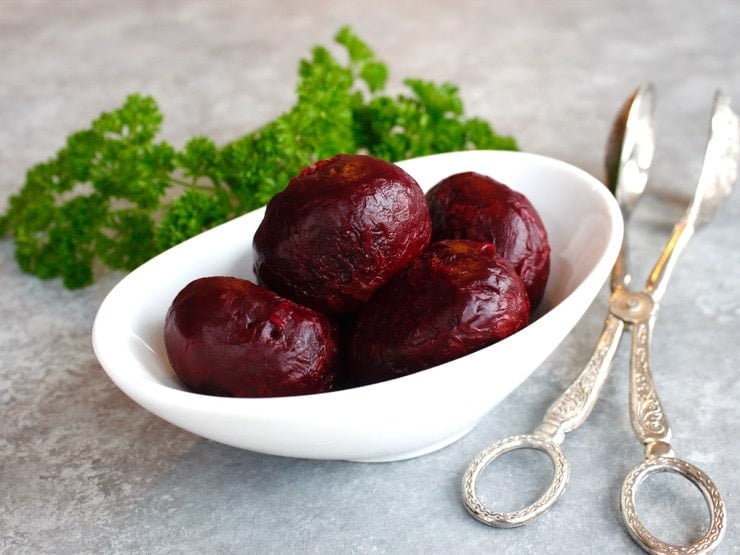
- By the end of this process, you will have some beautifully roasted beets! And once they're roasted, there are endless ways to prepare and enjoy them. Search my blog for "beets" and you'll find many tasty recipes for this beautiful ruby-colored roasted root vegetable!
NOTES
Nutrition

tried this recipe?
Let us know in the comments!

I CAN EAT BEETS EVERYDAY,,,ROASTING IS ALSO MY FAVOUITE WAY OF COOKING THEM……CHOCKLATE CAKE RECIPES IS A MUST HAVE A FEW GRATINGS OF RAW OR COOKED BEETS……THANKS …..QUERINO
thank you so much Chef ,you really outdid yourself your teaching me that i understand all
Im not a real cook, I had to say never stop cooking ,when i see your recipes ,am very happy
Blesse ,you and be well L,G
Why are you transitioning away from using aluminum foil?
There are some concerns that it may leach into foods during high-heat cooking, or when combined with salty/acidic foods, and lead to excess amounts of aluminum in the body. The science isn’t settled yet, but due to ongoing concerns that are being researched, I’ve chosen to find alternatives to foil (or ways to keep it out of direct contact with the food) wherever possible.