

Apple Honey Challah is one of my most popular Rosh Hashanah recipes. This beautiful braided challah is sweetened with honey and stuffed with tender apple pieces. I have included easy braiding instructions for a perfect round challah every time.
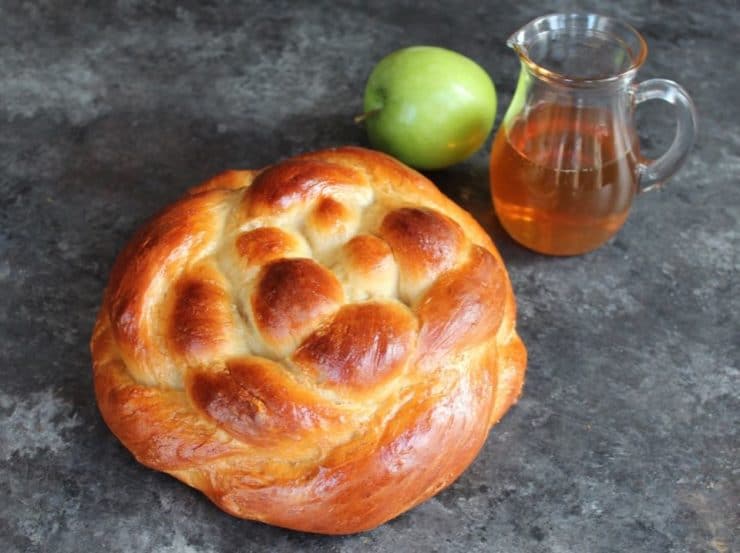
Rosh Hashanah is fast approaching. What better way to celebrate than with a freshly baked Apple Honey Challah? On Rosh Hashanah we dip apples in honey to symbolize our hope for a sweet new year.
In this recipe, the apple and honey tradition is incorporated into my Shabbat challah recipe. It has become a holiday tradition for many readers and their families.
The Rosh Hashanah tradition is to braid challah in a round shape for the holiday. Some believe the round shape represents a crown for God. Our family tradition says that the circular shape represents the cyclical nature of the year– as one year draws to a close, another year begins, and so the circle continues.
There are many ways to make a round challah. In this post, I’ll be sharing a braiding technique that was first introduced to me by my blogging friend Andrea at Capitol to Capital. It creates a lovely challah with a very pretty design on the top.
I’ve broken it down in step-by-step instructions for you; it seems complicated at first, but once you get the hang of it you’ll realize it’s actually pretty easy.
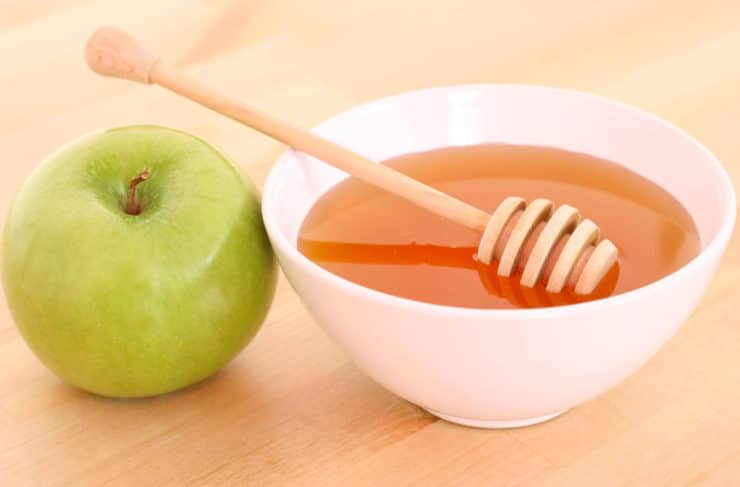
I wanted this challah to be sweet, but not dessert-sweet. I gave it a sweetness level similar to Hawaiian bread, so it could be served and enjoyed with dinner. You can sweeten it further by topping it with honey… and with butter, if you’re so inclined.
The recipe is dairy free so it can be served with a meat meal, but I’ve gotta say it’s awesome topped with salted butter and honey. Holy moly. Good stuff!
The apples were a challenge at first. I used Granny Smith, which are naturally tart but best for baking. In the beginning, the apples weren’t baking up sweet enough for my taste.
I solved this by tossing them in sugar before integrating them into the challah. You can add a little cinnamon to the apples, too, if you’d like an apple-cinnamon flavor. With the sugar, they ended up adding a soft, moist bit of sweetness to the dough– just right!
If you’ve never made challah before, I don’t recommend starting with this one. Working with challah dough is something that becomes considerably easier with time and experience.
Rather than working the apples into the dough during kneading, I’ve found that concealing the apples in the strand creates a more even, smooth shape to the braid.
Making these stuffed strands is not a complicated process, but it might be frustrating to somebody who has never worked with challah dough before. If you’re new to challah, I recommend simply making this into a Honey Challah by omitting the apples. You can then make regular strands instead of stuffed ones, and you can choose any braiding technique you like.
There are several easy braiding methods, including a simple 3-strand or 4-strand braid, or a Linked Loops braid for a round Rosh Hashanah challah. For an introduction to the basic braiding techniques, click here.
For those who don’t want to bother with braiding and aren’t worried about making a round shaped challah, you can try a Royal Challah pan, which will create a beautifully shaped challah without the need to braid.
If you’re comfortable with challah and you’re up for the challenge, read on! It’s really not that difficult, especially since I’ve broken each step down with photos to illustrate.
Here is a printable diagram that you can bring into the kitchen to keep you on track as you braid. Once you do it a couple of times, you’ll realize it’s a very simple braid to master:
How to Braid a Four Strand Round Challah
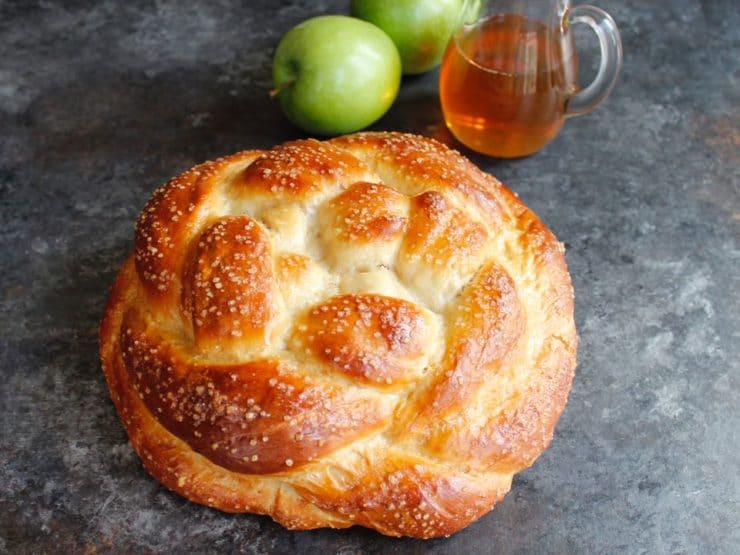
This challah smells AMAZING while it’s baking. It has the aroma and flavor of the holiday. Topping it with turbinado sugar gives an extra bit of crunchy sweetness to the crust. Shana Tova!
Recommended Products:
We are a participant in the Amazon Services LLC Associates Program, an affiliate advertising program designed to provide a means for us to earn fees by linking to Amazon.com and affiliated sites. As an Amazon Associate I earn from qualifying purchases.
Apple Honey Challah
Ingredients
Dough Ingredients
- 1 1/2 cups lukewarm water, divided
- 1/4 ounces active dry yeast
- 1 teaspoon sugar
- 1 large egg
- 3 large egg yolks
- 3/4 cup honey
- 2 tablespoons avocado oil (or canola - avocado oil is healthier)
- 2 teaspoons vanilla
- 2 teaspoons salt
- 5-7 cups flour
- 3 medium granny smith apples
- 1/4 cup sugar
- 2 tablespoons turbinado sugar (optional)
Egg Wash Ingredients
- 1 large egg
- 1 tablespoon cold water
- 1/2 teaspoon salt
Instructions
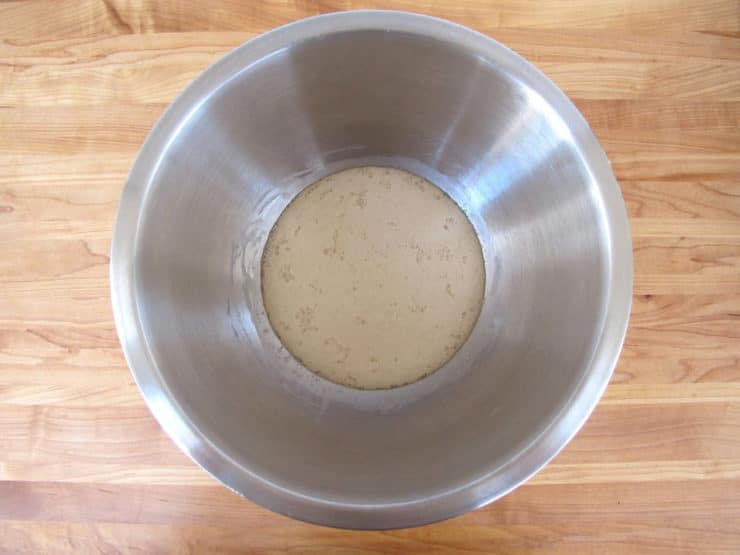
- Pour ¼ cup of the lukewarm water (about 110 degrees) into a large mixing bowl. Add 1 packet of Active Dry Yeast and 1 tsp of sugar to the bowl, whisk to dissolve. Wait 10 minutes. The yeast should have activated, meaning it will look expanded and foamy. If it doesn’t, your yeast may have expired, which means your bread won’t rise—go buy some fresh yeast!

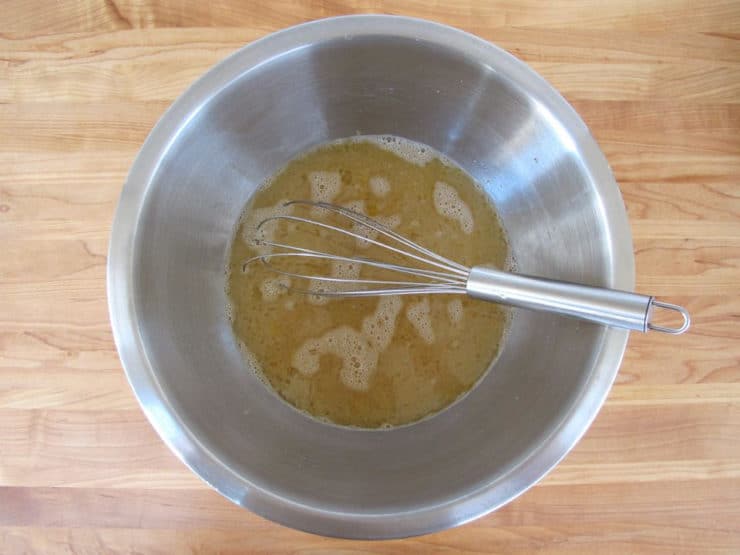
- Once your yeast has activated, add remaining 1 ¼ cup lukewarm water to the bowl along with the egg, egg yolks, honey, canola oil, vanilla and salt. Use a whisk to thoroughly blend the ingredients together.
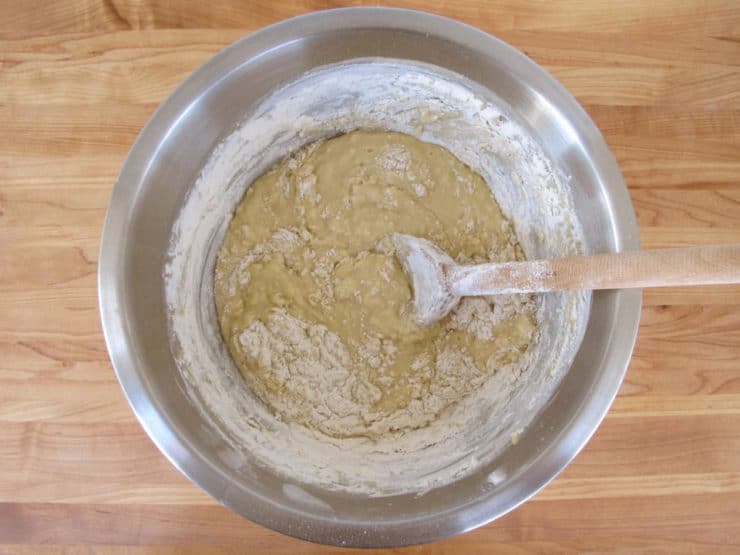
- Begin adding the flour to the bowl by half-cupfuls, stirring with a large spoon each time flour is added. When mixture becomes too thick to stir, use your hands to knead.
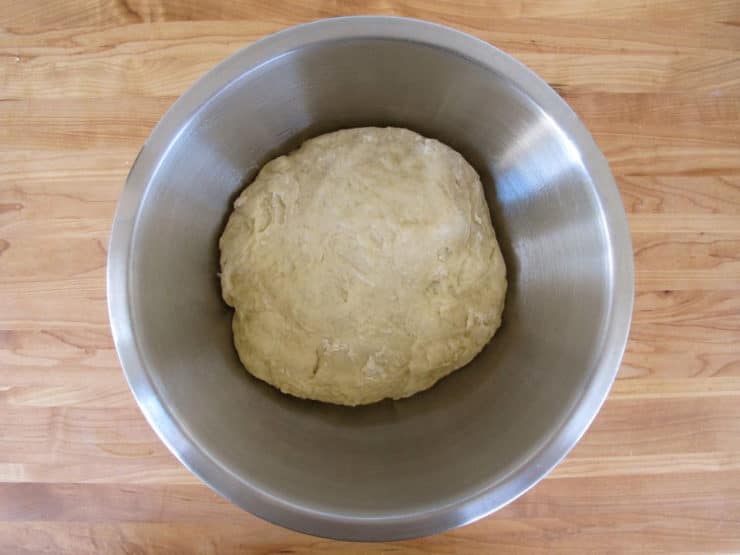
- Continue to add flour and knead the dough until it’s smooth, elastic, and not sticky. The amount of flour you will need to achieve this texture varies—only add flour until the dough feels pliable and “right.” Turn the dough out onto a smooth surface and knead a few more times.
- Place a saucepan full of water on the stove to boil.
- Wash out the mixing bowl that you used to mix the challah dough. Grease the bowl with canola oil. Push the dough back into the bottom of the bowl, then flip it over so that both sides are slightly moistened by the oil.
- Cover the bowl with a clean, damp kitchen towel. Place the bowl of dough on the middle rack of your oven. Take the saucepan full of boiling water and place it below the rack where your dough sits. Close the oven, but do not turn it on. The pan of hot water will create a warm, moist environment for your dough to rise. Let the dough rise for 1 hour.
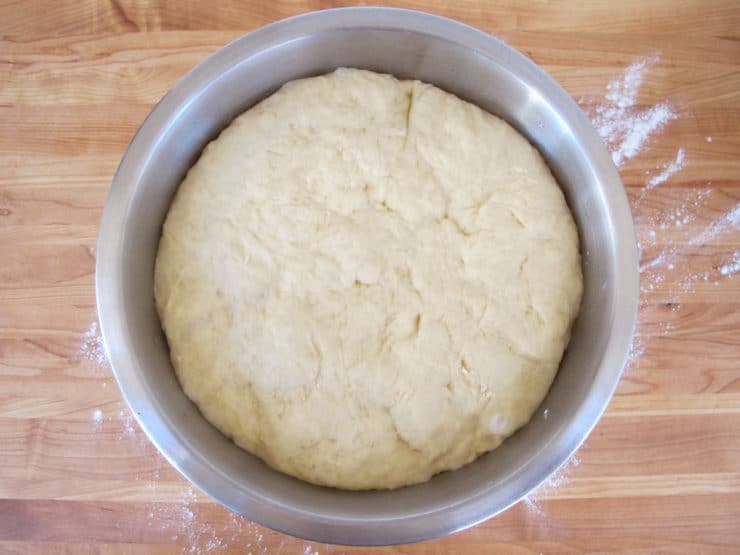
- Take the dough bowl out and punch it down several times to remove air pockets. Place it back inside the oven and let it rise for 1 hour longer.During this final rise, fill a mixing bowl with cold water and dissolve ½ tsp of salt in it. Peel the apples and dice them into very small pieces, about ¼ inch large. Place the diced apples into the bowl of lightly salted water. Reserve. When you are ready to begin braiding the dough, drain the apple pieces and pat them dry with paper towels. Toss the apple pieces with 1/4 cup of sugar. If you’d like, you can add ½ tsp of cinnamon to the sugar to give the apples an apple-cinnamon flavor.

- Take the dough out of the oven; it should have doubled in size during this final rise. If it has not fully risen, return it to the oven till it's had a chance to properly rise. When the dough is ready, flour a smooth surface like a cutting board. Punch the dough down into the bowl a few times, then turn the dough out onto the floured surface. Knead the dough a bit, adding flour as needed to keep it from feeling sticky. You will have enough dough for two medium-sized challot (challahs).
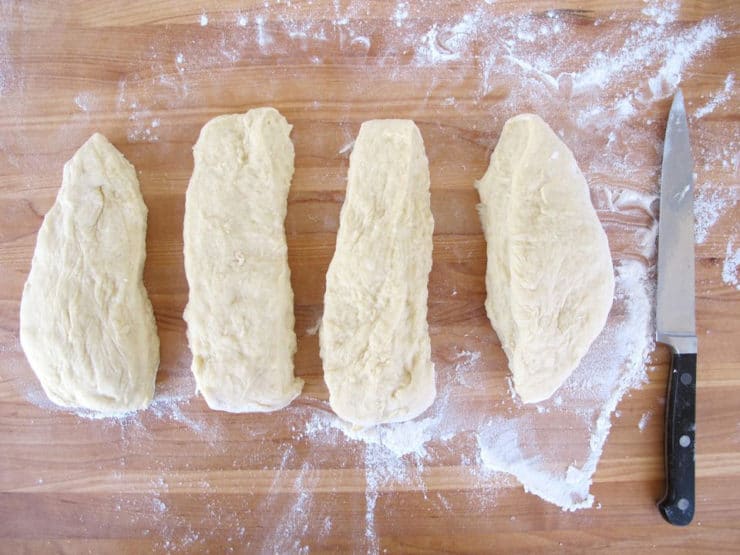
- Divide the dough into two equal halves. Put one half of the dough on a smooth, lightly floured surface. Leave the other half of the dough in the bowl covered by a moist towel. Cut the dough on the floured surface into four equal portions.
- Take one of the four portions and stretch it with your fingers into a rough rectangle, about 1 foot long and 3-4 inches wide. Use a rolling pin to smooth the dough, if it helps. The rectangle doesn’t need to look perfect, and it shouldn't be too thin-- the dough needs to be thick enough to handle an apple filling.
- Sprinkle some of the sugared apple pieces across the center of the rectangle. You should use about 1/8 of the apple pieces in each rectangle. Liquid will collect in the apple bowl as you progress—do not transfer the liquid to the dough, or it will weaken and become mushy. Do your best to shake off excess liquid before placing the apples on the dough. Leave at least 1/2 inch border along the outer edge of the dough clean, with no apples.
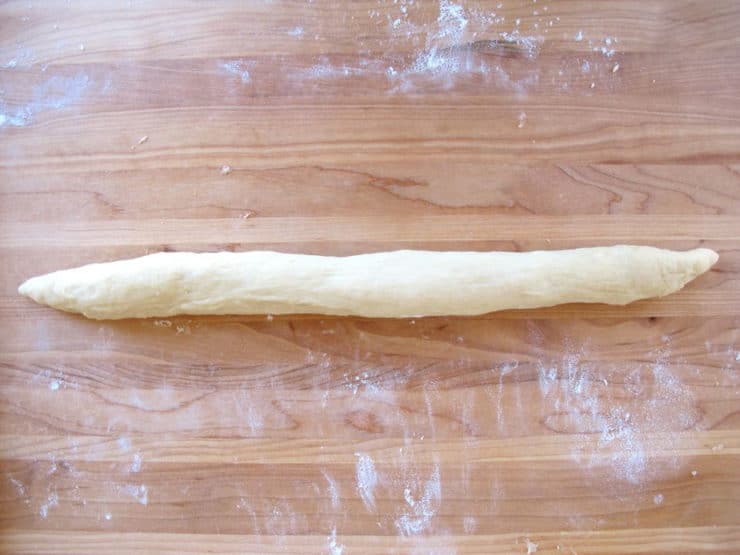
- Gently roll the upper edge of the rectangle down to the lower edge and pinch to seal, creating a snake-like roll of dough stuffed with apples. This is the beginning of your strand.
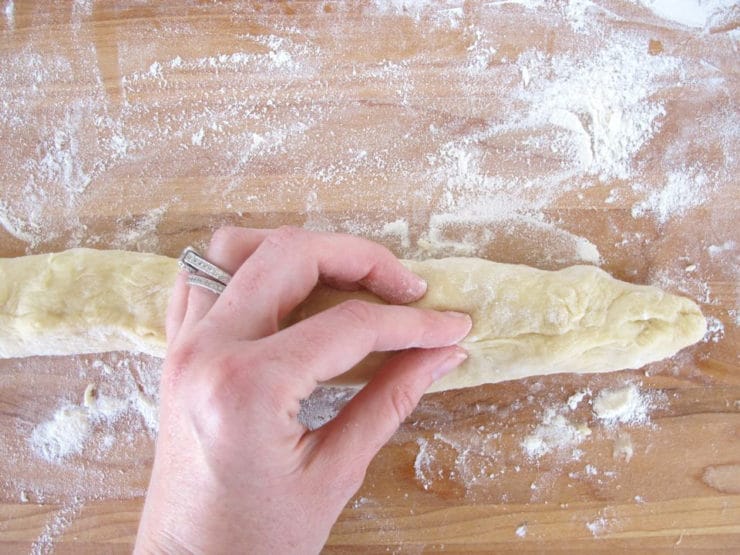
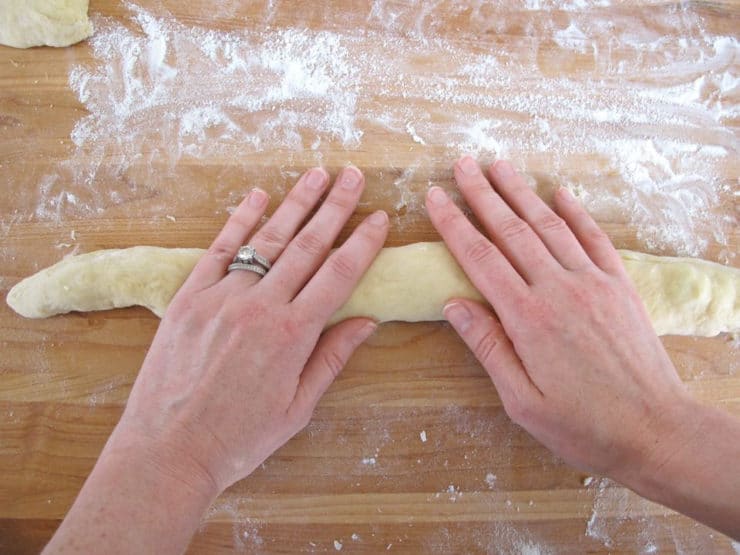
- Gently and carefully roll the stuffed strand till it becomes smooth, using gentle pressure with your hands on the center of the strand, pulling outward as you roll. If any apples begin to poke through the dough, repair the hole with your fingers before you continue. Re-flour the surface as needed to keep your dough from sticking.
- Taper the ends of the strand by clasping between both palms and rolling. At the end of the rolling process, your strand should be about 16 to 18 inches long with tapered ends.Once your apple strand has been rolled, repeat the process with the remaining 3 pieces of dough, making sure that they are even in length with the first strand. In the end, you’ll have 4 apple-stuffed strands.
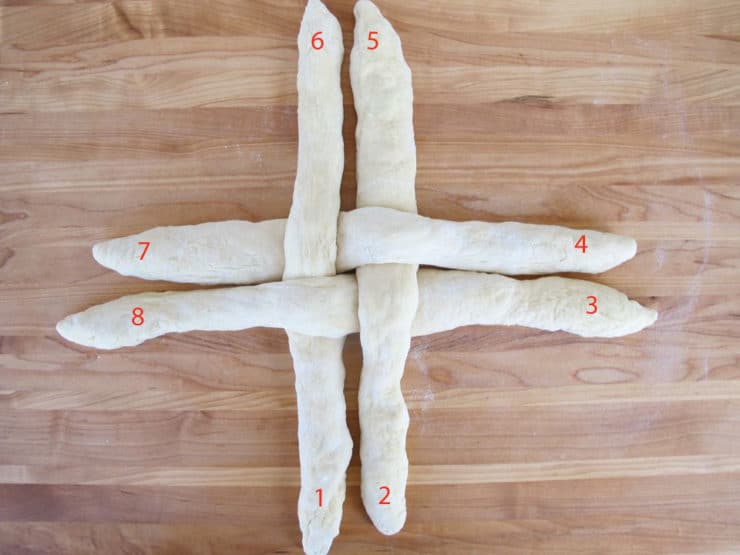
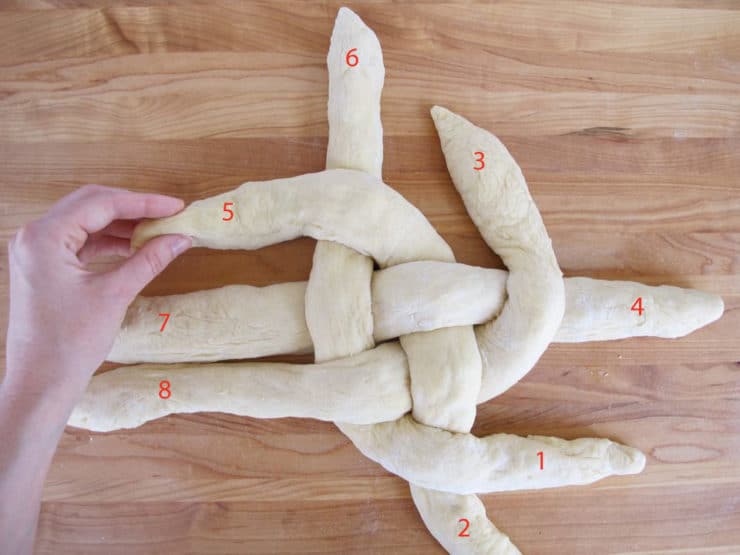
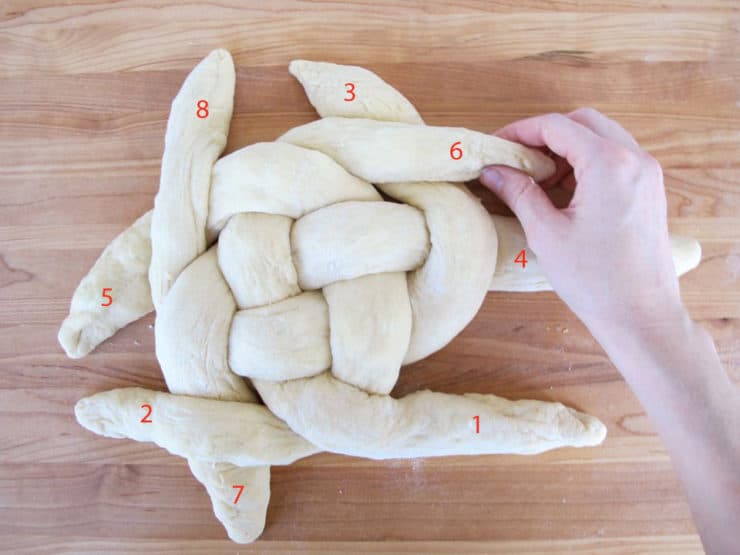
- Now your stuffed strands are ready to braid. There are a few different ways to braid 4 strands into a challah. This recipe will guide you through one method for braiding a round four strand challah. For other braiding methods, click here.Place two strands in the center of a smooth surface, running parallel top to bottom. Place the third strand across the two strands, going under the left strand and over the right. Place the fourth strand directly below the third strand, going over the left strand and under the right. You will have something similar to a tic-tac-toe board pattern, with the center of the board being a very small square and 8 “legs” sticking out from that center. Keep the center as tight as possible… you’ll be braiding from the center. I have numbered the strand ends in the following diagram to make the braiding process easier.
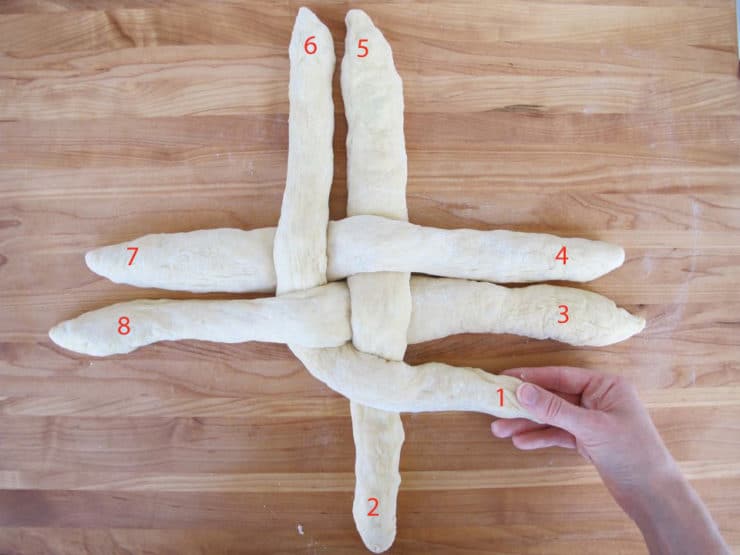
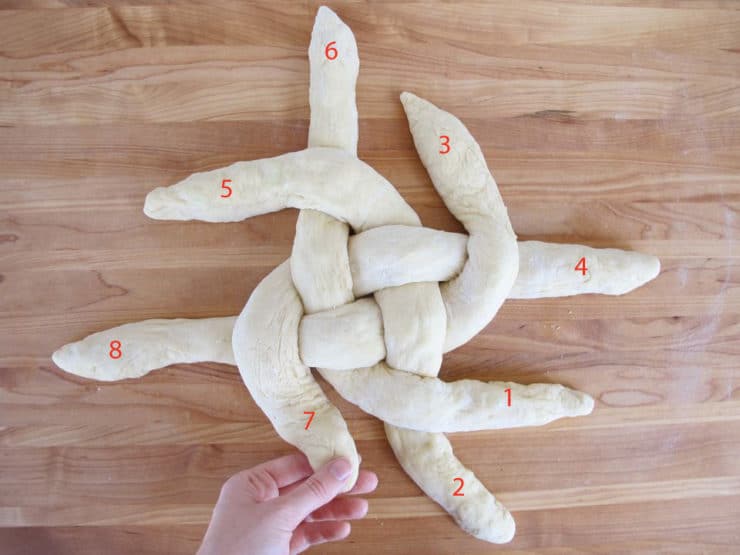
- Take strand 1 and cross it over strand 2.
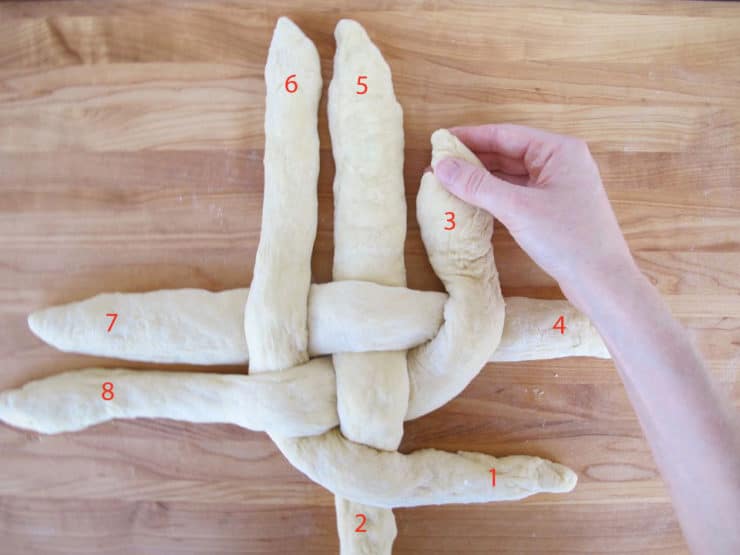
- Take strand 3 and cross it over strand 4.
- Take strand 5 and cross it over strand 6.
- Take strand 7 and cross it over strand 8.
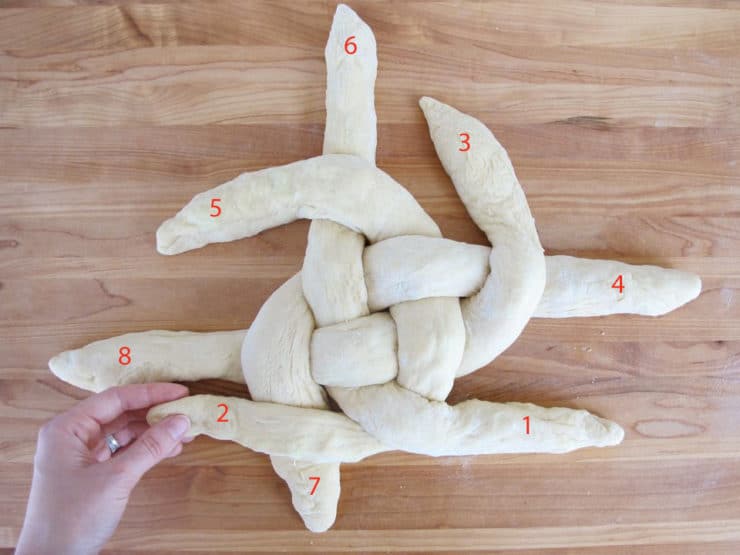
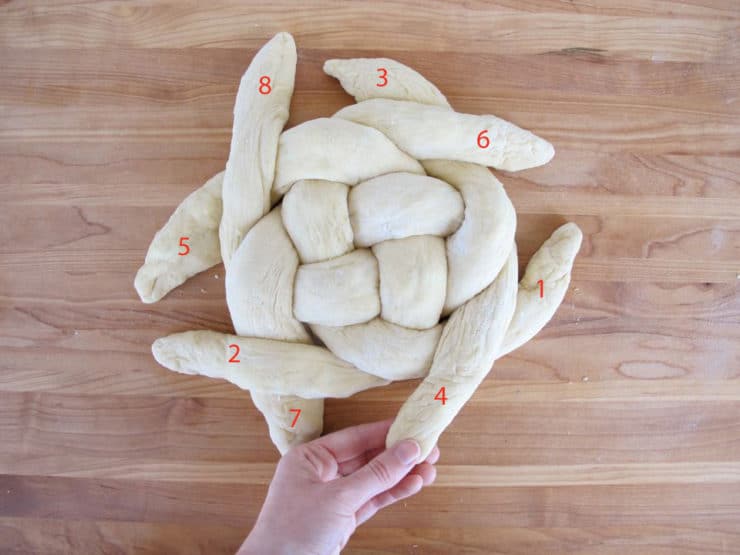
- Take strand 2 and cross it back the opposite way, over strand 7.
- Take strand 8 and cross it over strand 5.
- Take strand 6 and cross it over strand 3.
- Take strand 4 and cross it over strand 1.
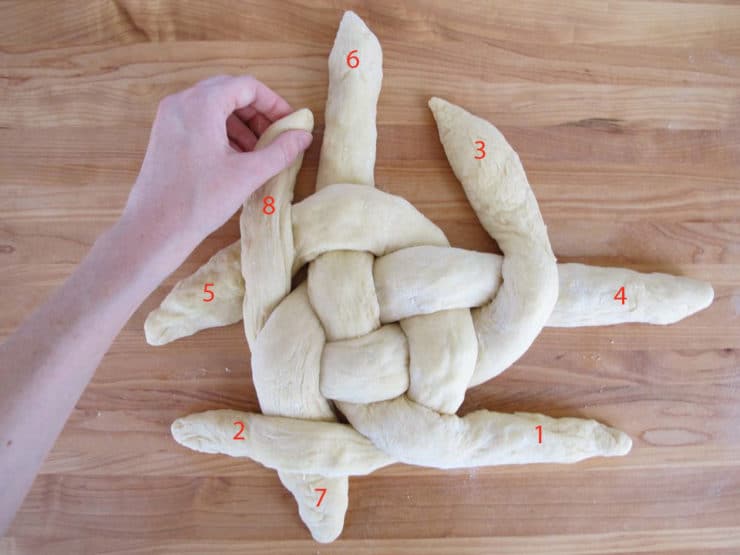
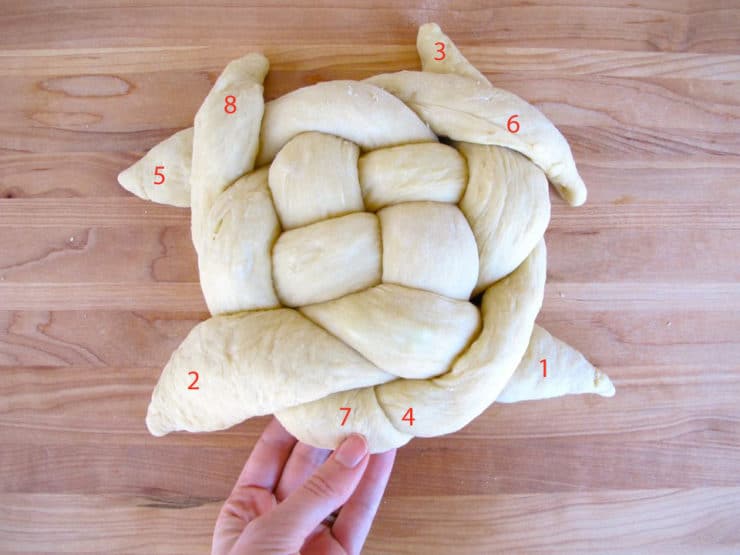
- Take strand 7 and twist it with strand 4.
- Tuck the twisted ends under the challah.
- Repeat this process with the remaining loose ends—twist and tuck 1 with 6, then 3 and 8, then 5 and 2.
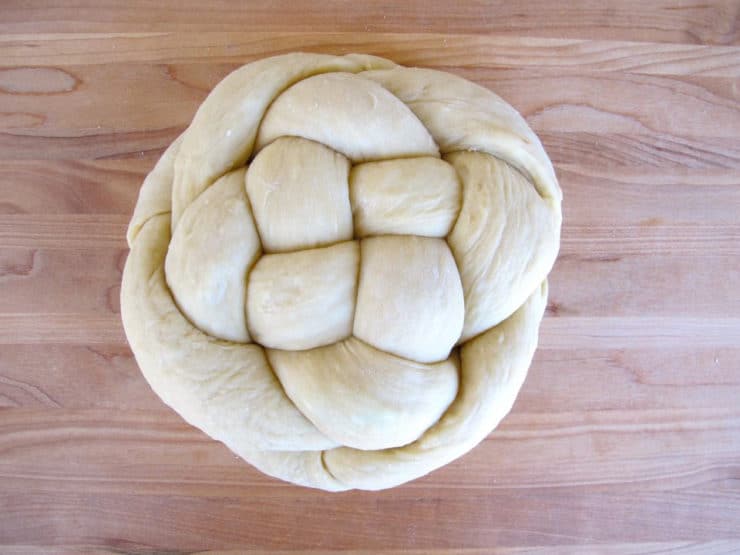
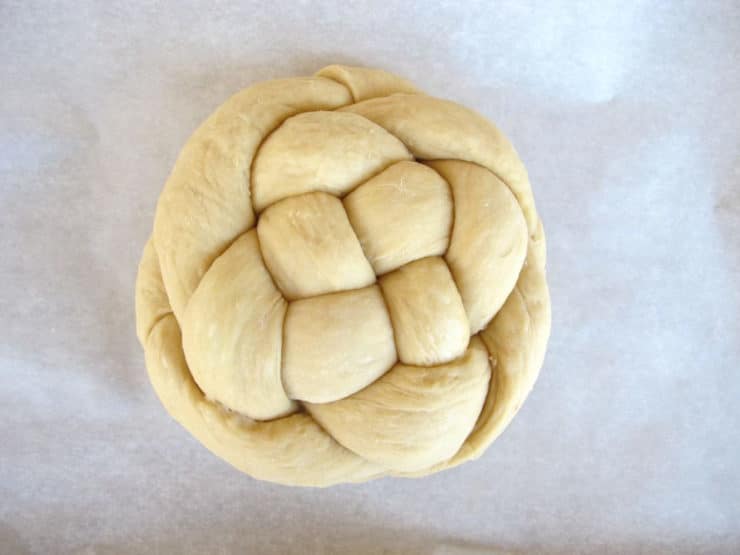
- When all of the loose ends are twisted under, gently plump the challah into a nice, even round shape.
- After the round has been braided, place it on a baking sheet lined with parchment paper. Preheat the oven to 350 degrees F. Let the braid rise 30 to 45 minutes longer. You’ll know the dough is ready to bake when you press your finger into the dough and the indentation stays, rather than bouncing back. While this challah rises, you can braid the other half of the dough in the same way, or you might choose a different braid for your second challah. No matter which way you braid, you can conceal the apple pieces inside the strands using the same method described above. Your second challah will rise as the first one bakes.
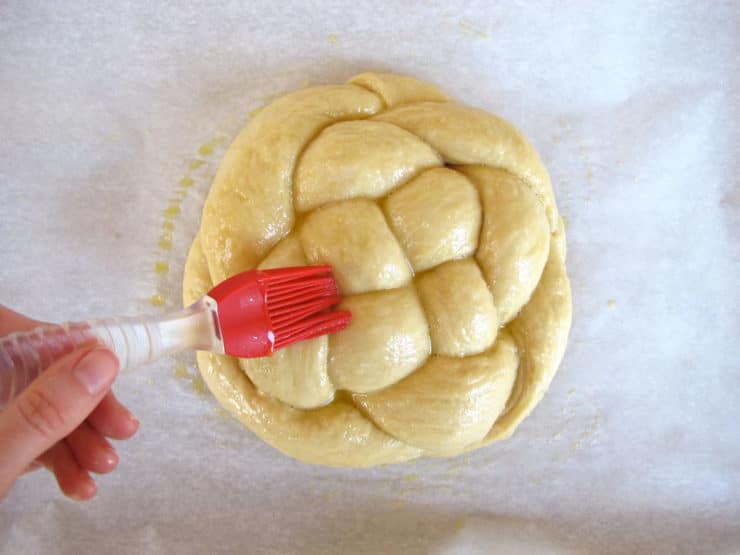
- Prepare your egg wash by beating the egg, salt and water till smooth. Use a pastry brush to brush a thin layer of the mixture onto the visible surface of your challah. Reserve the leftover egg wash. Sprinkle the top of the challah with 1 tbsp turbinado sugar, if you wish.Each challah needs to bake for about 45 minutes total, but to get the best result the baking should be done in stages. First, set your timer to 20 minutes and put your challah in the oven.After 20 minutes, take the challah out of the oven and coat the grooves of the braid with another thin layer of egg wash. These areas tend to expand during baking, exposing dough that will turn white unless they are coated with egg wash. Turn the challah around, so the opposite side faces front, and put it back into the oven. Turning it will help your challah brown evenly—the back of the oven is usually hotter than the front.The challah will need to bake for about 20 minutes longer. For this last part of the baking process, keep an eye on your challah—it may be browning faster than it's baking. Once the challah is browned to your liking, take it out and tent it with foil, then place it back in the oven. Remove the foil for the last 2 minutes of baking time.Take the challah out of the oven. At this point your house should smell delicious. Test the bread for doneness by turning it over and tapping on the bottom of the loaf—if it makes a hollow sound, and it's golden brown all the way across, it’s done. Because of the apples in this challah, it may take a bit longer to bake than your regular challah recipe. Err on the side of letting it cook longer to make sure it's baked all the way through. You can also stick an instant read thermometer in the thickest part of the challah-- when it reads 190, it is baked all the way through. Let challah cool completely on a wire cooling rack before serving. Bake the second challah in the same way.







NOTES
Nutrition


This is my 4th year in a row using your challah recipe – it’s been delicious and beautiful every time… absolutely the perfect start to a sweet new year!
So glad to hear it! Love when these recipes become new family traditions 🙂
We love it, but I’m not sure why you’d say Prep Time is a mere 20 minutes! C’mon…maybe for you, but us newbies? Just getting all the ingredients ready, let alone the kneading and mixing. AND there’s the rising. If it doesn’t fit into the “Prep” definition, then it should be noted somewhere up top.
This is delicious, but it was a full day event. How anyone makes it for RH (which I’m doing for the first time this year) I don’t know. Glad I experimented a little bit more, especially in our relatively small kitchen.
BTW, do you have to refresh the hot water and put it back for the 2nd rise?
Sorry for questions and pointers; I’m a cookbook and food/nutrition writer/editor by trade. 🙂
Hi Wendy – sorry about that, when my recipes were transferred over to a new system I had an assistant helping me to input the information from the old system to new. She must have accidentally left out the 3 hours part and only left the 20 minutes part. 🙂 I corrected it. No need to refresh the hot water unless it’s a very cold day.
Hi Tori,
Do you think this recipe will work with instant yeast (to save rise time)? I’m a teeny tiny bit behind in my prep, so every hour counts.
Thanks, and Shana Tova!
Yes it should, but rise times may drop by about half. If you’re doing a refrigerated rise it’s best to use active dry. You won’t need to proof the instant yeast. You’ll only need about 80% the amount of instant yeast subbed for active dry.
Dear Tori, I have always appreciated your detailed recipes. I am at the moment with strict diet, gluten, dairy free food. Would you tell me if I can bake this Challah or any other recipes with other flour. Thank you.
Sara
Hi Sara, unfortunately I have yet to find a gluten free challah preparation that I truly like (and I have really tried!). Sorry I can’t be of more help here.
Hi Tori! If I only have vegetable oil, do you think that would be a suitable swap for canola oil? And…I am very tempted to sub Grand Marnier for vanilla extract. I often do this when I bake cookies (it’s sort of my signature move), but I’ve never tried it with something yeast-based. Do you think that the alcohol or citrus could interfere with the yeast?
Either way, I am very excited to try making this! I have never made challah before. Thank you for sharing the recipe with so much detail!
Re: vegetable oil – sure no problem. Re: Grand Marnier – that’s an excellent question that I don’t have an answer for! I would think it should be fine, as vanilla contains some alcohol too and it doesn’t bother the yeast… but not sure if Grand Marnier being more potent would cause an issue? Sorry I can’t be of more help on that one!
Would you consider (read “I’m begging you”) using weight measurements, along with volume? Especially for baking? Always easier to know what 2 medium onions weigh but, for me, absolutely essential for baking. Metric or imperial — doesn’t matter. Thank you.
For this recipe you really don’t need it – it’s more a “feel” thing with the dough. Even if I provided a weight measurement it would be an estimate, because the dough’s flour requirements can vary based on elevation and humidity levels. If you follow the instructions closely you should have no issue. However I am working to integrate more weight measurements on the site for new recipes, and slowly converting old ones as I revisit them.
This is a wonderful Challah recipe. I made it for the first time but omitted the apples. Just the challah on its own was light, fully and slightly sweet. This will be what I made for Rosh Hashanah! And the round braid is simply stunning! Thank you!
i make this challah every year for my family and friends for the new year. I was just wondering if there is a way to freeze the challahs if i make them in an advance? What would the defrost method be as well?
Thank you so much
Lara
I’m not Tori, but I do have experience freezing challot. They freeze well when wrapped well to prevent freezer burn. To thaw, remove from freezer packaging, wrap in absorbent towel, and allow to sit on counter until thawed. In my experience, the towel absorbs any moisture condensation while the loaf is thawing, preventing sogginess. I have even wrapped my challah in the absorbent towel, then placed it in a plastic bag or whatever desired packaging material before placing it in the freezer. I have also thawed challah in the microwave: just wrap in absorbent towel and usually about 2 minutes in the microwave, more or less depending on the power of your ‘wave, will do the trick.
I freeze all the time. Key to it is wrap completely cool challah in saran wrap and then in aluminum. I have frozen for a year (on accident) and it was perfect.
Tori, Thank you so much for the recipe! I am not Jewish, but love to bake. I first made this three years ago to surprise my boyfriend on our first Rosh Hashanah and his comment was that I was “sweet, but misguided” as he doesn’t love stuffed challah. This recipe made him a true fan! I recently found myself with an excess of apples and he requested it directly. The instructions are clear and it turned out even better in round two. Thank you for helping me impress him 🙂
Hi! Hope you can help: do you have a recipe for Gluten Free Challah?
Am a regular challah baker, however
a recent illness has me switching to gluten free. Tried to adapt a KA gluten free bread recipe, but was unable to roll ropes for braiding/braid. Is there an answer? TY
Hi Judith – short answer is no, unfortunately. Gluten is the property in flour that helps it to be molded and shaped into braids. Eliminating it makes capturing a “true challah” very difficult. I continue to experiment with this as it’s a popular request on the site, but all of the recipes I’ve tried have left me unimpressed. I will be sure to share if I come across one that works!
You’ve done a gorgeous job on this recipe. I love the rounded braid, and this will be on my holiday table this Christmas. You’ll have to allow me the borrowing across faiths: my dad and most of my childhood friends came from Jewish families, although we celebrated Christmas after my mother’s German upbringing. As an adult I’ve added in the holiday treat of doing something delicious with yeast to treat my Thai sister in law. Oven baking is far less common in Southeast Asia, as you can imagine and she loves homemade holiday breads.
Thanks Jen!
Great recipe. Works well with Nutella spread as filling. I’ve also incorporated it as a cinnamon roll dough base…great with a vanilla, powder sugar, cream cheese icing. Question…how well does this dough take to being frozen? I’d like to minimize prep time on bake day.
Have you ever tried?
I haven’t tried it with this particular recipe, but challah dough generally freezes well.
This looks amazing
I have never commented on a recipe page before but have to express my thanks for giving me an absolutely foolproof, phenomenally delicious recipe! First time making and wowed the crowd (incl myself!) Made with raisins and it was so soft and fluffy and the glaze is perfect! Yum!
This makes me so happy!!
This looks so delicious! Question – can I make the dough in a bread machine?
Hi Erica, I have never used a bread machine for any dough, so I’m not really sure. Sorry I can’t be of more help!
I used my bread machine for the first round of kneading. After that, it’s too large to rise in the bread machine, so I let it rise in the oven and followed all of the rest of the steps. It’s baking now and it’s beautiful. I made it into one large challah. My only caution is not follow the advice not to make the rectangles too thin. My apple filling is peeking out in a couple of places. I am looking forward to sharing this with guests tonight!
Beth
This looks delicious!
What adjustments to cooking time and temperature would I need for a convection oven?
Hi Jenny, I am not sure– I would refer to your oven’s manual, it should have some general guidelines for converting recipes.
Can I make the challah (fully baked) and then freeze it?
Hi Jody, yes that shouldn’t be a problem. Wrap it in a layer of plastic wrap, followed by a layer of foil. Make sure you give yourself ample time to thaw. You can also refresh it in a 325 degree oven until heated through.
I made these challahs for RH and they are amazing! Once again, I made the dough and now braided like a traditional challah (without filling) and froze it. How long will it take to thaw? Thanks!!!
Hi Emma! I don’t have an exact timing for you on the thaw, sorry… wish I could help! Maybe another reader who does it this way regularly will chime in.
Can you please give the quantities of butter and honey to use for the glaze? Are they instead of, or in addition to the egg yolk and water?
Hi Paula, I’m not sure which glaze you are referring to.
I’ve made these three years in a row in two different ovens. Every time I make these the bottom burns or gets too dark. Any tips?
Hi Sue, I make this recipe every year and this never happens to me – where physically in the oven are you baking it? Sometimes the bottom of the oven runs hotter than the top. At any rate, one tip I’ve learned is to sprinkle coarse ground corn meal on the cookie sheet to keep a separation between the sheet and the dough, so it doesn’t get overly done on the bottom. Hope that helps!
Bake the Challah in the highest position in your oven and try using a 10*F lower temperature for baking and CHECK THE BAKING TIME !!
Don’t put it at the bottom of the oven. Is your oven running hot. When I have to use the bottom 1/3 of the oven I double the baking sheet. And I check the bottom at intervals.