

Is there any food that reflects the beauty of Judaism more than a freshly baked challah? Jews and non-Jews alike love the flavor and shape of this delicious eggy bread.
But challah is so much more than just bread. The tradition of challah is a very spiritual one; for observant Jews, it is a way to directly connect with the spiritual energy of God. In fact, baking challah is considered an important blessing in the Jewish home.
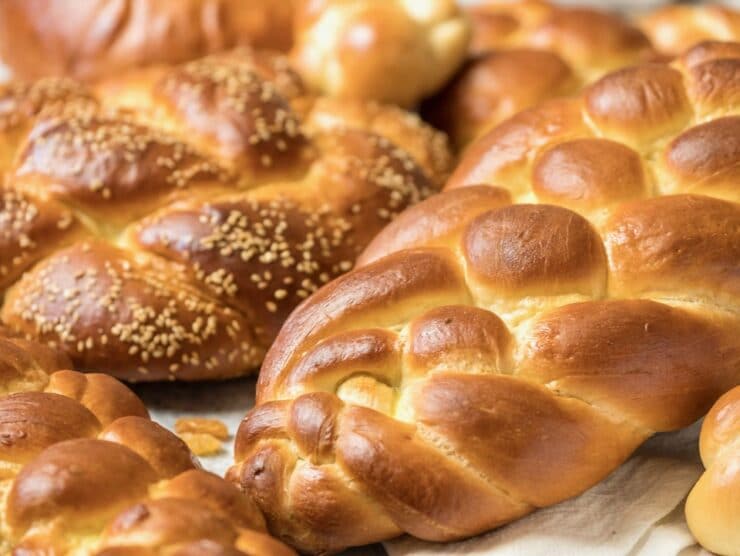
Today, the word challah is used to describe the beautiful loaf of braided bread that appears on Shabbat tables all over the world. In ancient times, challah referred to a small bit of dough that was set aside for the Temple priests as an offering to God:
Of the first of your dough you shall present a loaf as a contribution; like a contribution from the threshing floor, so shall you present it.
Numbers 15:20
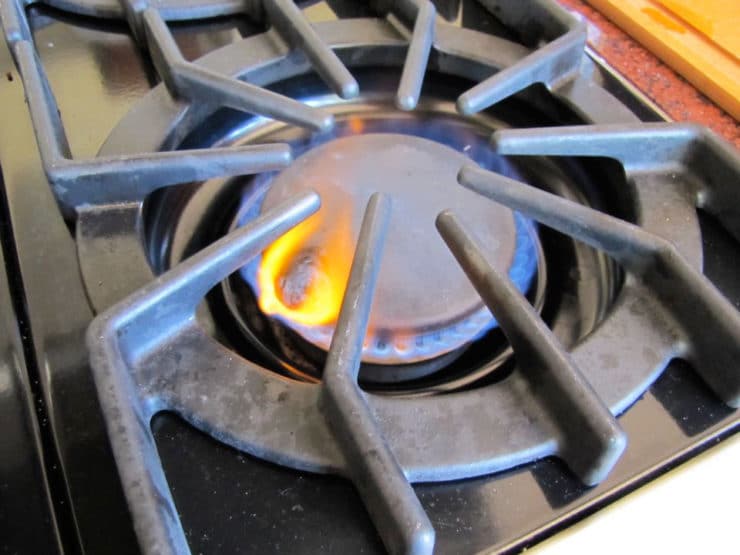
Burning a small portion of dough as an offering is part of the challah blessing.
Traditionally, challah is served on Shabbat and holidays. I like to think of challah as a “special occasion” bread because of the time and effort that goes into making it. You can certainly make challah any day of the year, but in my home the process is reserved for Shabbat and the major Jewish holidays (except for Passover, of course, when leavened bread is not allowed).
The smell of freshly baked challah ushers in our weekly Shabbat celebration and puts everybody in a mood of gratitude. As blog reader Rabbi Gershon Steinberg-Caudill put it—“I love it when I finish making my Shabbat Challah. It smells like Shabbat!”
The ritual associated with separating and blessing the challah is a somewhat complex process, dependent on the size of challah you are baking and your level of observance. Customs vary according to Halachic opinion; Ashkenazi and Sephardic traditions approach the blessing differently. If you are interested in learning more about the process of separating challah, there are many guides available online… or ask a trusted rabbi!
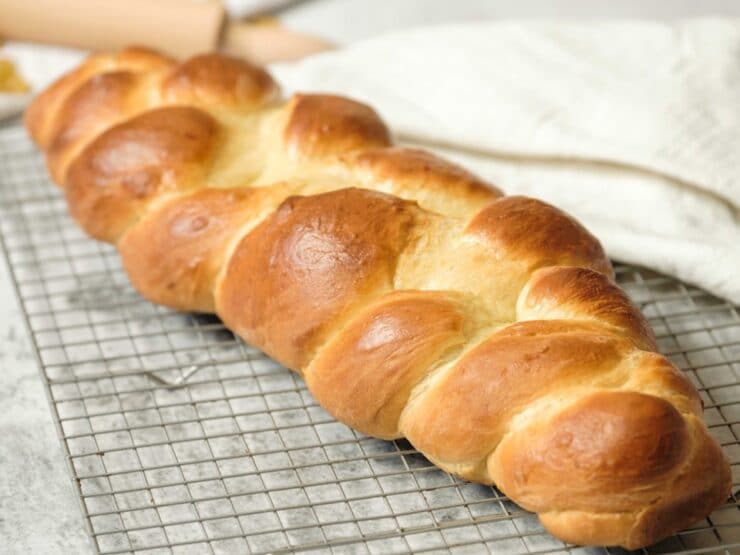
For me, baking challah is like a meditation. Kneading and rising, kneading again, shaping, braiding and baking— it all takes a lot more time than baking brownies from an instant mix. Smelling the bread baking, then seeing your gloriously braided challah on the dinner table, really makes it all worthwhile. I hope this blog inspires you to try it yourself!
The following recipe is my favorite way to make challah, developed after many attempts to create a “foolproof” challah recipe. It’s a rich, moist, eggy challah sweetened with honey.
The multiple risings create a beautiful texture, and the egg wash results in a gorgeous golden crust. Feel free to sprinkle your challah with any of the toppings suggested in the recipe. You also can add raisins or chocolate chips to the dough (adding real chocolate will make it a dairy recipe). No matter which way you choose to make it, challah is a delicious way to celebrate Shabbat, or any other holiday.
If you’ve never made challah before, remember to be patient. Baking challah is a simple process, but it does take time and effort. You may need to try it a few times to get a “feel” for the dough. If you follow my instructions exactly, you should be fine— I’ve tried to describe each step very carefully and specifically. Comment me if you have any questions.
For instructions on how to braid your challah, click the following link:
Challah Part 2: How to Braid Challah.
Good luck! 🙂
Recommended Products:
We are a participant in the Amazon Services LLC Associates Program, an affiliate advertising program designed to provide a means for us to earn fees by linking to Amazon.com and affiliated sites. As an Amazon Associate I earn from qualifying purchases.
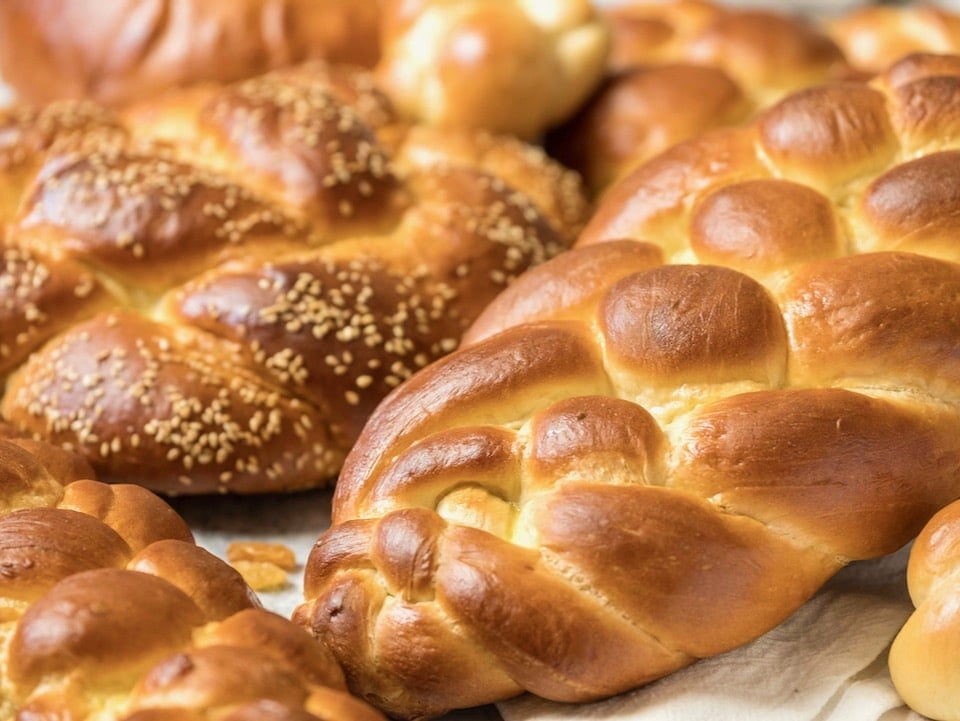
Challah
Ingredients
Dough Ingredients
- 1 1/2 cups lukewarm water, divided
- 1 packet active dry yeast (1 packet is equivalent to 2 1/4 tsp or .25 ounce active dry yeast) - you may substitute 1 3/4 teaspoons of instant yeast or .6 ounce compressed fresh yeast (1 small cake)
- 1 teaspoon sugar
- 1 large egg
- 3 large egg yolks
- 1/3 cup honey
- 2 tbsp avocado oil (I prefer avocado oil for flavor and health reasons - you may substitute sunflower oil or canola oil)
- 2 teaspoons salt
- 4 1/2-6 cups all purpose flour - PLEASE NOTE - if you are using the metric conversion tool on this recipe, the flour is not updating correctly. The correct metric measurements for flour are 562.5 to 750 grams (do not change the recipe serving sizes or it will not work)
Egg Wash Ingredients
- 1 large egg
- 1 tablespoon cold water
- 1/2 teaspoon salt
Optional Ingredients
- Raisins, chocolate chips (1 ½ cups of either)
Optional Toppings
- Sesame seeds, poppy seeds, kosher salt
Instructions
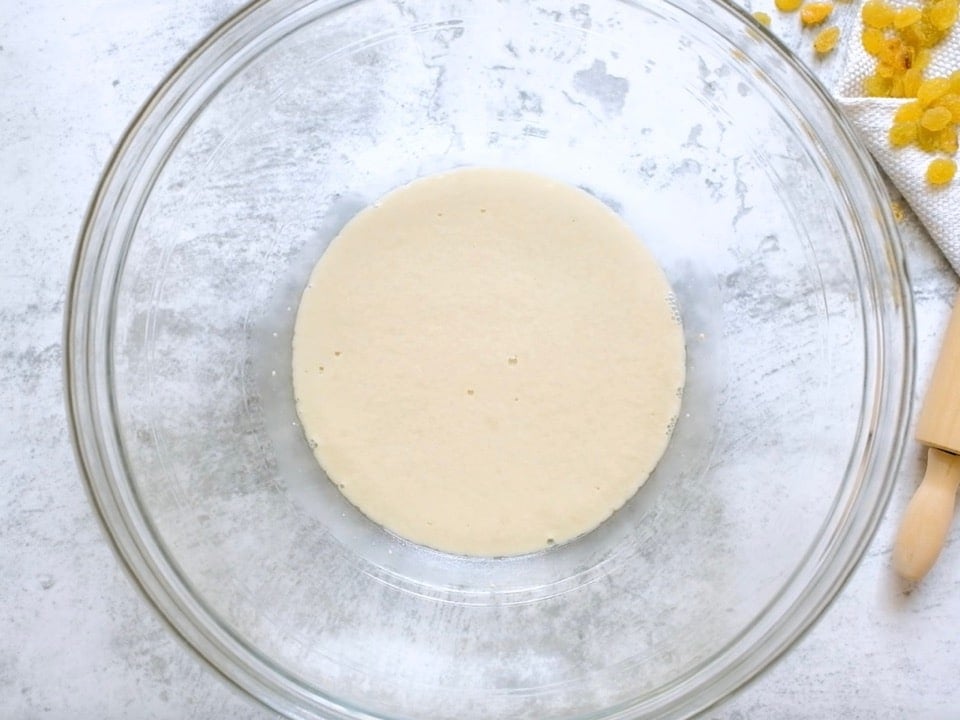
- Pour ¼ cup of the lukewarm water (about 110 degrees) into a large mixing bowl. Add 1 packet of active dry yeast and 1 tsp of sugar to the bowl, stir to dissolve. Wait 10 minutes. The yeast should have activated, meaning it will look expanded and foamy. If it doesn’t, your yeast may have expired, which means your bread won’t rise—go buy some fresh yeast! This step Is called "proofing" the yeast - if you're using instant yeast you can skip this step and simply add the yeast to your dry ingredients. If you're using fresh yeast (or compressed or cake yeast), simply stir it into the lukewarm water to dissolve, then add the remaining wet ingredients - no need to wait for proofing.

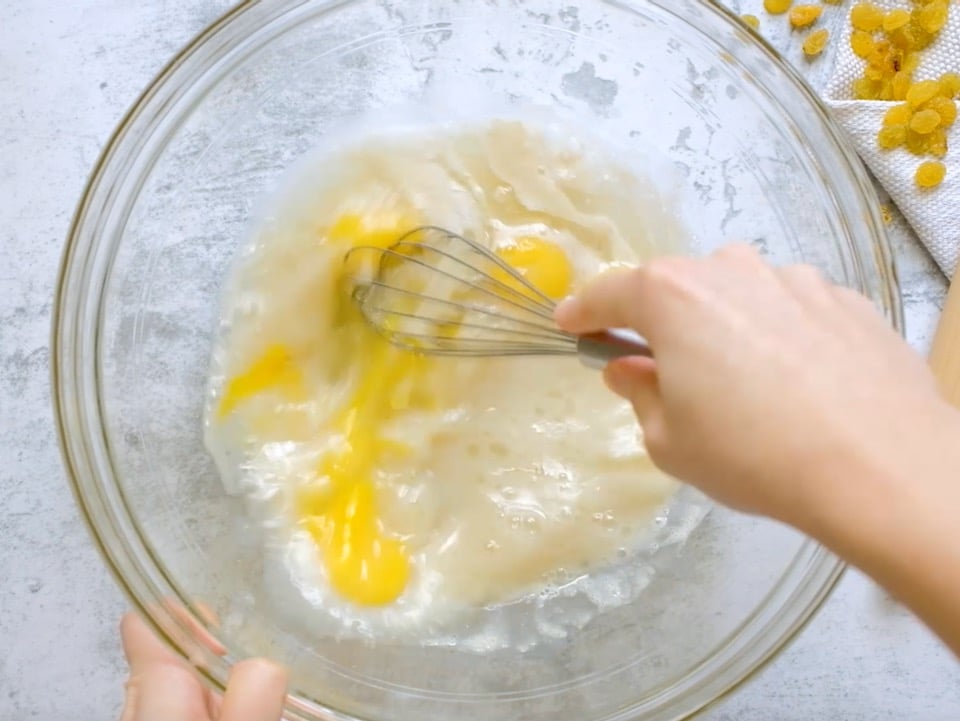
- Once your yeast has activated, add remaining 1 ¼ cup lukewarm water to the bowl along with the egg, egg yolks, honey, oil, and salt. Use a whisk to thoroughly blend the ingredients together.

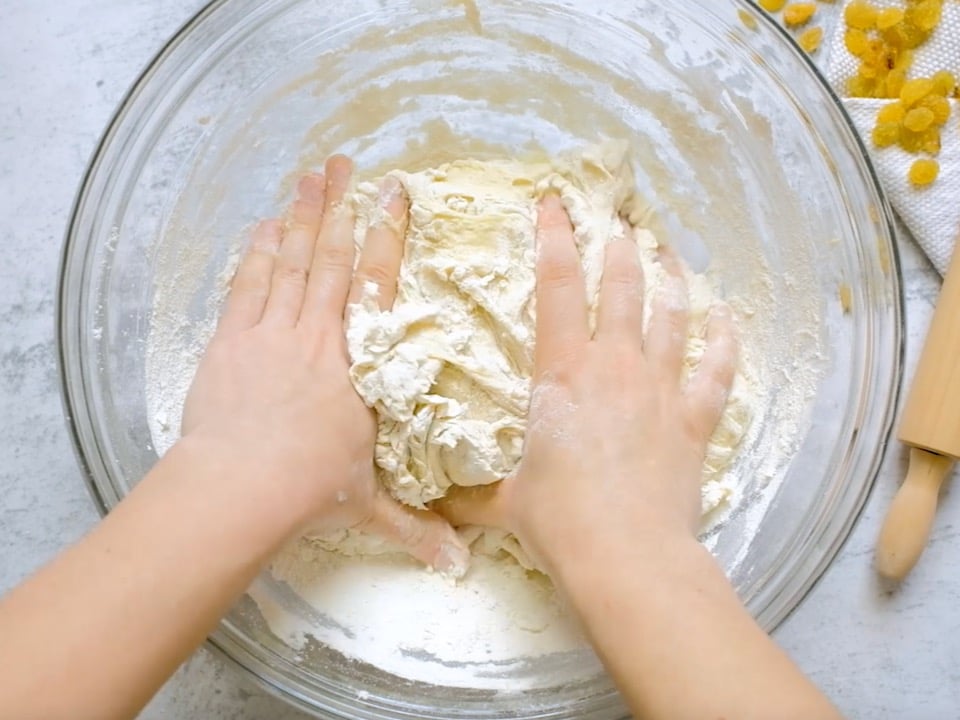
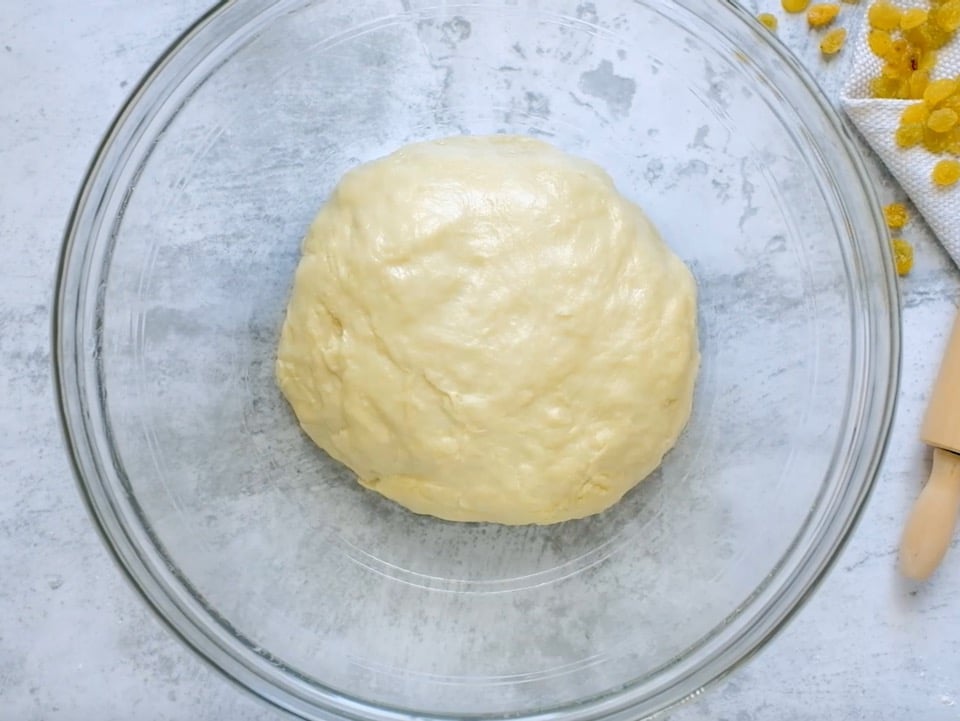
- Begin adding the flour to the bowl by half-cupfuls, stirring with a large spoon each time flour is added. When mixture becomes too thick to stir, use your hands to knead.Continue to add flour and knead the dough until it’s smooth, elastic, and not sticky. The amount of flour you will need to achieve this texture varies—only add flour until the dough feels pliable and “right.” If you plan to add raisins or chocolate chips to the challah, incorporate into the dough as you knead.
- Place a saucepan full of water on the stove to boil.Meanwhile, remove the dough from your mixing bowl and wash out the bowl. Grease the bowl with oil. Push the dough back into the bottom of the bowl, then flip it over so that both sides are slightly moistened by the oil.
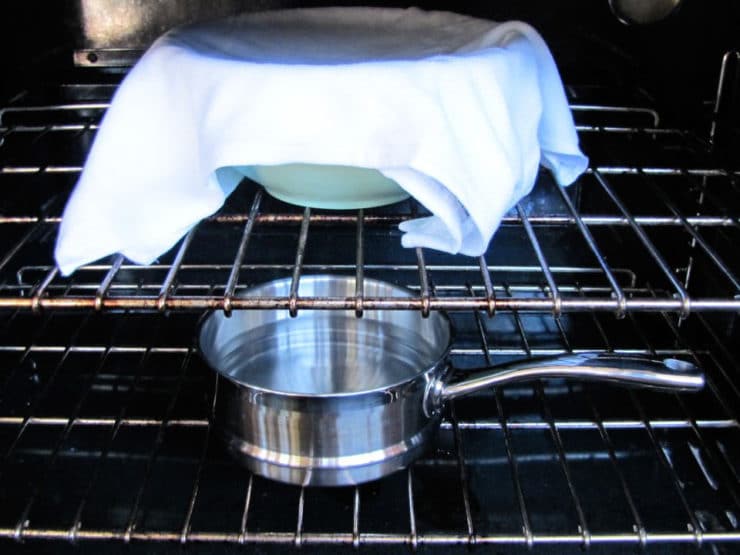
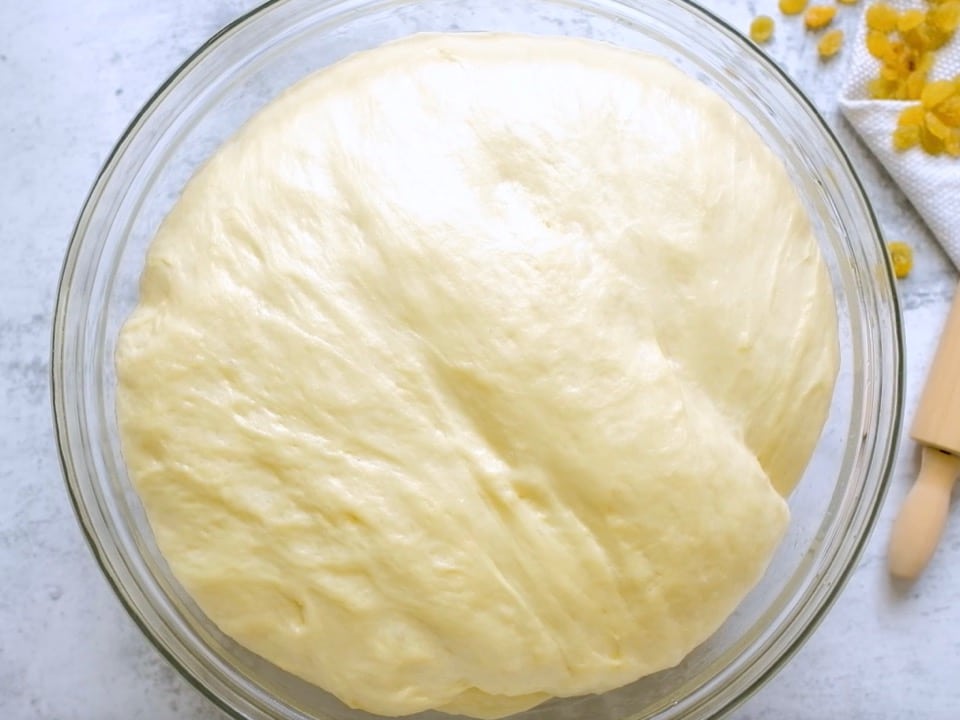
- Cover the bowl with a clean, damp kitchen towel. Place the bowl of dough on the middle rack of your oven. Take the saucepan full of boiling water and place it below the rack where your dough sits. Close the oven, but do not turn it on. The pan of hot water will create a warm, moist environment for your dough to rise. Let the dough rise for 1 hour, or until the dough doubles in size. This may take longer depending on a number of things, including weather conditions... be patient! It's important to let the dough rise for best results.

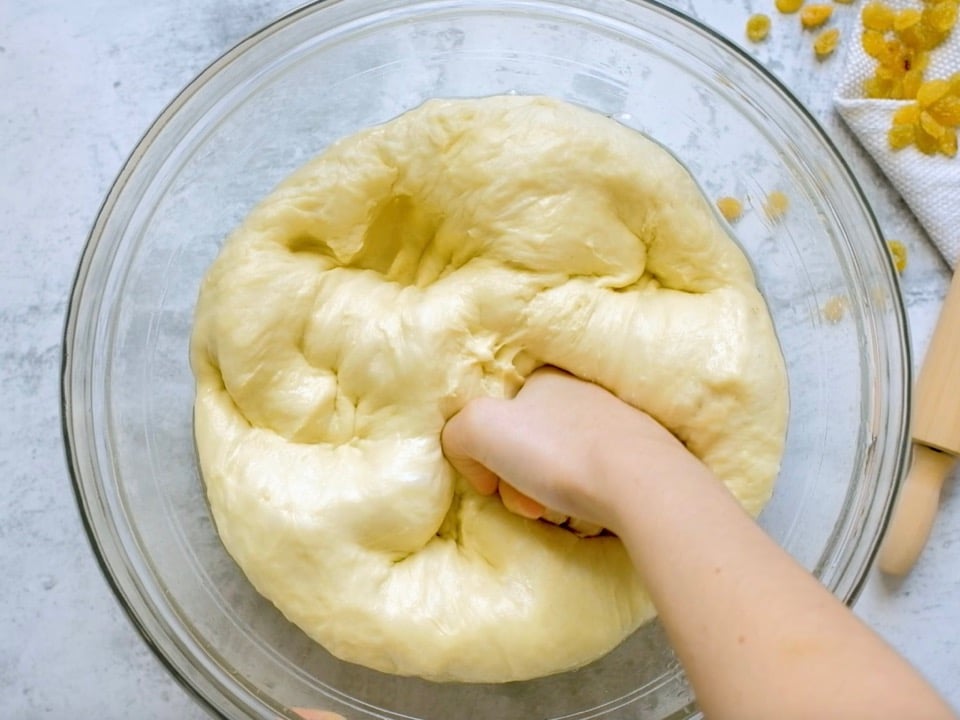
- Take the dough bowl out and punch it down several times to remove air pockets.
- Place it back inside the oven and let it rise for 1 hour longer, or until the dough doubles in size.
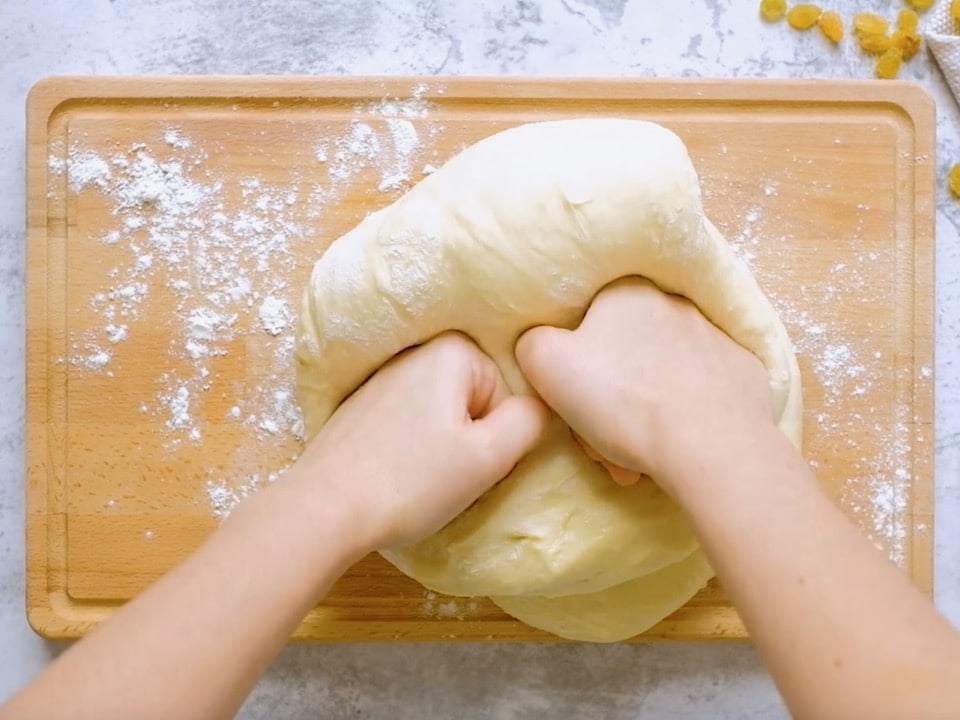
- Take the dough out of the oven. Flour a smooth surface like a cutting board. Punch the dough down into the bowl a few times, then turn the dough out onto the floured surface. Knead for a few minutes, adding flour as needed to keep the dough from feeling sticky.
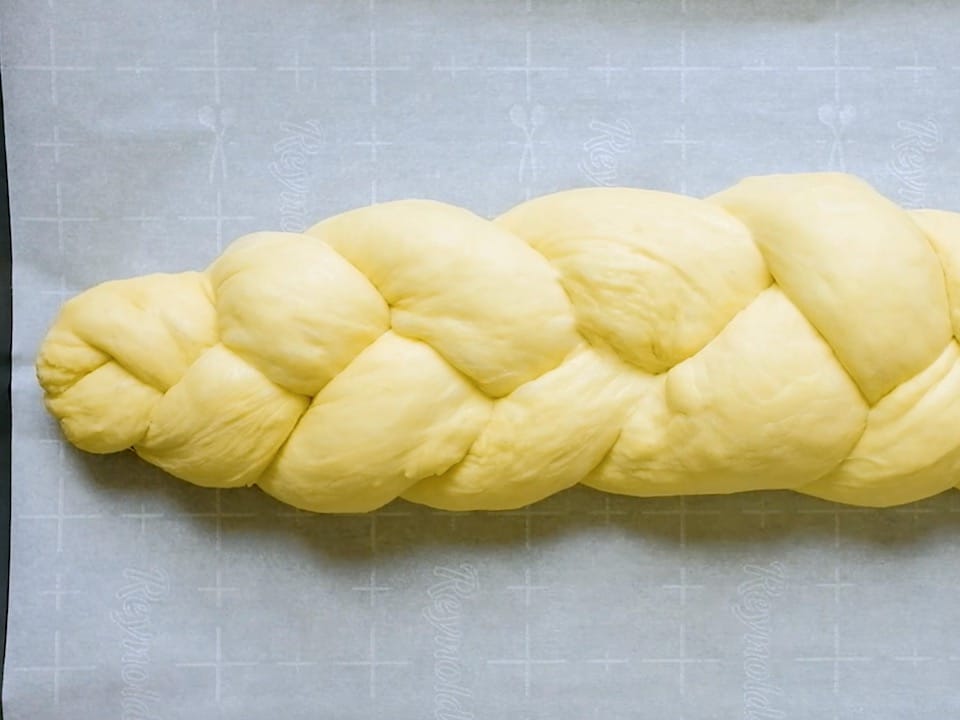
- Now your dough is ready to braid. If you plan to separate and bless the challah, do it prior to braiding. Click here to learn how to braid challah.After you’ve braided your challah, place it on a cookie sheet lined with parchment paper (this will catch any spills from your egg wash and keep your challah from sticking to the cookie sheet).Note: I usually only put a single challah braid on a cookie sheet, since they tend to expand a lot when baking.
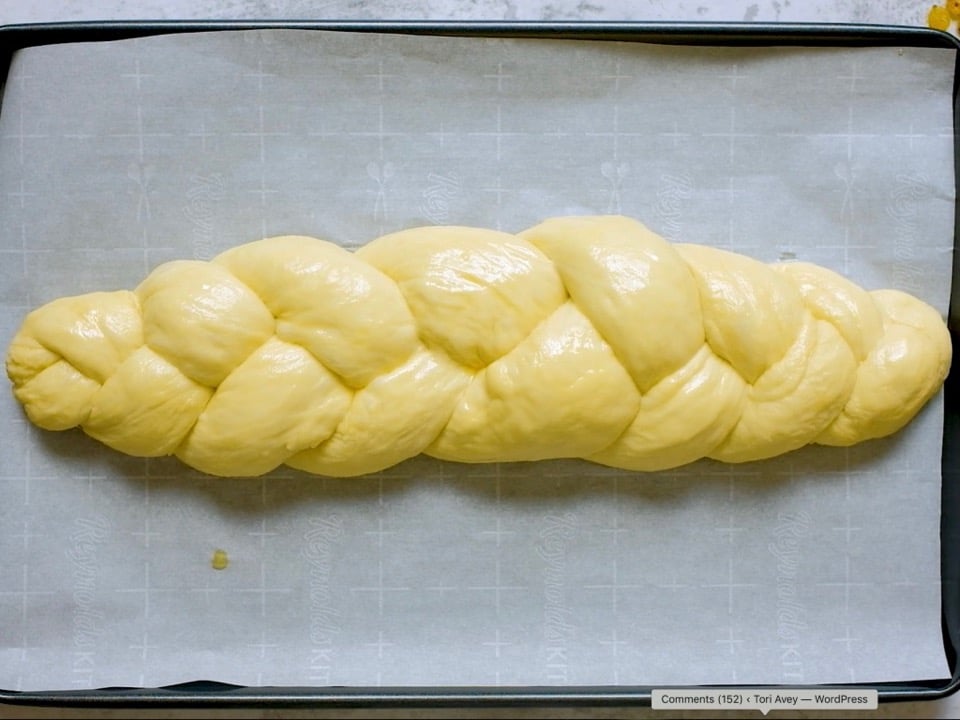
- Prepare your egg wash by beating the egg, salt and water till smooth. Use a pastry brush to brush a thin layer of the mixture onto the visible surface of your challah. If you're adding sesame seeds or some other topping, sprinkle it on the damp dough now - the egg wash helps it stick. Reserve the leftover egg wash.
- Let the braid rise 30 to 45 minutes longer. You’ll know the dough is ready to bake when you press your finger into the dough and the indentation stays, rather than bouncing back.Heat oven to 350 degrees F. The challah needs to bake for about 40 minutes total, but to get the best result the baking should be done in stages. First, set your timer to 20 minutes and put your challah in the oven.
- After 20 minutes, take the challah out of the oven and coat the center of the braid with another thin layer of egg wash. This area tends to expand during baking, exposing areas that will turn white unless they are coated with egg wash.Turn the tray around, so the opposite side is facing front, and put the tray back into the oven. Turning the tray helps your challah brown evenly—the back of the oven is usually hotter than the front.
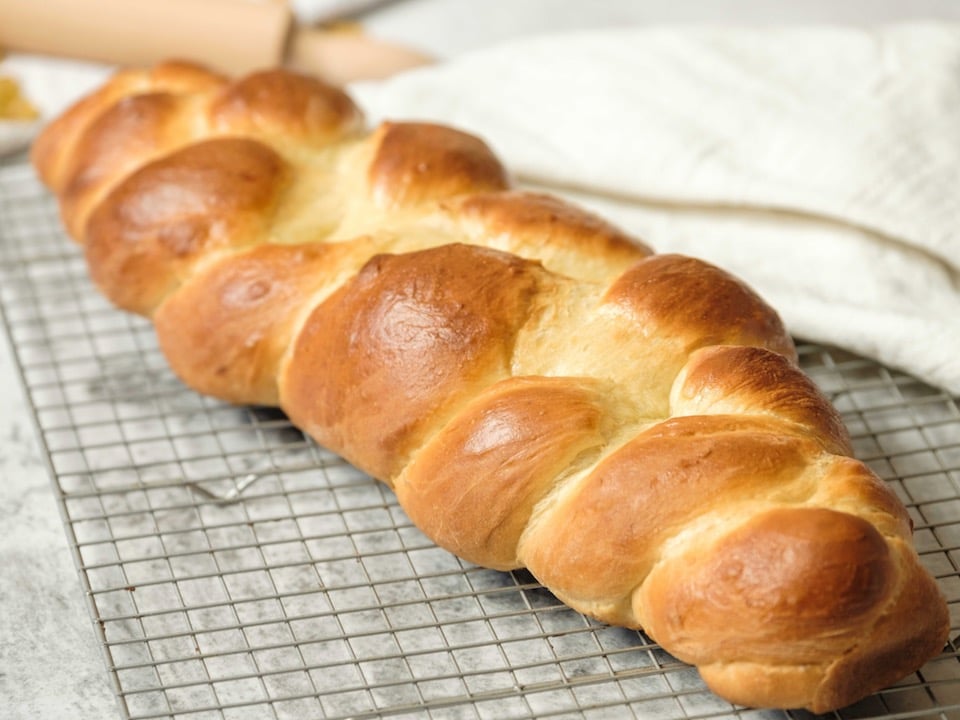
- The challah will need to bake for about 20 minutes longer. For this last part of the baking process, keep an eye on your challah—it may be browning faster than it’s baking. Once the challah is browned to your liking, take the tray out and tent it with foil, then place it back in the oven. Remove the foil for the last 2 minutes of baking time.Take the challah out of the oven. At this point your house should smell delicious. You can test the bread for doneness by turning it over and tapping on the bottom of the loaf—if it makes a hollow sound, it’s done. Let challah cool on the baking sheet or a wire cooling rack before serving.


NOTES
Nutrition


Hi! Will be making this for the first time with my kids, and they will of course each knead to braid their own loaves, haha. Will any of the times change if the loaves are smaller? Ie Shorter baking time? I’m imagining mini loaves/knots/lumps of dough. Thanks!!
Smaller loaves will require a shorter bake time. Best to monitor it closely and use the tap test for doneness– if it sounds hollow inside, it is done. You can also stick an instant read thermometer in the thickest part of the challah– when it reads 190, it is baked all the way through.
Hi – if i would like to make the challah in advance (2 days), how should i best store it? Both cooked and just the dough portion?
Thanks,
Hi Ariel, Tori’s assistant Ashley here. You can make the challah dough ahead of time and freeze it. Once your dough has completed its second rise, been filled and then braided/shaped, wrap it in several layers of foil and plastic wrap, then freeze. The night before you plan to bake your challah, allow it to defrost and complete its second rise in the refrigerator. Before you bake, allow the dough to come to room temperature, then bake as directed. Another option– if you’re going to the trouble of freezing, you may as well bake the whole thing ahead and freeze it fully baked in a freezer bag. You can reheat it from frozen in a 300 degree oven till warmed through, it will almost taste as though it’s been freshly baked. Enjoy!
I just wanted to thank you for this recipe and the copious notes. I’ve been making this challah recipe for the past 6 years and yours was the first yeast dough recipe I was able to complete that didn’t turn out like adobe bricks. I now make all kinds of breads and English muffins and ALWAYS use the oven sauna trick. Your challah recipe gets annual rave reviews at High Holidays, so thanks from my (extended) family and me!
I used to make challahs that turned out like bricks and I can say that the one thing that makes the biggest difference is using brand name (King Arthur, Gold Medal, etc.) flour. Buying the house brand just keeps the bricks coming.
If I want to take challah can I triple the recipe to use enough flour to say the bracha
Thanks Tori for the recipe and the tradition behind the Challah, making it much more significant! Totally agreed with what others have said! Tried the first time and the texture of this Challah recipe turns out to be so soft and yummy good! Loving it! God bless!
Is it possible to use self raising flour as that’s the only flour I have in. Or do I need to go and buy another type? Thanks
Hi Susie, you need to buy all purpose or bread flour instead. Self raising contains agents that make the dough rise/expand, which is what the yeast does in this recipe.
Thank you for sharing with all of us. Is this a family recipe or your own creation.
Hi Megan, Tori’s assistant Ashley here. This is her personal recipe. 🙂
Question!
If making two regular sized challahs, should you bake them at the same time or bake one and then the other?
(By the way, I’ve made the large challah before, and this is the best challah recipe out there! 🙂 )
Natalie, I tend to have better results when baking one at a time. 🙂 Good luck!
If you are making 2 regular sized challahs, and bake them separately, what do you do with the other rising dough while you are waiting for the first to bake? Just let it keep rising? Put it in the fridge?
You should only let it rise until you poke it and the indentation stays in the dough. After that you can refrigerate until ready to bake.
If omitting the honey for sugar to which would be the best for conversion?
Hi CJ, Tori’s assistant Ashley here. You should use 1/2 cup of sugar in place of the 1/3 cup of honey.
I made challah today, and the recipe is similar to yours. Having read your blog last week, I took your suggestion to egg wash the center of the braid where it had expanded after 20 minutes. My braids came out brown and wonderful. Thanks for that tidbit. Sometimes it is the little things that make the difference.
Hi! I want to try your recipe but I have a question – what type of flour do you use?? Im in Israel and they have all sorts – white flour with numbers I dont know what they relate to, like 1+, 2+ etc…and then they have all-purpose flour, cake flour, bread flour…”Kneadless to say” I could use some help! Thanks 🙂
I usually use all purpose, Sarah. Bread flour can also be used; it has a slightly higher protein content which can add strength to the dough. However, I haven’t noticed a huge difference in this recipe between the two, so I generally stick to all purpose. 🙂
Hi! My daughter and I are currently baking for tomorrow night! Generally how much flour would you expect to use? 4 cups plus or minus?
As the recipe states, it can vary. It’s all about the feeling of the dough.
Laura, 4 cups plus.
It’s only two of us; is it possible halve this recipe, please?
I do not recommend halving baked recipes as it can cause mixed results. However, any bread you make with this recipe can be frozen then thawed for future use. After thawing, I recommend putting in a 350 degree oven for a few minutes to refresh and heat up before serving.
Tori, thank you so much for this recipe! The bread comes out consistently outstanding: light, fluffy, flavorful! I use sesame seeds for the topping. I’ve made it already several times, and my family enjoys every time!
I also want to share my experience with baking half the portion (only 1 challah). I measure everything by weight and get absolutely great results. As Tori suggested freezing the baked bread or as I do – half the portion, measuring by weight, will give you great results! Again, thank you, it’s absolutely a star among the vaiety of bread that I often bake.
I’ve made challah before using various recipes. This was the best one yet and I finally found the family favorite. I paired this with the matbucha recipe and I honestly could have done without the rest of Shabbat dinner. I didn’t realize how much everything would expand and only made 2 challahs with it. I could have easily made 4. Thank you!
So happy to hear that! Two of my favorite recipes 🙂
Absolutely spectacular recipe. Everyone loved it. I made it into rolls. This will now be my go-to challah recipe.
Baruch HaShem!!! Thank you so much! This turned out amazing!!!!
Hi, I used my breadmaker to create the dough. I used 4.5 Cups unbleached flour…but it was sooo sticky. I just added more flour and kneaded it in a bit, because I could not work with it…Any ideas why it was sticky, and how to avoid it in the future? I did 1 Tbl. Avocado oil, and 1.5 Tbl. butter instead of EVOO, but didn’t figure that would make a difference. Thanks!
Hi Rachelle, Tori’s assistant Ashley here. We’ve never made this recipe using a breadmaker or with avocado oil, so unfortunately I can’t advise.
Love this recipe and come back to it over and over again! Just wanted to let you know that the link halfway down the photo tutorial to the Part II with how to braid the challah is broken.
Thanks,
Kate
Hi Kate, Tori’s assistant Ashley here. Thanks for letting us know! The link has been fixed now. 🙂
How long do you cook the Challah for?
Hi Amanda, Tori’s assistant Ashley here. The challah bakes for about 40 minutes total.
thank you! I am thinking of doing this for mothers day…
Tank your for this tutorial – this is even better than “braiding for dummies”! I braided two loaves (someone else’s awful recipe- will use yours next) and for a first-timer, they looked amazing. Question- do you have a preferred flour?
Hi Heidi, Tori’s assistant Ashley here! So glad you found the tutorial helpful. We typically use organic, unbleached all-purpose flour, any brand will do!