

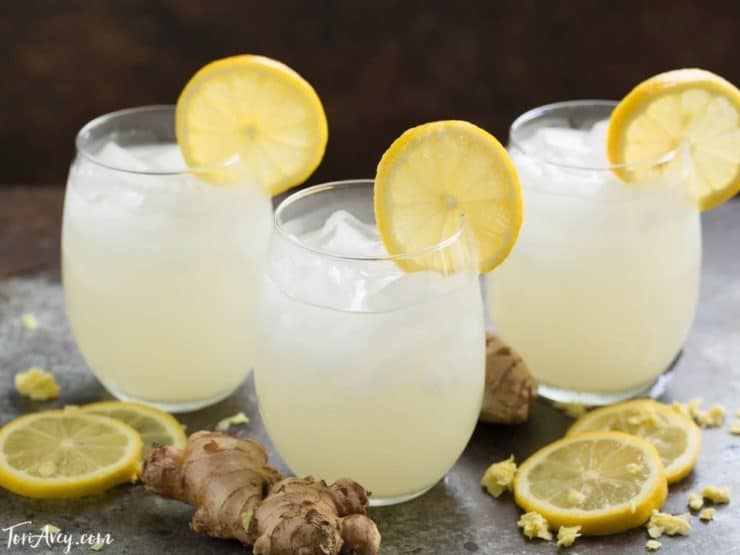
In this post I will teach you how to make ginger beer the old fashioned way, no soda machine or brewery required. This drink is nice and refreshing on a warm day; it’s also one of the main ingredients in the popular Moscow Mule cocktail. It’s easy, really, and surprisingly fizzy. I’ve outlined the recipe and process below, including a how-to video and photo tutorial.
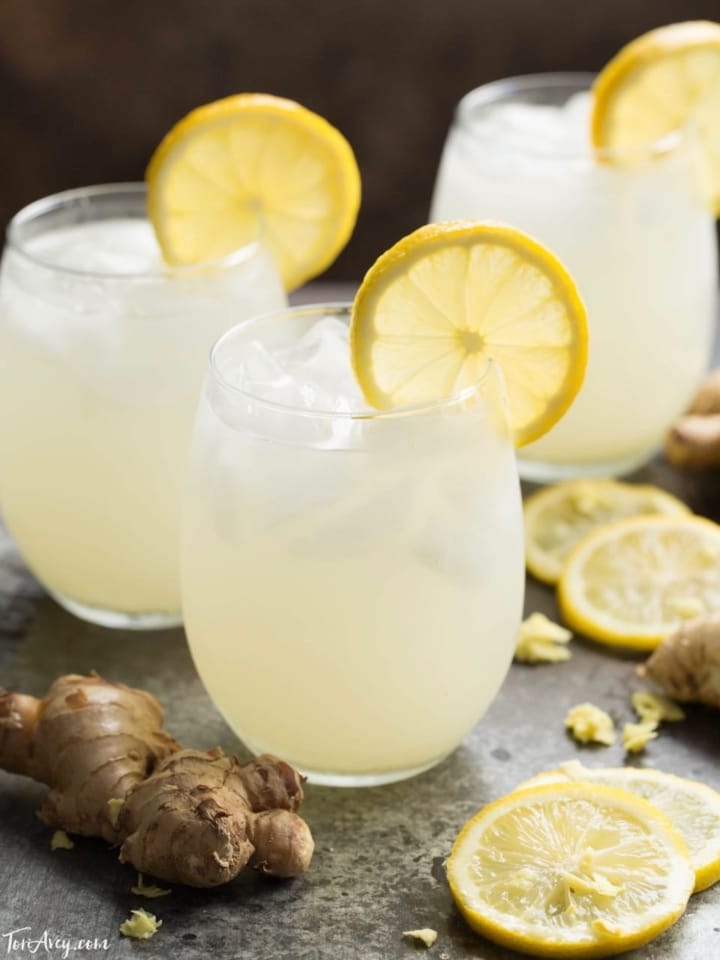
Ginger, with its zippy and refreshing taste, is listed among the world’s oldest spices. As far back as 500 BC, this native plant of China and India was used for medicine, food, and flavoring. For most of the Western world, ginger was used to spice up drinks. Up until the Victorian era, beer was the drink of choice in England, especially herbal and spiced low-alcohol “small” beers such as ginger beer.
I would be willing to bet that most us were introduced to the flavor of Zingiber officinale through ginger ale. I don’t know about you, but the zingy soda pop was my mom’s go-to cure for tummy aches. This non-alcoholic ginger ale made its American debut in 1866 when a Detroit, Michigan pharmacist named James Vernor installed a soda fountain in his drugstore. Vernor began playing around with ginger extracts, and in 1870 perfected his recipe, which included mellowing the syrup for four years in wooden casks. It’s not surprising that a pharmacist would chose ginger, as the rhizome was (and still is) known as a stomach soother. In fact, Vernor’s ads often touted “Mothers tell their children to ask for Vernor’s Ginger Ale because it’s wholesome and healthful.” Vernor’s Ginger Ale remains just as popular today.
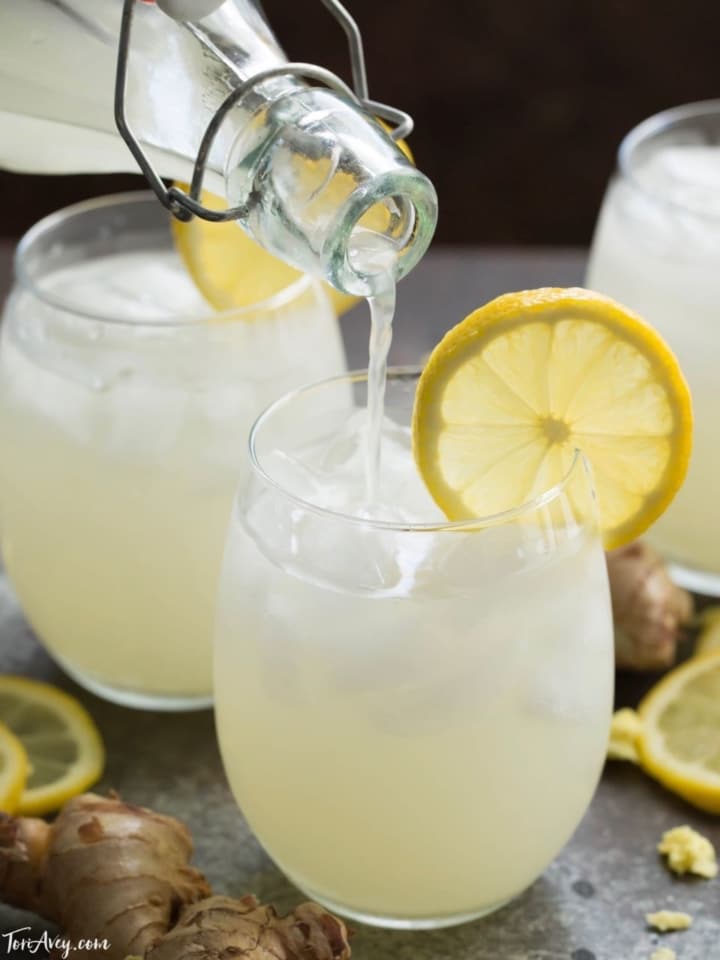
Ginger ale and ginger beer are both basically the same thing. It’s easy and inexpensive to make old-fashioned ginger beer at home, and you get more of a gingery taste than you do from the store-bought stuff. A bit of fermentation is involved, which produces a very slight alcohol content (not noticeable, but important to point out for those sensitive to alcohol). Some manufacturers ferment the mixture longer and make other adjustments to increase the alcohol content, but for our purposes this ginger beer is more akin to ginger ale. If you’re concerned, make the ginger syrup as noted below, but skip the fermentation process and mix it with seltzer water instead to produce a fermentation-free beverage.
Once you master the process of creating ginger beer, you’ll be hooked. It’s fun to ferment. Enjoy!
Recommended Products:
Video by Entice Films
We are a participant in the Amazon Services LLC Associates Program, an affiliate advertising program designed to provide a means for us to earn fees by linking to Amazon.com and affiliated sites. As an Amazon Associate I earn from qualifying purchases.
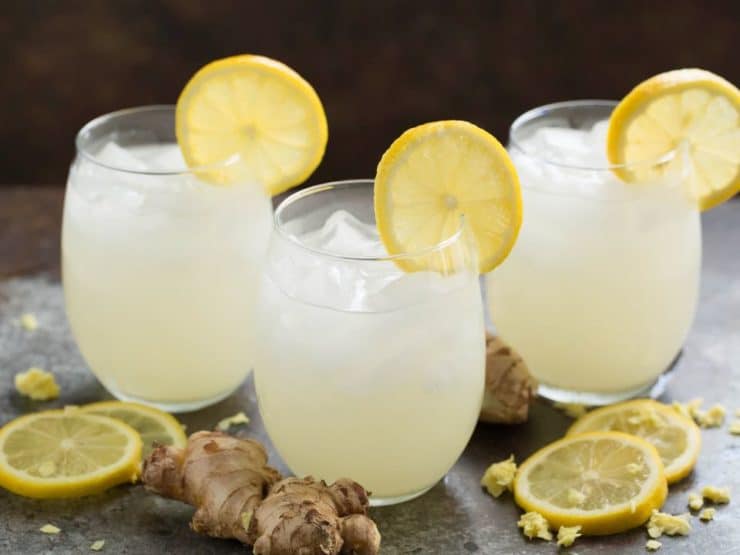
Homemade Ginger Beer
Ingredients
Ginger Syrup Ingredients
- 1 cup granulated sugar
- 1/2 cup water
- 2 tablespoons grated fresh ginger
Ginger Beer Ingredients
- 1/8 teaspoon active dry yeast or brewer's yeast
- Ginger syrup (ingredients above)
- 3 tablespoons lemon juice, freshly squeezed
- 7 cups filtered water
Instructions
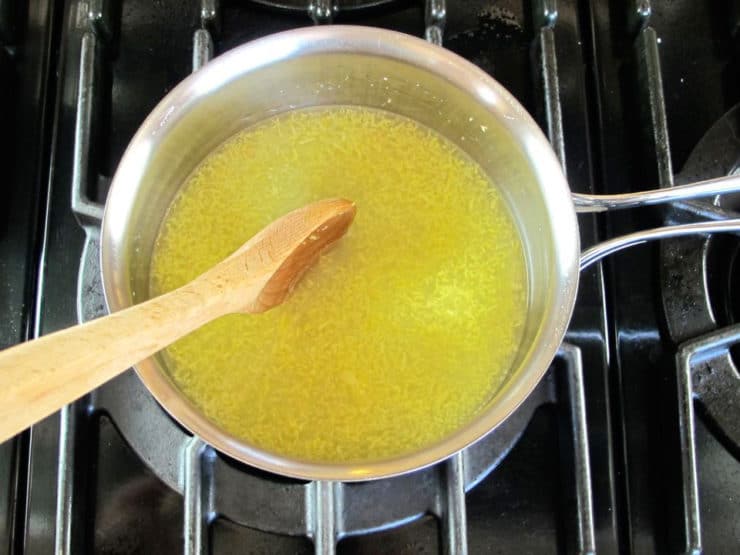
- Peel a chunk of the ginger with the tip of a teaspoon—the papery skin scrapes right off—and grate it, using the fine side of your grater. Place the ginger, sugar, and water in a saucepan over medium heat and stir until the sugar is dissolved. Turn off the heat and allow the mixture to steep for an hour.

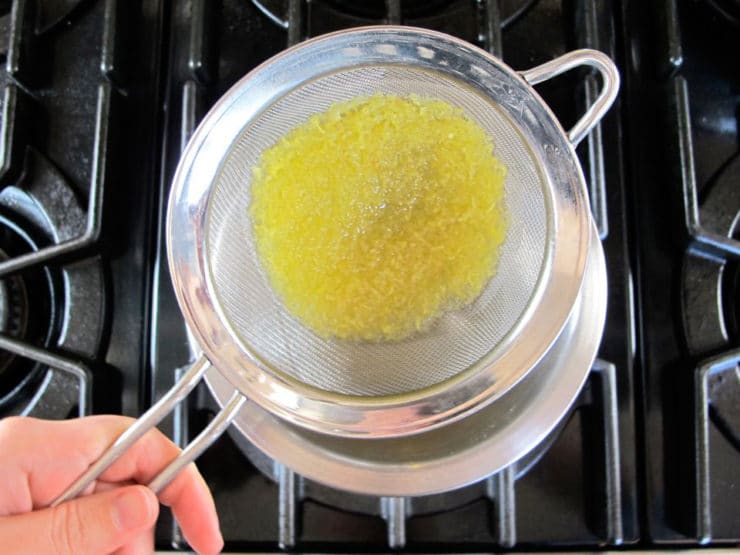
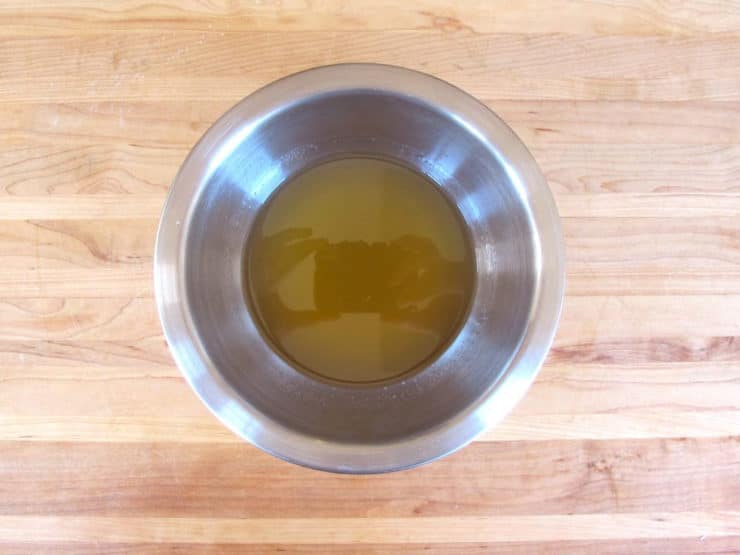
- Strain the mixture (discard the ginger solids) and allow to cool.
- You’ve now made ginger syrup (or gingerette, as the Brits call it). Stop right here if you’re looking for a short-cut to ginger ale and you don’t want to mess around with the fermentation process. Pour three or four tablespoons (more or less depending upon how gingery you like it) of your syrup over ice and add 8 ounces of seltzer water or club soda. Bottle the rest of the syrup and store it in the refrigerator.
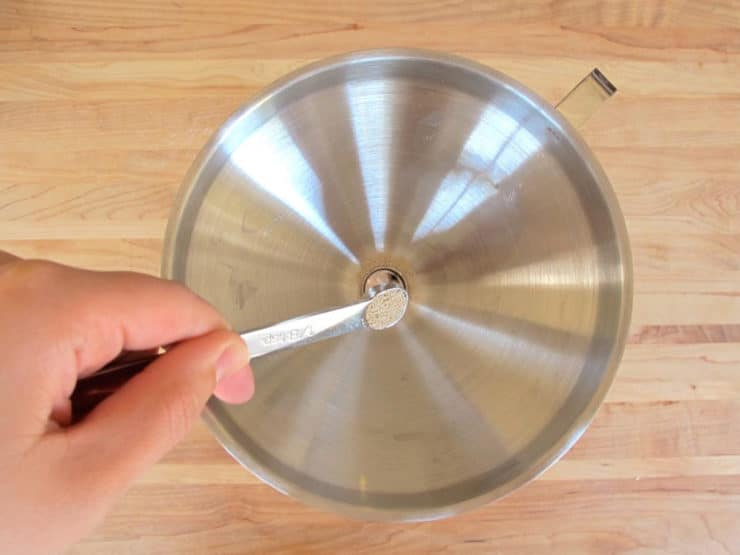
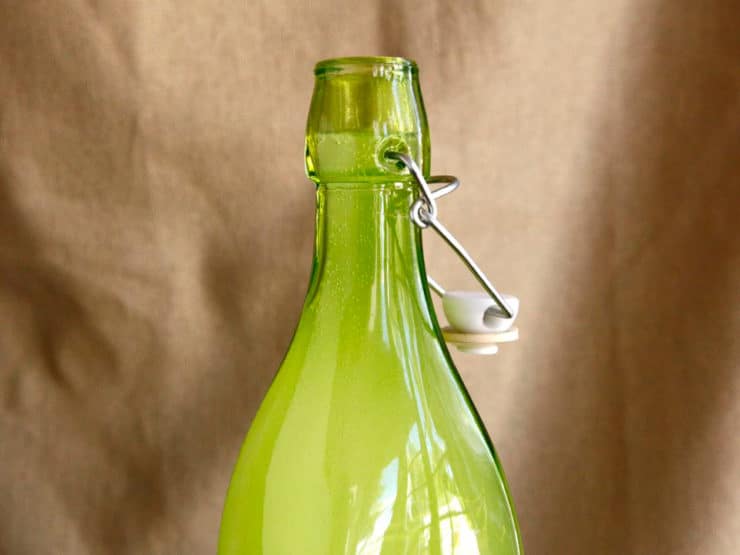
- For the full ginger beer experience, place a funnel in the top of the bottle. Sprinkle the yeast in, followed by the syrup, lemon juice, and water.
- Put the lid on the bottle and shake the concoction until the yeast is dissolved. Stow it on a shady shelf or in your pantry out of direct sunlight for 2-3 days, or until fizz is achieved. At this point it is ready to drink, and must be stored in the refrigerator to prevent further fermentation. Don't forget about the bottle, or the pressure will build up so much that it may explode!As with any yeast-powered beverage, the fermentation process continues unless you prevent it from happening. Refrigerating will slow the process down but not stop it completely, that's why it’s best to treat ginger beer as a perishable beverage. Consume within 1-2 weeks.
- Serve over ice and savor the spicy taste of your very own homemade ginger beer!
NOTES
Nutrition

tried this recipe?
Let us know in the comments!


I find that you need to ferment the ginger beer in a seperate container and then when fermentation is over tranfer it to a plastic container with a small amount of sugar.
If you ferment and drink from the same bottle when you open it for the first time you will get all of the spent yeast come up from the bottom and ruin the laste.
It’s just like making any other home brew.
Little confused here. Are you saying don’t add the sugar at time of yeast? I have had yeast rise as you say..would live to NOT have it. Please describe clearer. Thank you.
Yeast needs the sugar, he is saying don’t keep it in a sealed bottle during primary fermentation to avoided explosions. Once the primary fermentation has completed transfer to the bottle, add a little sugar to start a secondary fermentation which will carbonate the liquid, still be careful of pressure buildup.
But you’re not making homebrew. You’re basically just doing a secondary fermentation to give fizz to a non-alcoholic beverage. If you want to make alcohol out of gingery sugar, and then throw some fizz into it, yes, you’d do primary and secondary. This is more like JUST using the yeast to produce carbonation, NOT to make alcohol, except as an incidental, secondary factor. Because you’re doing this with a really sugary beverage, you’re inherently at a risk for bottle bombs, so you let it reduce the gas when you open to drink it.
The problem I’m having is that I have a lot of fizz after only a half day and not a lot of taste at the end of two days. It tastes like Champagne. This has happened with another recipe. How can a get a good sweet gingery taste? Sort of like Rachel’s Ginger Beer from Seattle. Can anyone help?
U r the best . Oh I made it n its awesome. The best recipe for Ginger beer.
Thanks a lot .
Love from India
This is a really great article. It got me started making my own Ginger Beer. I’ve made this a few times sometimes using a ginger bug. Also I leave the grated ginger in the bottle while it ferments and filter it all out just before I serve it. It seems to “keep” the spiciness better. I also use a special collander meant for washing rice that filters out a lot of the solids. I tend to use about 8 Tbsp of ginger per bottle (I love ginger). An interesting variant adds Cayenne Pepper, Cloves and Cinnamon giving it a Carribean flavor.
Dave can you leave more detailed instructions on what you did? I like really spicy ginger beer (as I added it to bourbon) and am interested in adding cloves. Also, where did you get the recipe for your ginger bug? Thanks!
Just made this for the first time and I am very impressed by how easy and tasty the beer is. Does anyone know how alcoholic it is?
As a beer brewer the only way I measure alcohol content is with a hydrometer to measure gravity of the
concoction before fermentation and after fermentation. After fermentation the gravity should be around zero. Not sure what the gravity would be prior, negligible I should imagine, as you are only
fermenting for carbonation, less than 1 % I’d suggest. With home brewing starting gravity gets to around
1.050 or higher to give a final reading of 1.000 – 4 -5% alcohol. On bottling a further smaller amount of sugar is added to the bottle for carbonation, that is all that would be happening here. increasing sugar content and proportionally, the yeast will yield alcoholic ginger beer.
My mom always added raisins in her ginger beer, how will raisins effect the ginger beer? Has anyone tried it?
The purpose of the raisins is to get some natural yeasts present on the raisin skins rather than brewers yeast into the fermentation process. The theory is that this process produces a product closer to that produced by the so called ancient ginger beer plant.
Th start one of these “plants” off, mix together water, sugar, grated ginger and or powdered ginger, lemon juice, lemon zest and about 9 raisins The ratios are not super critical. Feed this “plant” daily in the usual manner and after about 2 to 3 weeks, the plant should be fermenting away and be able to ccreate a brew in the usual way.
My mother used to make a traditional Finnish fizzy lemon drink that is prepared very similar to ginger beer. She alway put a couple of raisins in each bottle. The theory was when the raisins floated to the top the drink was fermented enough and ready to drink.
Hey I got a question, do I open the bottle everyday, right from the beginning, or only after 2-3 days when it’s ready to drink?
Looking forward to try it out 😀
Hi, Tori’s assistant Ashley here. You can open the bottle every day, right from the beginning. Enjoy!
Excellent. Halved the sugar. Very simple and easy recipe, tastes delicious. Thanks for sharing.
Just remember, the sugar is not for you it is for the yeast.
I could see a situation where if you didn’t go through the whole yeast production process that halving the sugar content could help. But if producing yeast cultures, they definitely need the sugar to survive!
I tried the recipe. Really looked forward to tasting. But it’s flat. It never began to create the bubbliciousness… Any suggestions. Already tried to add more yeast – still not working.
(And yes – I followed the recipe step by step)
Does your water have chlorine? The yeast would be killed if that’s the case. Try buying a gallon of spring water and give that a shot.
It is very important to NOT add yeast to hot wort. The boiled mixture must be cooled to room temp. Otherwise the yeast is easily killed. Also, you can test the yeast with a small glass of warm water and sugar to verify that it is living. Add a
pinch of yeast, stir, and look for bubbles or movement after 5-10 minutes of standing.
Okay. So. I have a SodaStream seltzer maker. Can I make ginger beer without the yeast using the soda maker instead? Also, what if I use Stevia instead of sugar to sweeten (since you don’t NEED yeast) ??
I’m ready to start right now. Thanx.
Use non chlorinated water
I’ve made this several times, but my current batch has something floating on top. I’ve. Ever seen it before. Is it mold? It’s patchy and the same color as the sediment at the bottom.
Part of the reason you use the lemon juice is to create an environment where only the yeast can grow. I’m inclined to believe it’s Krausen, a beer making term to describe the frothy buildup on top of fermenting beverages. It’s carbon dioxide bubbles trapped in wort and yeast proteins. Should be a-okay.
I haven’t made this yet but I do want to try.
Has anyone used a wine fermenter to let out the gas bubbles.
Yes and it was flat. Big mistake!
I make my own beer and have bottle C02, I used the recipe and gassed the bottle with the syrup water (chilled) and instant carbonated Ginger beer, so nice!
5 Stars!!
Did you use the dry yeast or brewers yeast?
Jim: As far as I know; When you make ginger ale instead of ginger beer (aka pour the syrup over carbonated water) you don’t need the yeast, as the yeast is there to create the bubbles.
Phillip I also have my own Co2 set up was the recipe too sweet and would you cut the sugar in half since we’re adding our own carbonation
I am excited to try! I let inside the bottle for the fermentation. I have a doubt, during the fermentation I open a bit to avoid the bottle to explode. However, the ginger beer starts bubbling and once I close the bottle gets the pressure quickly. Does it mean that I should let the bottle with pressure and only open once a day remove the over pressure? Does the pressure helps directly in the fermentation process?
Another thing, I notice a sediment in the bottom. Should I remove that before drinking?
Thanks a lot!
Opening once a day should be enough. If you let it open, you might not get as much carbonatation as you need. The pressure does not “help” the fermentation process, actuallyvis a result of it. If you think you are getting too much pressure, try to reduce the quantity of yeast you’re using. As for the sediment, you dont need to remove it. I usually avid shaking the bottle and simply do not serve when its about to finish. Trying to remove the sediment if not done properly may leave to mixing the sediment with the liquid or losing a big deal of the carbonatation. I personally think it is not worth the trouble!
Just made it 3 days ago. Very delicious, light, and refreshing. I think I will try other tart fruit juice in place of lemon next time. What do you think raspberry or orange?
I haven’t tried this yet, but I love a bit of lime (and rum) in my store-bought ginger beer. I cannot wait to give this recipe a go, and I plan on skipping tight to lime. Orange sounds pretty good – let us know how it works!
Pretty sure you need LEMON when using the yeast version (?)
Why not put a small hole in the bottle cap, to keep it from exploding?
And why not heat the brew to kill the yeast and stop the process at the perfect point?
If you put a hole in the lid, all the gas will slowly leave the fluid and escape. Just like when you leave the lid off from a bottle of fizzy drink (it goes flat). The pressure is needed to stop more CO2 from coming out of the S olution.
The same thing will happen if you heat it the drink to kill the yeast – instant flat ginger beer.
A small hole would cause all the CO2 to escape resulting in a flat ginger beer. Heating it would kill the yeast but also causes gases to expand, if you heated in the bottle it would explode, heating out of the bottle would make it flat.
A hole in the lid with negate the carbonation of the liquid. very sad flat drink.
Heating the liquid will degas the beverage – very sad hot flat drink.
You can buy water purification tablets from camping shops that will kill the process, but drop one in, and close the lid quick. The gas will try to escape like mentos in a coke bottle, but if you contain it – all good – process ceased, gas retained and happy cold and gassy drink.
“Trust me, I’m a scientist”
Delicious ginger beer and so easy to make!
How much ginger syrup do you add to the recipe for fermenting
I will find out if it works for me in a couple of days, but I was wondering that no one mentioned the ginger leftovers. I put them on parchment paper and in my oven overnight. It’s a 52 okeefe and Merritt so it’s warm all the time. The ginger soaked up so much of the sugar I really hope to have ginger candy in the morning. Has anyone tried this?
My father made it but a different way. He started off with yeast and water then every day for 6 weeks “feed” it a spoonful of ginger and sugar. After the 6 weeks half of solid mater was retained and water added for the next batch. the solids were filtered out then added to an amount of water for 6 bottles along with lemon rind. That was 50 years ago so don’t remember any more details!
Hi, Instead of using the yeast, would it work for fermentation if I use one of my SCOBY’s from the Kombucha I brew?
Hi Sue, Tori’s assistant Ashley here! We’ve never experimented with kombucha, so unfortunately I’m not able to answer this question for you.
Although kombucha feeds on tea , it also loves ginger so i would say give it a shot! Traditionally made with ginger beer plant which is a water kefir thats fed sugar and ginger. INJoy!
To stop the fermentation process you can pop the bottle in the freezer for about 40 minutes. The cold temperature will kill off the yeast (giving you a beverage with a nearly unlimited shelf life health wise, not so much quality wise). Also, some brewing supply stores carry yeast killing agents (primarily used by wine makers) which you can use at the end of “working” (brewing period). This period varies and in some cases depends on how much carbonation you want but typically is between 1-3 weeks (depending on room temperature and the quality of your yeast). Oh, and during the “working” it is typical to check on the bottle/bottles every 48 hours and every 72 hours alternating between the two. In hotter room temperatures (above 62-77Fahrenheit) check the bottle/bottles every 36 hours.
P.S.
Use brewers yeast (not to be confused with champagne or wine yeast although they are similar in the sense that they are both debittered yeast), it is sold online and in health food stores. It is also known as debittered yeast (for good reason, bakers yeast leaves behind a bitter aftertaste in your brewed beverages and thus unless you are planning on long-term brewing for high alcohol levels which tempers that taste out of the beverage, brewers yeast is the way to go).
I meant to add to the checking time frame that this is when you release the gas from the bottles as well.
Why would the freezing ruin the flavor? There aren’t any cells left to destroy, apart from the yeast.
Believe me, you don’t want to know what those yeast killing agents are made of…