

In this post I will teach you how to make ginger beer the old fashioned way, no soda machine or brewery required. This drink is nice and refreshing on a warm day; it’s also one of the main ingredients in the popular Moscow Mule cocktail. It’s easy, really, and surprisingly fizzy. I’ve outlined the recipe and process below, including a how-to video and photo tutorial.
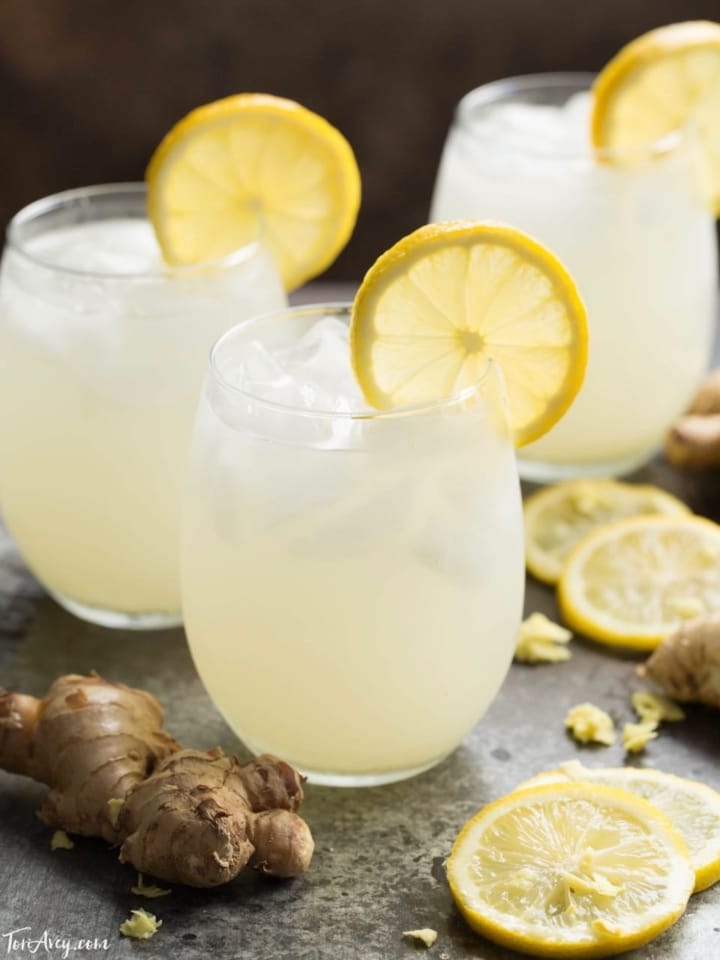
Ginger, with its zippy and refreshing taste, is listed among the world’s oldest spices. As far back as 500 BC, this native plant of China and India was used for medicine, food, and flavoring. For most of the Western world, ginger was used to spice up drinks. Up until the Victorian era, beer was the drink of choice in England, especially herbal and spiced low-alcohol “small” beers such as ginger beer.
I would be willing to bet that most us were introduced to the flavor of Zingiber officinale through ginger ale. I don’t know about you, but the zingy soda pop was my mom’s go-to cure for tummy aches. This non-alcoholic ginger ale made its American debut in 1866 when a Detroit, Michigan pharmacist named James Vernor installed a soda fountain in his drugstore. Vernor began playing around with ginger extracts, and in 1870 perfected his recipe, which included mellowing the syrup for four years in wooden casks. It’s not surprising that a pharmacist would chose ginger, as the rhizome was (and still is) known as a stomach soother. In fact, Vernor’s ads often touted “Mothers tell their children to ask for Vernor’s Ginger Ale because it’s wholesome and healthful.” Vernor’s Ginger Ale remains just as popular today.
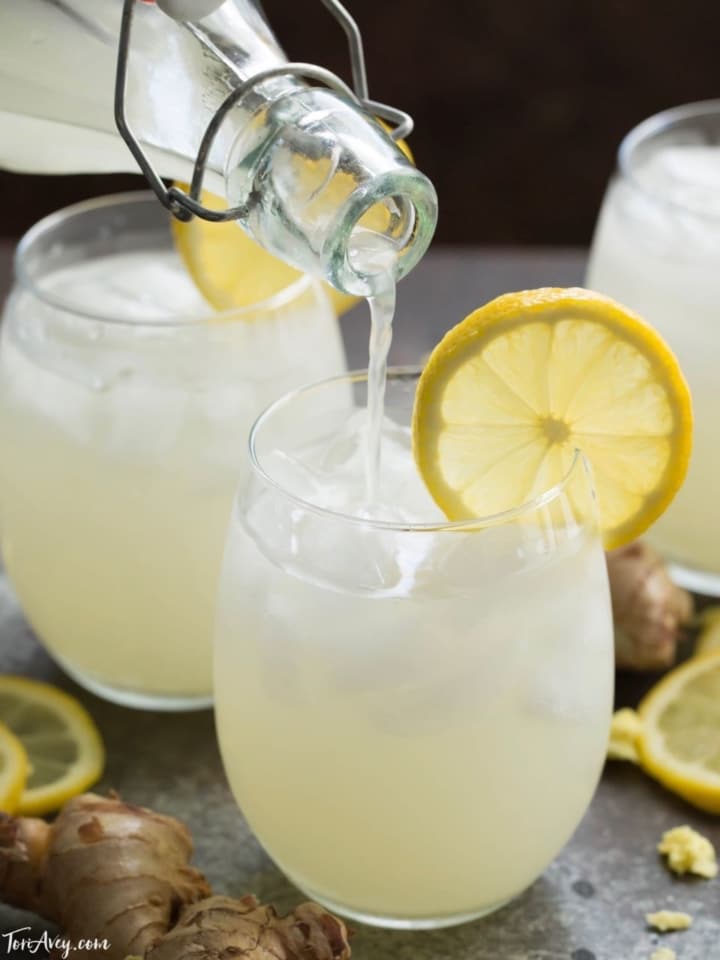
Ginger ale and ginger beer are both basically the same thing. It’s easy and inexpensive to make old-fashioned ginger beer at home, and you get more of a gingery taste than you do from the store-bought stuff. A bit of fermentation is involved, which produces a very slight alcohol content (not noticeable, but important to point out for those sensitive to alcohol). Some manufacturers ferment the mixture longer and make other adjustments to increase the alcohol content, but for our purposes this ginger beer is more akin to ginger ale. If you’re concerned, make the ginger syrup as noted below, but skip the fermentation process and mix it with seltzer water instead to produce a fermentation-free beverage.
Once you master the process of creating ginger beer, you’ll be hooked. It’s fun to ferment. Enjoy!
Recommended Products:
Video by Entice Films
We are a participant in the Amazon Services LLC Associates Program, an affiliate advertising program designed to provide a means for us to earn fees by linking to Amazon.com and affiliated sites. As an Amazon Associate I earn from qualifying purchases.
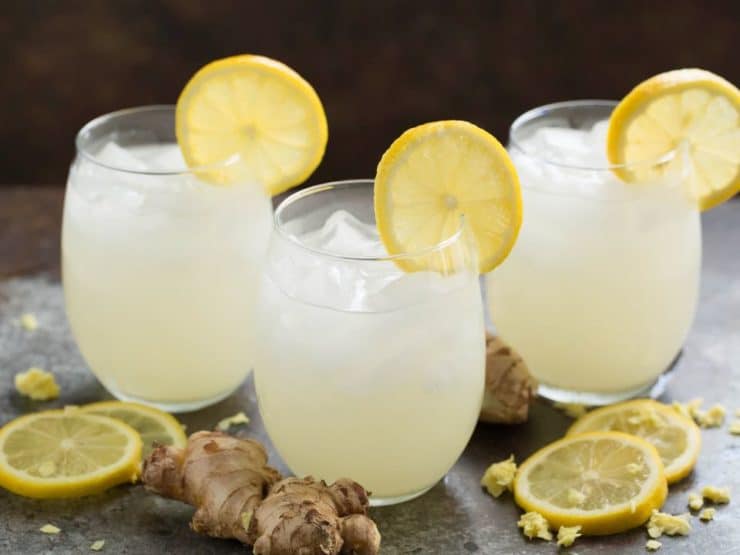
Homemade Ginger Beer
Ingredients
Ginger Syrup Ingredients
- 1 cup granulated sugar
- 1/2 cup water
- 2 tablespoons grated fresh ginger
Ginger Beer Ingredients
- 1/8 teaspoon active dry yeast or brewer's yeast
- Ginger syrup (ingredients above)
- 3 tablespoons lemon juice, freshly squeezed
- 7 cups filtered water
Instructions
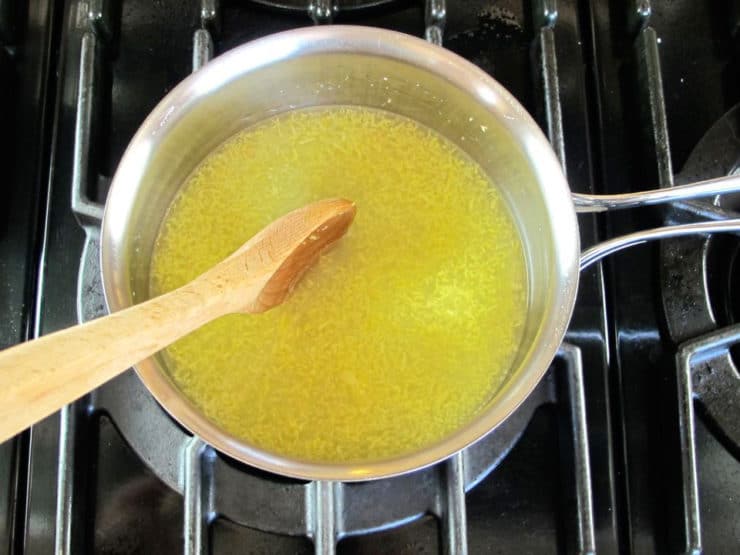
- Peel a chunk of the ginger with the tip of a teaspoon—the papery skin scrapes right off—and grate it, using the fine side of your grater. Place the ginger, sugar, and water in a saucepan over medium heat and stir until the sugar is dissolved. Turn off the heat and allow the mixture to steep for an hour.

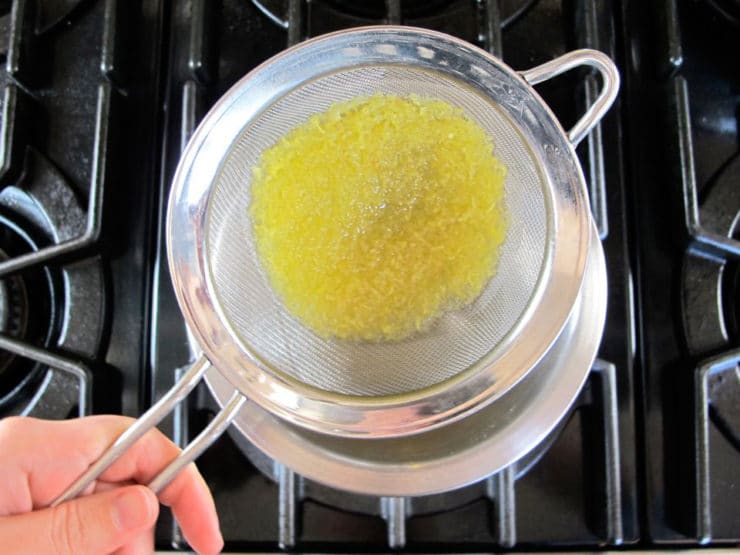
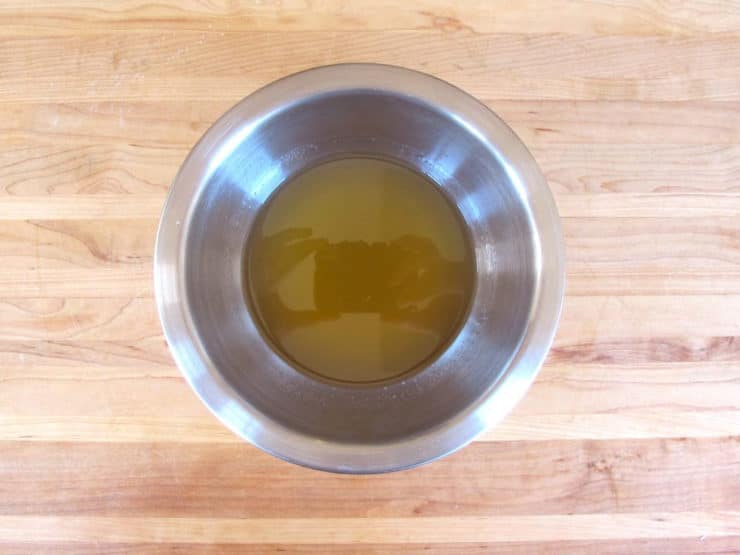
- Strain the mixture (discard the ginger solids) and allow to cool.
- You’ve now made ginger syrup (or gingerette, as the Brits call it). Stop right here if you’re looking for a short-cut to ginger ale and you don’t want to mess around with the fermentation process. Pour three or four tablespoons (more or less depending upon how gingery you like it) of your syrup over ice and add 8 ounces of seltzer water or club soda. Bottle the rest of the syrup and store it in the refrigerator.
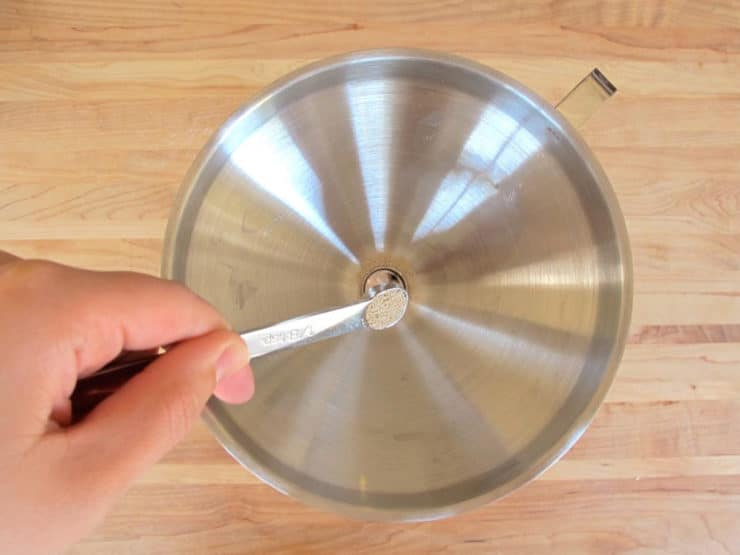
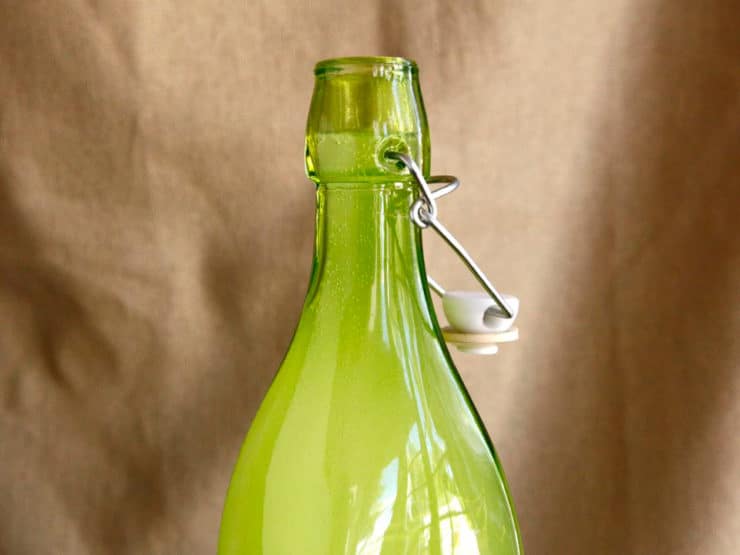
- For the full ginger beer experience, place a funnel in the top of the bottle. Sprinkle the yeast in, followed by the syrup, lemon juice, and water.
- Put the lid on the bottle and shake the concoction until the yeast is dissolved. Stow it on a shady shelf or in your pantry out of direct sunlight for 2-3 days, or until fizz is achieved. At this point it is ready to drink, and must be stored in the refrigerator to prevent further fermentation. Don't forget about the bottle, or the pressure will build up so much that it may explode!As with any yeast-powered beverage, the fermentation process continues unless you prevent it from happening. Refrigerating will slow the process down but not stop it completely, that's why it’s best to treat ginger beer as a perishable beverage. Consume within 1-2 weeks.
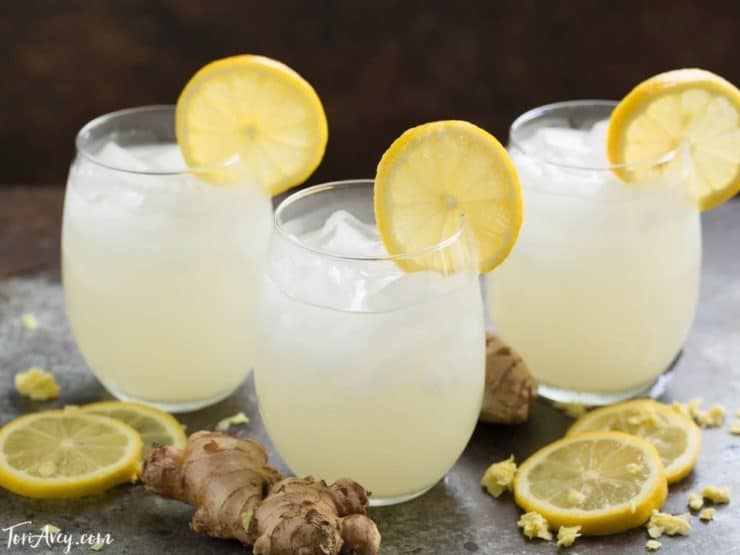
- Serve over ice and savor the spicy taste of your very own homemade ginger beer!
NOTES
Nutrition

tried this recipe?
Let us know in the comments!


What to do if I want to flavor it with fruit flavor?
Hey there. This might be a stupid question. I didn’t open the bottle as it fermented, but opened it on the third day and drank the stuff it was fine.
Was it alcoholic by that point? I hope not. I never even thought of that!!
Hi Phil, my guess is with that short a fermentation, the amount of alcohol would be negligible.
Hello, I’m a beer brewer. A couple thoughts:
1) Any yeast will work, even bread yeast.
2) The amount of sugar you put into this will cause it to continue fermenting in the fridge. You cannot leave this sealed without extra work. Step #7 in the blog addresses this. Even if you let the gasses out, it will get less sweet and more alcoholic every day. Yeast eat sugar, pee alcohol, and fart CO2. This is where the carbonation comes from. If you have constant carbonation/gasses to release then you also have constant alcohol.
3) You would be better off using soda water and putting the syrup in it or simply making the soda as directed and dropping a little dry ice in it(look up the ratio. Don’t want to explode the bottle do we?) This will be stable.
4) If you want it alcoholic, just lay the lid on the bottle you are using but don’t screw it in. It will ferment just fine. Airlocks are unneeded. I make apple cider this way. $2 worth of GV apple juice, a squirt of lemon juice, and 1/4 packet of Montrachet yeast. The more sugar added, the higher the alcohol content.
The recipe sounds easy. I have kegging equipment and I am interested in making a diet version myself.
I would like to make this with a higher alcohol . The ginger ale was a success but was flat the second day. Can you give more details on this? How about a recipe for the ginger or the cider?
These tips and explanations really useful. Going to start my first batch today
Thanks so much! Sounds like the recipe my mom used to make. She would add 2 raisins to each bottle. When you put them in, they sink to the bottom. One the Brew has fermented, they float to the top, so you know it’s ready.
This is a great tip!! LOVE IT!!
Used this recipe as a basis of my alcoholic Ginger Beer, 11%, so its a flavoursome recipe. Last batch fermented for so long, all the solids dropped out and left with water clear ginger beer with full on Fizz and flavour. FYI to make crystal clear highly alcoholic Ginger Beer, your looking at nearly 3 months from making to drinking.
Rick, Did you just leave the bottle on the shelf to continue fermenting or did you take other steps?
Hi all! Thank you for this recipe! I am totally obsessed with dark and stormy’s and when I read the ingredients on goslings ginger beer which I had been using, “ginger beer flavor”! I nearly barfed all over! So I set out to make my own with ginger that I love love love. Have made this recipe several times and each time, not enough fizz. Still good ginger flavor, but I need the fizzy bubbles. So can someone explain (in special ed detail) this secondary fermentation process? I’d really like to master this home made ginger beer thing! Cheers everyone!
If you want to carbonate the beer better, what you’d do is use a plastic bottle. See what regular carbonation feels like with the bottle – how hard is it?
When making the beer cap it tight. Check morning and night how hard the bottle gets from fermentation. If it’s hard, it’s carbonated. The fridge slows down the fermentation a lot but won’t stop it. So it’s slightly dangerous to keep more than a few days.
Can you say more about the yeast you used? I prepared a batch of this using brewer’s yeast, but I’m 48 hours along and very little pressure (or fizz) has come about. I’m beginning to think I should’ve used a different kind of yeast than off-the-shelf brewer’s yeast. I have looked around to see that there are all variety of champagne yeasts and other active yeast options, but then I’m also seeing that it’s important to choose a yeast suited to the ingredients. I’d be grateful for any perspective you can share. Thanks!
brewer’s yeast (for ales) is most active between something like 65-75 degrees and it will die if it is added when the mixture is too hot. It also is less active if it’s been sitting on a shelf for a long time without refrigeration. Brewer’s yeast would likely ferment more quickly than bread yeast. sounds like your yeast is dead if it didn’t ferment at all.
Hi, I haven’t made this recipe yet!
However, I have heard and read that Brewers yeast is a slower acting yeast compared to bread yeast. I suppose it is to allow the beer to ferment longer making the alcohol content get stronger, as it is the sugar that makes the alcohol and the longer you leave it the stronger it gets! Perhaps this is also why whisky etc is better when it is years old. Don’t quote me on the last bit, but to me it makes sense but I am just presuming.
rightly Missy i kinda enjoy an chuckle slightly to myself cause you young folks sure as shoot use the same recipes my old granny taught me way back yonder too pass on what was known as family traditions, i jus can’t quite recon thpugh why don’t folks still teach what we knowed as horse sense.
My ginger don’t have that colour so yellow.
It has a darker brownish colour.
I’m trying this recipe to honour the Caribbean ginger beer which I drank a lot back then.
Mine too, but I use demerara sugar and, in place of the lemon, a very tart orange juice
During the 2-3 days it sits in a darker place, do we burp it then as well, or is it only after the 2-3 days
during. better yet, get an air-lock that’ll let gas out but not in. 🙂
Try omitting the yeast as it occurs naturally. Slower fermentation process but it avoids the yeast taste beer taste
Ginger “bug” can be added…
Could you make the whole thing in a pressure cooker? That way fermentation pressure would not be a problem.
Hi!! I tried making this but it had a very decidedly alcohol flavor/smell to it. How do I make this so it’s completely non-alcoholic?
Hi Sunshine! Anything that is fermented will have naturally occurring alcohol. If you want to avoid this completely, I suggest referring to step 3 in the recipe and adding the ginger syrup to seltzer or club soda.
The fine grater jammed horribly on ginger so I had to old-school mince it. I’m using Chinese ginger though. Also started getting a bit of sugar precipitation while steeping but I good scrape and stir sorted that out. I must say, fantastic flavor.
Freeze the ginger first
Love these old recipes. My Mum made Ginger ale as it is easier to make and Ginger wine. Can’t get the cordial it was made from in Canada unfortunately. An old Glasgow soft drink is “sugar ally water” made by putting in one of these wee liquorice sticks., the really strong ones in a soda bottle, corking it and leaving it under the bed for a week at least. It will only dissolve the liquorice if kept under the bed so don’t try to mature it anywhere else.
Can you make a ginger beer even without the club soda?
I’m really excited about this recipe! I want to make the fermented version for a taco party but wanted to know what will happen if it fermented for longer than the suggested 2-3 days? Will it taste bad???
No it won’t taste bad… just stronger the longer it ferments. 🙂
Tried this recipe and it was very tasty. My family is from Jamaica so I grew up drinking ginger beer. loved the authentic spiciness of the ginger in this recipe.
So I just made this for the first time and the flavour is great but the soda is flat.
What happened was when I opened the bottle to try it, I had to slowly open and close the cap to keep the bottle from overflowing. It was going to spill everywhere. So by the time I got the cap off, there was no carbonation left.
How do I fix this problem? Should I put it in the refrigerator for a day or something before trying?
That happens to me from time to time. I open it over a clean large mixing bowl. After the initial explosion, I pour all the contents through a sieve since I don’t make syrup but place all ingredients in the bottle. Then I pour it all back in the bottle with a tablespoon of honey. That seems to be enough to reactivate the yeasts to create carbonation. This is also know as a “secondary fermentation” in the lexicon of home brewing. In a couple days, it’s all fizzy again.
I think this recipe is basically very sound though I have adjusted it for my own purposes and I make 20 litres at a time. I can’t be bothered with peeling the ginger; I simply shove it all in the blender and then, in a large pan, heat it with demerara sugar and water (ratio circa 1:3:1. I then put 3 litres of the cooled syrup into a 20 litre plastic carboy, plus 500cc of a very sharp orange juice we grow locally, and top up with 16.5 litres of fresh water, adding 1.25 teaspoons of dried yeast. Give it all a good shake and let it ferment for two or three days, after which I put into lire bottles and refrigerate
What’s the alcohol %? I’d like to make something with about 2%
Thank you, that’s more likely what I want to do.
I love ginger beer. But I like to use a airlock for a longer fermentation and get a more sour taste without the risk of explode the bottle