

In this post I will teach you how to make ginger beer the old fashioned way, no soda machine or brewery required. This drink is nice and refreshing on a warm day; it’s also one of the main ingredients in the popular Moscow Mule cocktail. It’s easy, really, and surprisingly fizzy. I’ve outlined the recipe and process below, including a how-to video and photo tutorial.
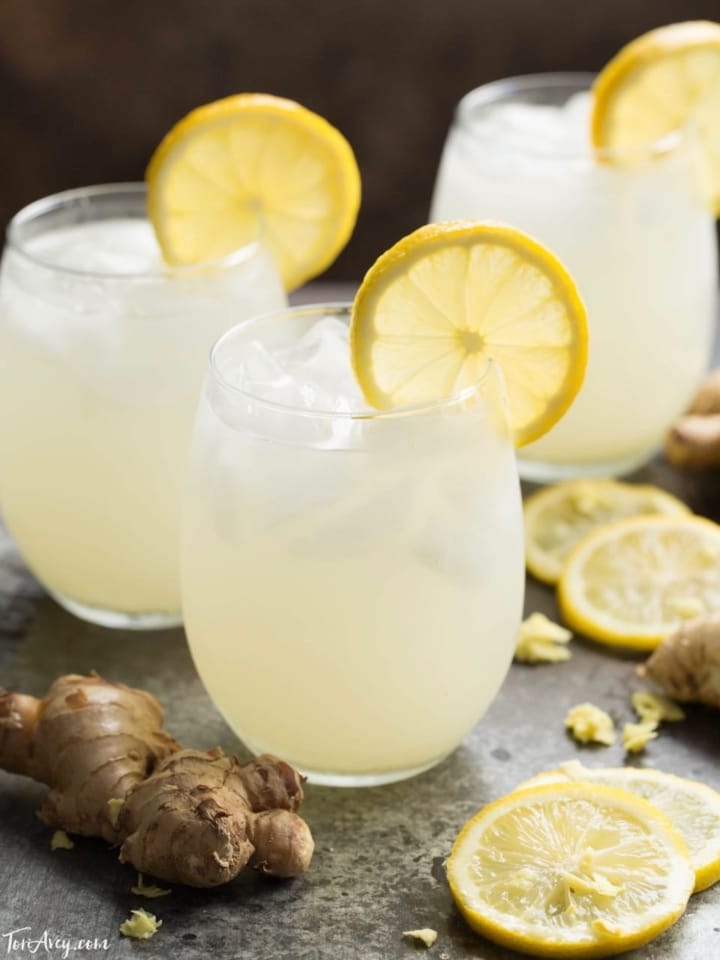
Ginger, with its zippy and refreshing taste, is listed among the world’s oldest spices. As far back as 500 BC, this native plant of China and India was used for medicine, food, and flavoring. For most of the Western world, ginger was used to spice up drinks. Up until the Victorian era, beer was the drink of choice in England, especially herbal and spiced low-alcohol “small” beers such as ginger beer.
I would be willing to bet that most us were introduced to the flavor of Zingiber officinale through ginger ale. I don’t know about you, but the zingy soda pop was my mom’s go-to cure for tummy aches. This non-alcoholic ginger ale made its American debut in 1866 when a Detroit, Michigan pharmacist named James Vernor installed a soda fountain in his drugstore. Vernor began playing around with ginger extracts, and in 1870 perfected his recipe, which included mellowing the syrup for four years in wooden casks. It’s not surprising that a pharmacist would chose ginger, as the rhizome was (and still is) known as a stomach soother. In fact, Vernor’s ads often touted “Mothers tell their children to ask for Vernor’s Ginger Ale because it’s wholesome and healthful.” Vernor’s Ginger Ale remains just as popular today.
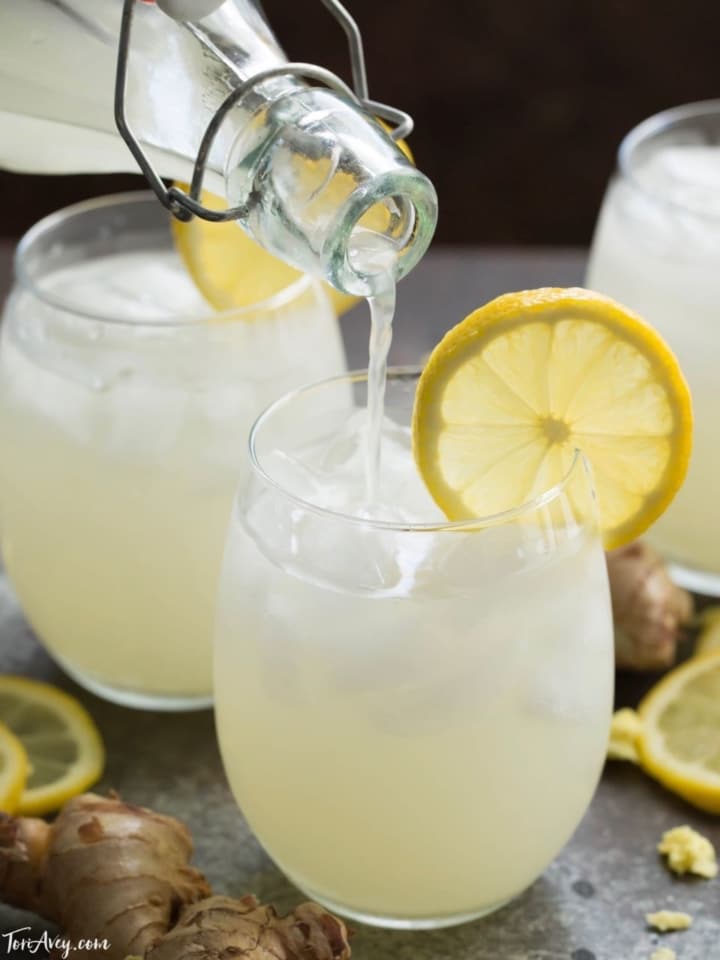
Ginger ale and ginger beer are both basically the same thing. It’s easy and inexpensive to make old-fashioned ginger beer at home, and you get more of a gingery taste than you do from the store-bought stuff. A bit of fermentation is involved, which produces a very slight alcohol content (not noticeable, but important to point out for those sensitive to alcohol). Some manufacturers ferment the mixture longer and make other adjustments to increase the alcohol content, but for our purposes this ginger beer is more akin to ginger ale. If you’re concerned, make the ginger syrup as noted below, but skip the fermentation process and mix it with seltzer water instead to produce a fermentation-free beverage.
Once you master the process of creating ginger beer, you’ll be hooked. It’s fun to ferment. Enjoy!
Recommended Products:
Video by Entice Films
We are a participant in the Amazon Services LLC Associates Program, an affiliate advertising program designed to provide a means for us to earn fees by linking to Amazon.com and affiliated sites. As an Amazon Associate I earn from qualifying purchases.
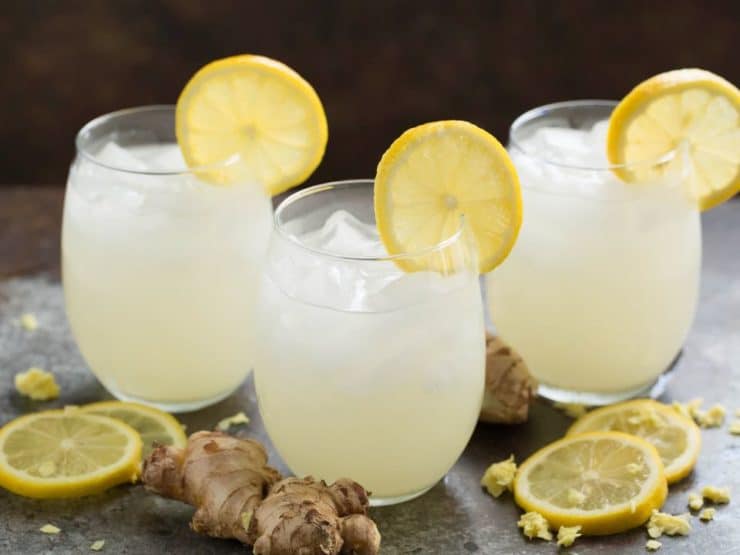
Homemade Ginger Beer
Ingredients
Ginger Syrup Ingredients
- 1 cup granulated sugar
- 1/2 cup water
- 2 tablespoons grated fresh ginger
Ginger Beer Ingredients
- 1/8 teaspoon active dry yeast or brewer's yeast
- Ginger syrup (ingredients above)
- 3 tablespoons lemon juice, freshly squeezed
- 7 cups filtered water
Instructions
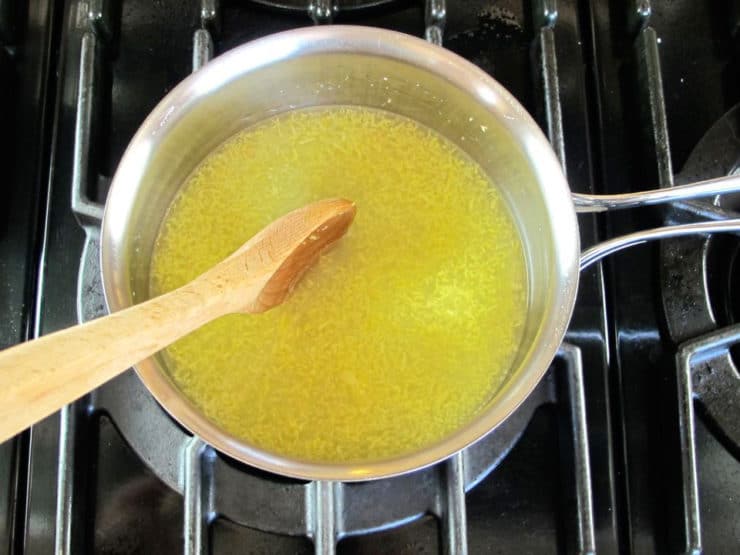
- Peel a chunk of the ginger with the tip of a teaspoon—the papery skin scrapes right off—and grate it, using the fine side of your grater. Place the ginger, sugar, and water in a saucepan over medium heat and stir until the sugar is dissolved. Turn off the heat and allow the mixture to steep for an hour.

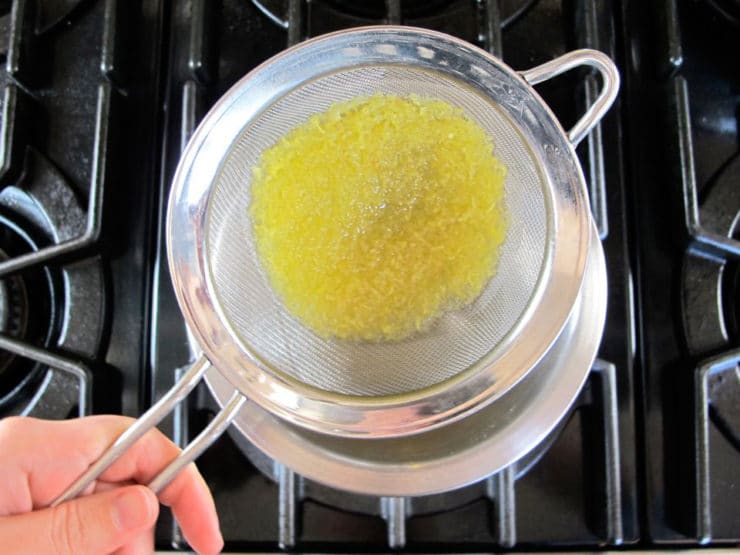
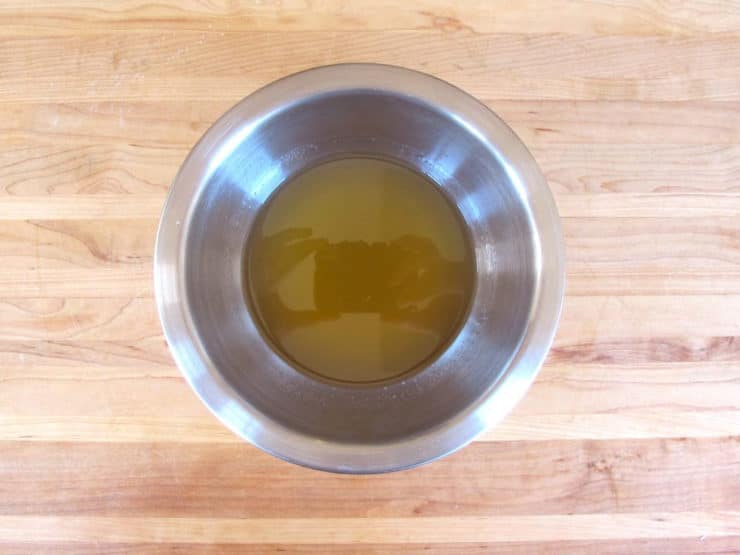
- Strain the mixture (discard the ginger solids) and allow to cool.
- You’ve now made ginger syrup (or gingerette, as the Brits call it). Stop right here if you’re looking for a short-cut to ginger ale and you don’t want to mess around with the fermentation process. Pour three or four tablespoons (more or less depending upon how gingery you like it) of your syrup over ice and add 8 ounces of seltzer water or club soda. Bottle the rest of the syrup and store it in the refrigerator.
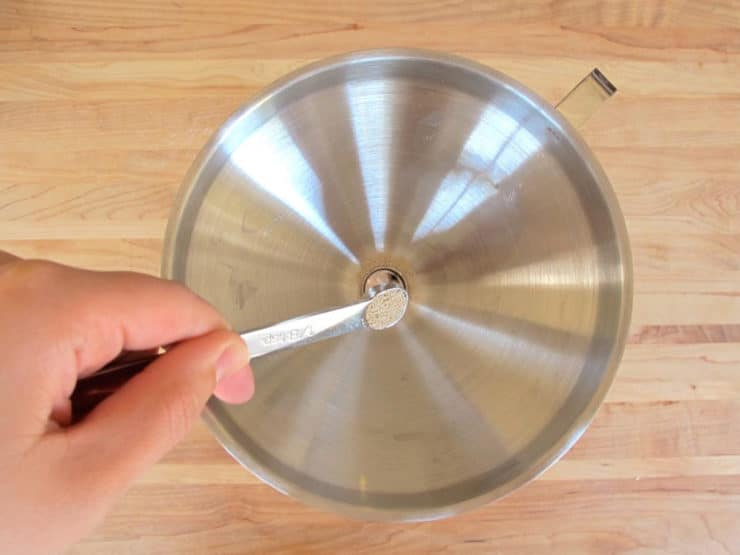
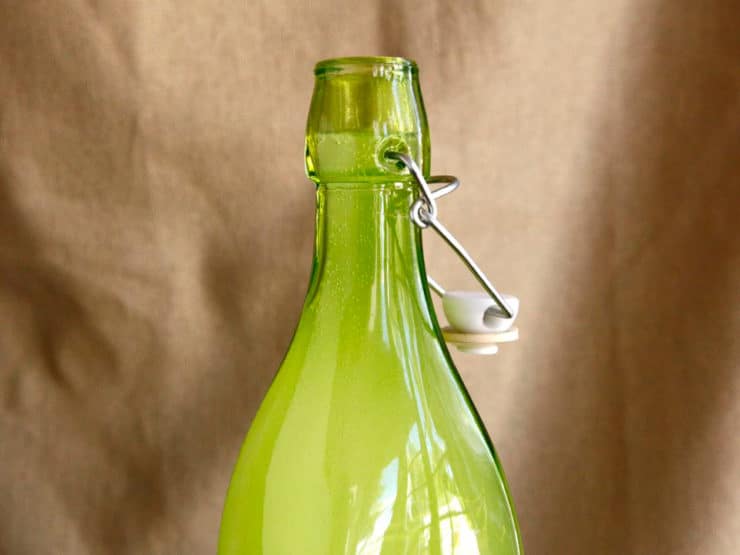
- For the full ginger beer experience, place a funnel in the top of the bottle. Sprinkle the yeast in, followed by the syrup, lemon juice, and water.
- Put the lid on the bottle and shake the concoction until the yeast is dissolved. Stow it on a shady shelf or in your pantry out of direct sunlight for 2-3 days, or until fizz is achieved. At this point it is ready to drink, and must be stored in the refrigerator to prevent further fermentation. Don't forget about the bottle, or the pressure will build up so much that it may explode!As with any yeast-powered beverage, the fermentation process continues unless you prevent it from happening. Refrigerating will slow the process down but not stop it completely, that's why it’s best to treat ginger beer as a perishable beverage. Consume within 1-2 weeks.
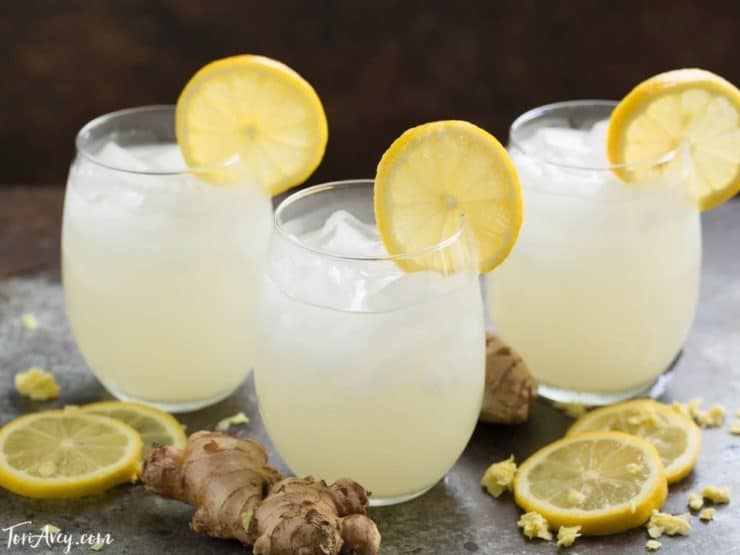
- Serve over ice and savor the spicy taste of your very own homemade ginger beer!
NOTES
Nutrition

tried this recipe?
Let us know in the comments!


Hi There the recipe sound great. Will definitely try it out this Christmas. May i add a few raisins to the brew or will it be too much.
Does this ginger bread/ale go off if left for more than a week? By the way the recipe sounds great and I’ve made some to drink over a few days already. Tx
It will not go off but it will continue to ferment which will lead to a more sour flavor. It may also increase the alcohol content but I am not completely sure about that
I’ve made this recipe several times and just love it. I could never go back to store-bought ginger ale or beer. It started last Christmas when we were given a gift of ginger-infused vodka. We had a party and made the best Moscow Mules ever! Since then, I’ve added the ginger syrup to Vermont Maple Syrup for my mother’s gingerbread pancakes. So good! Thanks for sharing the recipe. I know I’ll use it forever.
So happy to hear that!
As a “brit” I have never heard the word
‘gingerette’ in my life
I’m making second batch. First turned out great but one 2 liter bottle sort of stopped processing. I added some more sugar to it. After a day added more yeast. It still didn’t produce off-gas as expected. So put in frige and after 14 days or so it processed more. Every time I open the bottle now I get some pressure release. I’m almost finished that 2nd bottle. Making new batch right now. Will double the ginger and double the yeast as my yeast may have been almost over the hill.
Can you use ground ginger as a substitute for fresh grated ginger? If so, how much should i use?
Hi Kevin, Tori’s assistant Ashley here. You can substitute ground ginger in the simple syrup needed for this recipe, however we have not done it this way so I’m unable to say if the results will be any good. If you decide to give it a try, use 1 tsp of ground ginger in place of the 2tbsp of fresh ginger.
Dear Alice
Just in time I found your comment on your second bottle.. More or less I am sure, that your dry yeast didn’t start to work, because to activate the yeast you need warmness 35 until 42 Celsius For how long?? will be an experiment or a good cheese maker can help you. It seams by not peeling the ginger the fizz process can start too. Success and best regards from warm Indonesia. Lukas
I just made my first 2 litre bottle of ginger beer three days ago. I had my first taste this morning, quite nice, good fizz However it was not as gingery as the way my Mom used to make it! That had a real bite to it!
How do I get it to have more stronger flavour and bite? I must confess I didn’t grate but used a peeler on the ginger! Could this be why I lost some flavour?
Otherwise, a good recipe, very thirst quenching
Hi Chris, Tori’s assistant Ashley here. Grating the ginger releases more of the flavor and natural liquids, so I would try grating next time to see if you get the desired results.
hi I’ve had a couple of problems with this not fermenting properly. I’ve had to do it in two bottles since I didn’t have enough so I split the yeast. It seems to me that the water temprature has a large impact on the result. I need to start a recipe again in about 8 hours for a party so what should I do. FYI I’m using sure bake yeast
Okay, I’m back, with a more complete experience behind me! Very simple recipe and very effective. After two days in the fermenter, the mix tasted to me more like ginger ale than ginger beer. Or, to invoke a couple of brand names we have here in Australia, it was more like Kirk’s Ginger Beer than Bundaberg Ginger Beer.
I made a double sized brew, coming out (I assume) to nearly 4 litres. I’m taking out one bottle full at a time (almost 1L bottle) and storing that in the fridge. The rest of the mix is staying in the fermenter. (I’m using a ceramic fermenter, so I can’t monitor the action as it happens, but it sure has been bubbling away!)
I just finished my first bottle, so went to refill it. With the extra three days of fermentation, the aroma of the mix is much stronger. A deep inhale of it actually burned my nostrils a wee bit (similar to how ammonia would, but more pleasantly). I have no idea if it’s possible, but perhaps the mix has turned alcoholic. I don’t know how to even check that!
That’s exactly what happened. You are home brewing actual beer at this point. The yeast eats sugar and turns it into alcohol. If you don’t want alcoholic ginger beer process the rest right now. You mention fermenting it in a ceramic container. If this seals tightly you could have a ceramic beer bomb! I see your post is from May 9 so you are done by now. I hope it worked out for you.
I haven’t put a star rating yet, because I’ve just wrapped up the first part of making this (for my first ever time). I’m trying it with the mix in a fermenter, rather than in a bottle, so I should theoretically have no problem with pressure and explosions. I’ll be interested to see how it goes when I then get it into bottles. Planning to fill one bottle at a time and put it in the fridge, unless there’s room for more…so the fermentation might just roll on and on in the fermenter! I’m utterly new to all fermentation so it could be interesting—or disgusting!—to see the results.
Can I use less sugar and get the same results?
Sugar is the essential ingredient in the production of the carbon dioxide. Much of it is completely converted so don’t reduce the sugar too much or it will be flat and not achieve desired fizz!!
I’ve tried both methods: ginger syrup and fermenting. I use the ginger juice/syrup and soda water as the go-to when I’m in a hurry, and can make it really strong and gingery, which I prefer. However, a good batch of fermented brew is outstanding! Its own natural fizz beats out the other method, since the fizz in the soda water gets diluted by the juice. The brew is crisper tasting and well worth it. Just at least double the amount of ginger you use.
Tip: place a
deflated balloon over the mouth of the bottle. You won’t have to tend the bottle as much and it still stays sealed during fermentation.
This seems like an excellent idea, so I’m trying it with my new bottle. Great lateral thinking, sir!
I’m using balloons for my first batch. I learned this many years ago, at college, when we made wine with grape juice. We used thick, glass one gallon jugs with balloon and fermented in our dorm closet. We did have an exploded balloon, only once, with terrible mess and staining of many clothes. So, now I do check the balloons every day or so.
This balloon tip – Not tried this yet but this sounds a fantastic tip
This is the easiest and best recipe I have ever come across and the grandkids love it
In matters of reducing money to spend my friends n I normally use method that makes 7-10 litres of ginger beer and its awesome
I love the brewing experience… the smell of it fermenting and only 2 days after that its ready for the fridge… ooh my God I miss ginger and my taste buds are starting to react??
Hi I tried your recipe but it smelled bad like something died in there.Is it because I put too much yeast or I used the wrong type of yeast.Im using some supermarket bread yeast.
I make this all the time but I just use a few grains of yeast and let the mixture sit overnight and bottle the next day. Be sure each bottle is thoroughly cooled before opening so you get a nice opening and smooth pouring of fiz.Wonderful flavour.
Mine had a little smell with it but o ignored it and it taste great! And I’m not dead yet LOL. I’d go with instinct and the advice above, if you’re not sure redo it and note what you do to see if something is different. Good luck
Quite tasty! Didn’t have the strong ginger flavor and heat to stand up to Jack Daniels, so I added 1T of fresh ginger juice.
Has anyone done syrup in soda water vs. fermenting and compared? The fermenting is kind of fun, but if the flavor is the same why bother?
The fermentation process creates a much healthier, pro-biotic drink!
Great recipe! I’m adding a dried habanero to spice it up.
So during the 2-3 days before putting it in the fridge days do you open the bottle?
Yes, you should vent the bottle like twice a day regardless of which step you at
Have been making a batch a week all summer. Friends request a bottles so the batch size has expanded. Each batch has been a new flavor experiment. Blood orange juice, pineapple, honey crisp apples, key lime are a few of the flavor additives. I also play with spicing by infusing cinnamon, all spice and junipers. From the start I have used half the sugar and added 1 cup of local honey. Almost a honey mead flavor. Friends swear the drink has digestive benefits. Surprising, most of the finished product is used to mix Dark and Stormy’s’. Thank you for kicking off a new addition to our entertainment.
Have you tried flavouring with essential oils? I wonder how that would work?
For anyone thinking of trying to flavour with essential oils, please do not!! Essential oils should never be ingested (or even used topically undiluted with a carrier oil). If you’re being told your oils are food grade then you are either being lied to about what the product actually is (i.e. it’s not an essential oil) or its health benefits. Please don’t risk organ failure for a flavour you could far more easily, cheaply, and safely get from an actual food grade essence.
The recipe calls for 1/8 teaspoon of yeast. Is that 1/8 teaspoon for every bottle?
The recipe makes one 2-liter bottle, so yes.