

Schalet is the food of heaven,
Which the Lord Himself taught Moses
How to cook, when on that visit
To the summit of Mount Sinai…
Schalet is the pure ambrosia
That the food of heaven composes—
Is the bread of Paradise;
And compared with food so glorious…
From the poem Princess Sabbath by Heinrich Heine,
translated by Edgar Alfred Bowring
Since Biblical times the Jewish people have scattered and settled all over the globe, adapting their foods to suit the regions where they’ve settled. Over the centuries countless regional ethnic dishes have been made kosher to fit the Jewish religious standards for pure eating. This means that “Jewish food” is really world cuisine; there are very few dishes that are uniquely Jewish. Bagels? A Polish baked bread originally created for Lent and later embraced by the Jews. Gefilte fish? A German dish adopted by Yiddish cooks. But cholent– well, cholent is one of the few foods that is totally and completely Jewish.
In Joan Nathan’s fabulous book Jewish Cooking in America, she writes about this distinction:
“Throughout their wandering history, Jews have adapted their life-styles to the local culture. Food is no exception. Following the same dietary laws, Jews, relying on local ingredients, developed regional flavors. Because they have lived in so many places, there is no ‘Jewish food’ other than matzah; haroset (the Passover spread); or cholent or chamim (the Sabbath stews that surface in different forms in every land where Jews have lived).”
Cholent is uniquely Jewish. It was created because Jewish law does not permit cooking on Shabbat. To adhere to this prohibition, Jewish cooks began to create meat and bean stews in heavy pots that would slowly simmer inside a low-heat oven overnight. They would prepare the stew on Friday before sundown, cook it partially, and place it into the oven to continue cooking throughout the night. That way, there would be no need to kindle a fire or light a stove during the hours of Shabbat; they would simple remove the stew from the oven at mealtime and it would be fully cooked and ready to serve.

Cholent is partially cooked before the Shabbat candle lighting at sundown on Friday evening, then placed in the oven to slowly finish cooking overnight.
According the The New Jewish Holiday Cookbook by Gloria Kaufer Greene, the word cholent may have come into usage in medieval Europe:
“The medieval word cholent (with ‘ch’ pronounced as in ‘chair’) may have come from the French chaud-lent, meaning ‘warm slowly,’ or, less likely, from the Yiddish shul ende which describes when the cholent is eaten — at ‘synagogue end.'”
My friend, food historian Gil Marks, refutes this notion of shul ende being the root of the word, because the word cholent was used in France before Yiddish developed as a language in the mid 1200’s. In his Encyclopedia of Jewish Food, he contends that the word most likely evolved from the French chaud (hot) or from the Spanish escallento (warm), since the dish probably made its way to France from Spain. Still others believe that the word cholent is derived from the Hebrew she’lan, meaning “that rested” and referring to the pot resting in the oven overnight.
While nobody knows the exact source of the word cholent, it is without a doubt one of the most beloved dishes in Jewish cuisine.
A Cholent By Any Other Name
Shabbat stews are cooked all over the world in different ways and under many different names. Here are a few of the many varieties of cholent:
Schalet – The Yiddish word for cholent, referred to in the German poem at the beginning of this blog. Schalet refers to an Eastern European-style cholent with meat, beans, barley, and sometimes kishke. Spicing is minimal; often only salt and pepper are used.
Hamin/Hamim/Chamim/Chamin – From the Hebrew word “hot.” The Sephardic version of cholent is known as hamin. Popular throughout Israel, hamin is often made with chicken rather than meat and usually contains eggs. It is also spiced more exotically than Eastern European cholent.
Dafina & Skhina – In Spain, the Maghreb, and Morocco, cholent is referred to as dafina or skhina. It is generally cooked with chickpeas, meat, potatoes and eggs along with spices native to the Maghreb.
Osh Savo – A sweet and sour Shabbat rice stew served by Bukharan Jews.
Tabeet & Pacha – Iraqi Jews have two popular Shabbat dishes. Tabeet is made with a whole chicken stuffed with rice, herbs, and seasonings. Pacha is tripe stuffed with lamb, seasonings, and rose petals. Both are slowly cooked overnight for Shabbat, which makes them regional ethnic variations on the cholent theme.
Batia Restaurant in Tel Aviv
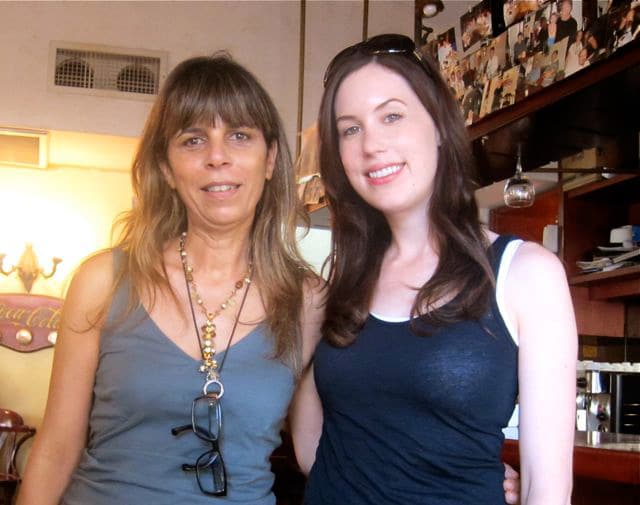
With Miri, the manager of Batia restaurant in Tel Aviv.
On a trip to Israel in the summer of 2010, our friend Hagai brought me to a restaurant called Batia in Tel Aviv. It’s a traditional Ashkenazi restaurant, well known for their cholent. While there I met the manager, Miri. She gave me a tour of their kitchen and I got to snap a shot of their massive cholent pot, which is the size of about twelve normal cholent pots. Check it out:
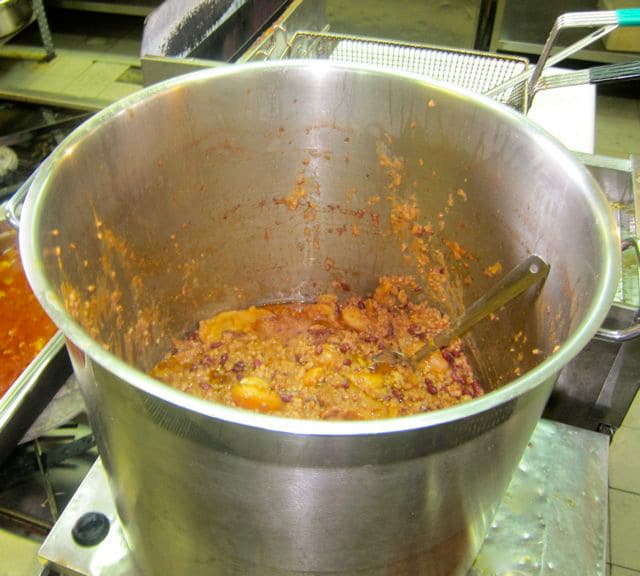
Huge cholent pot at Batia Restaurant – Tel Aviv, Israel.
Miri told me that even with all of this cholent, they never fail to run out towards the end of the day. It is absolutely delicious. Their cholent is made in the Israeli style with eggs, similar to mine but with less spices. They also add a kishke to their cholent and sliced meat if you ask for it.

Batia’s famous cholent, complete with kishke.
Cholent: A Family Affair
Tamar Genger from the website Joy of Kosher talked about the warm memories and feelings that a pot of cholent can conjure. “People have an emotional response to the word ‘cholent’ — it may be a memory of a meal at a grandparents house, kiddush after shul or that unmistakable smell that warms the entire home on a cold winter morning.”
I totally relate to this emotional response, even though I didn’t grow up eating cholent. For the past decade, cholent has made a regular appearance on our Shabbat table. During the winter, it doesn’t feel like Shabbat unless a pot of cholent is slowly cooking in the oven, filling the house with its tantalizing, savory aroma. Cholent and challah are the official flavors of Shabbat in our home.
Cholent recipes vary greatly from region to region, and even from family to family. No two cholent recipes are exactly alike. It’s one of those dishes that evolves over generations, with spices and ingredients being added or changed to suit family tastes. Some cholent recipes have a hint of sweetness in them from the addition of honey or ketchup. Our family prefers a savory cholent, the recipe for which appears below.
Ashkenazi cholent recipes sometimes include kishke, or stuffed derma, which is a particularly unique Jewish delicacy. We never include a kishke, but you could certainly buy a kishke and add it to the pot. Couldn’t hurt!
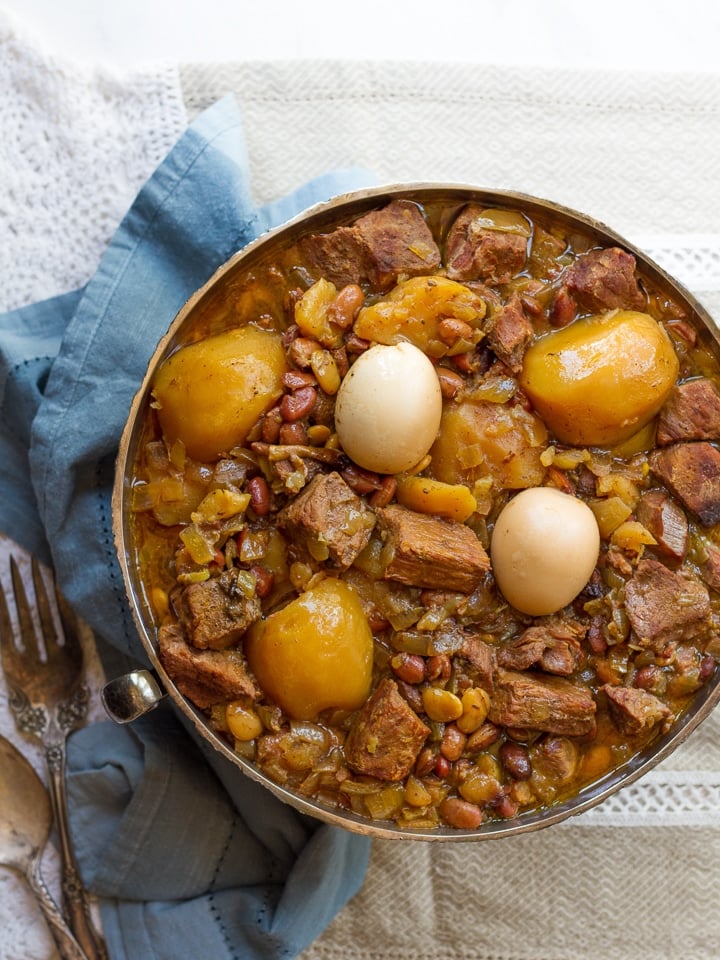
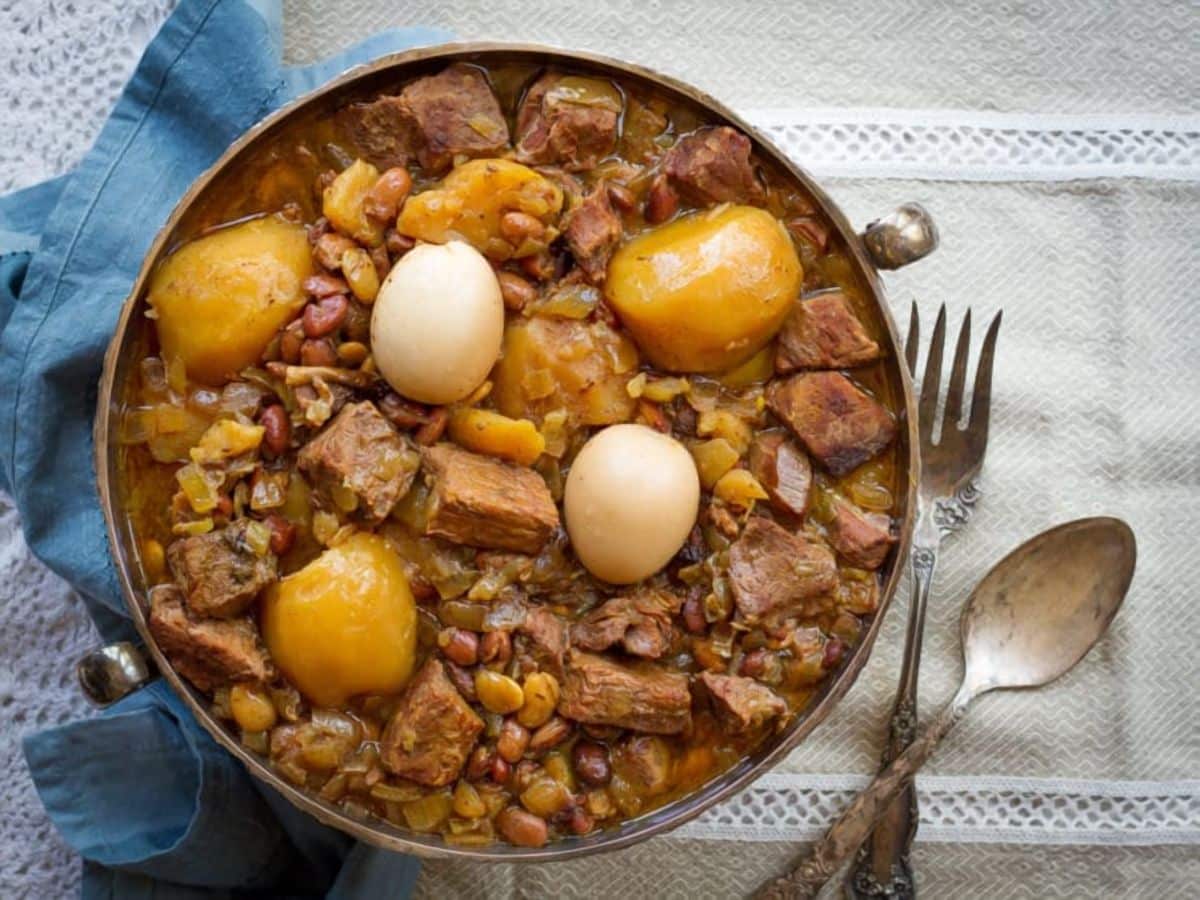
Our family’s cholent recipe is a reflection of the heritage of my fiance’s parents; his mother was Sephardic, his father Ashkenazi. The dish uses the basic ingredients of an Ashkenazi cholent– meat, beans, potatoes, and sometimes barley or kasha– with added Sephardic spices for flavor. We also add whole eggs to the pot, another Sephardic custom. The eggs slowly cook in the broth, soaking up the flavor of the cholent and turning a lovely brown color.
I sometimes use chickpeas, as is the custom in Moroccan dafina. Other times, I use a combination of kidney, pinto, and lima beans, which are more often used in Ashkenazi cholent. It just depends on what we have in the pantry on Friday. I use red potatoes because they have a lower starch content, so they won’t dissolve during the long slow cooking process. When we want a lighter cholent, I leave out the barley grains and let the potatoes take starchy center stage. Cholent is flexible that way. The result of combining all of these different flavors is an irresistible savory cholent that is always a hit on Shabbat.
Over the years I’ve refined this cholent recipe. I used to overnight soak the beans, pre-boil the ingredients and often cooked it in the oven. Now I always use a slow cooker, and I only give the beans a quick soak. If I’m in a hurry I skip the soak entirely– the quick soaked beans are easier on digestion, but the slow cooking process will fully cook the raw beans. Remember, this dish cooks overnight, which requires some forethought. The traditional way is to start the cooking on Friday before sundown so that the pot is cooking before Shabbat begins. Enjoy!
Recommended Products:
We are a participant in the Amazon Services LLC Associates Program, an affiliate advertising program designed to provide a means for us to earn fees by linking to Amazon.com and affiliated sites. As an Amazon Associate I earn from qualifying purchases.
Food Photography Beauty Shots & Styling by Louise Mellor
Cholent
Ingredients
- 2 1/2 pounds large red potatoes, peeled and halved (for a smaller slow cooker, use 2 lbs)
- 2 whole onions, chopped
- 2 1/2 pounds beef stew meat or brisket, cut into chunks (for a smaller slow cooker, use 2 lbs)
- 2 marrow bones
- 1 cup dried beans - lima, pinto, chickpeas, red beans (not kidney), or a mixture
- 1/2 cup pearl barley or coarse-grain kasha (optional - for gluten free, do not use pearl barley)
- 3 whole garlic cloves
- 6 eggs (optional)
- 1/2 teaspoon black pepper (if spice sensitive use 1/4 tsp)
- 1 quart low sodium chicken broth
- 1 tablespoon kosher salt
- 1 1/2 teaspoons paprika
- 1 1/2 teaspoons turmeric
- 1 teaspoon cumin
- 1/4 teaspoon cayenne (if spice sensitive use just a pinch)
- 1 kishke (optional - we never add this, but many families like it)
- Water (varies)
Instructions
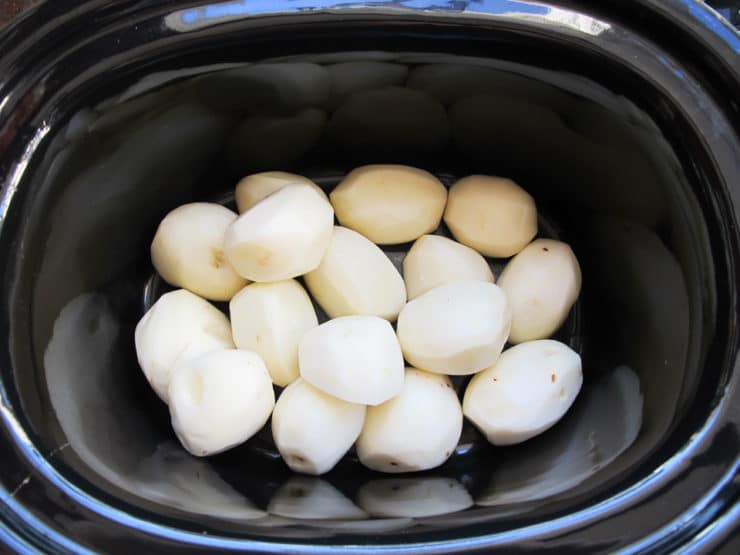
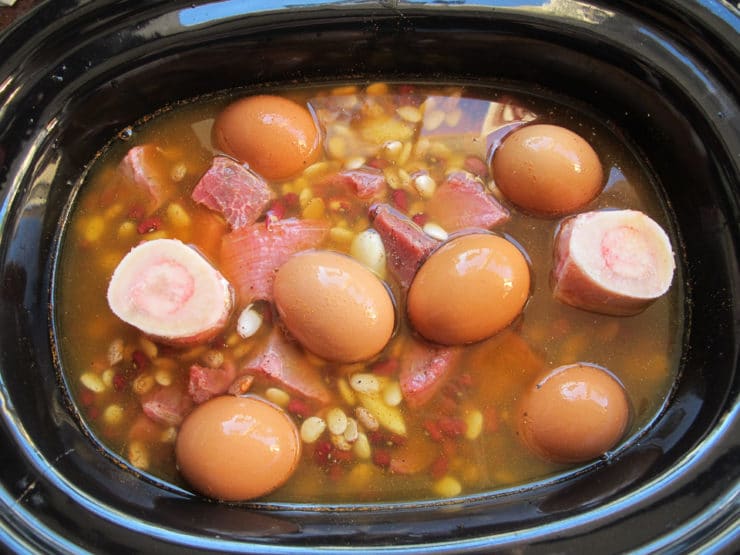
- In a large slow cooker (the larger the better!), place the potatoes in a single layer on the bottom of the cooking vessel.

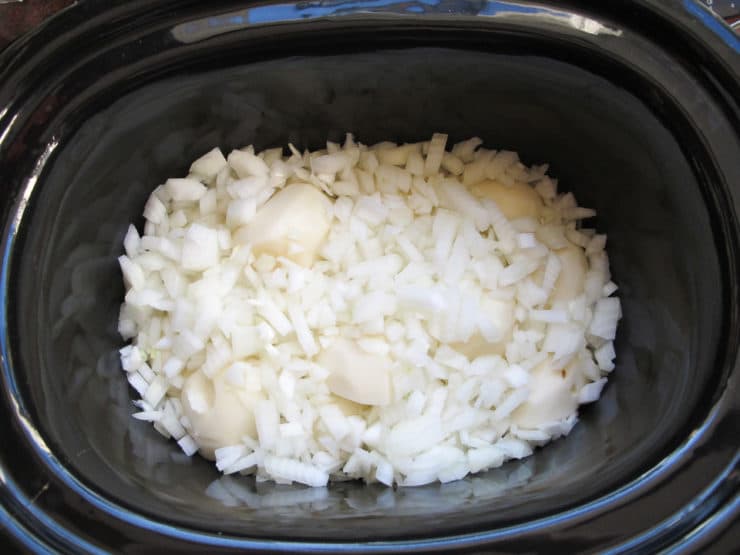
- Sprinkle the onions over the potatoes.
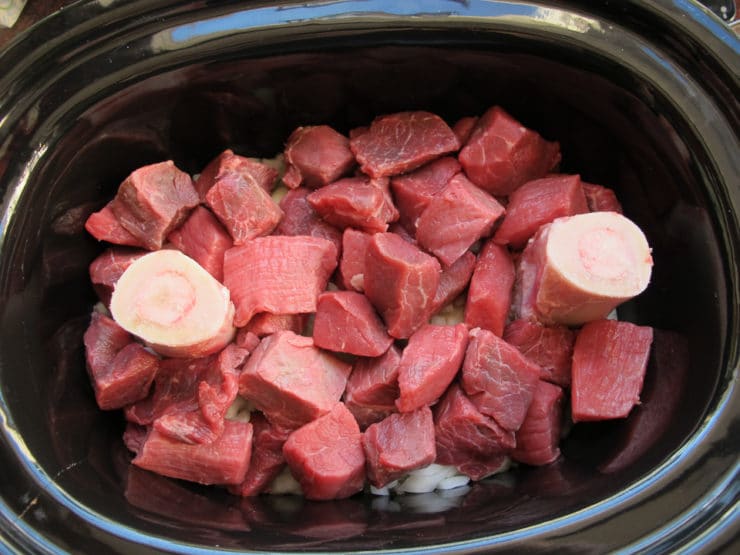
- Place the beef in a single layer on top of the onions and potatoes. Place the two marrow bones in the meat. If you're adding a kishke, now would be the time to put it in the cooker.
- Rinse the beans clean, checking for any stones or impurities. If using barley or kasha, do the same with the grains. Sprinkle the beans (raw or pre-soaked) and optional grains over the top of the meat. Place the three whole garlic cloves into the meat, evenly spaced. Sprinkle the whole mixture with the black pepper.
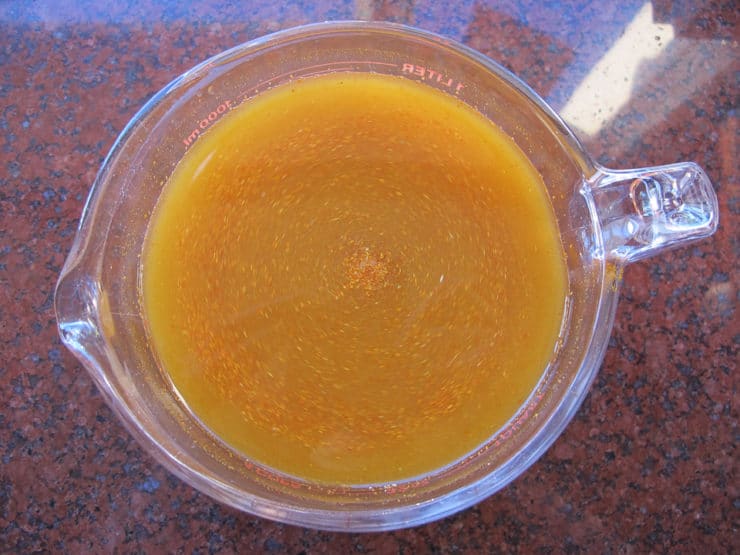
- If using eggs, rinse them well and then tuck them into the meat. In a 4-cup container, whisk together the low sodium chicken broth, kosher salt, paprika, turmeric, cumin and cayenne.
- Pour the liquid over the cholent. Add additional water until all of the beans and pieces of meat are covered. For us, it's usually another 1-2 cups of water in our slow cooker-- it will vary; I usually add a bit more liquid if using grains, because they will soak it up.
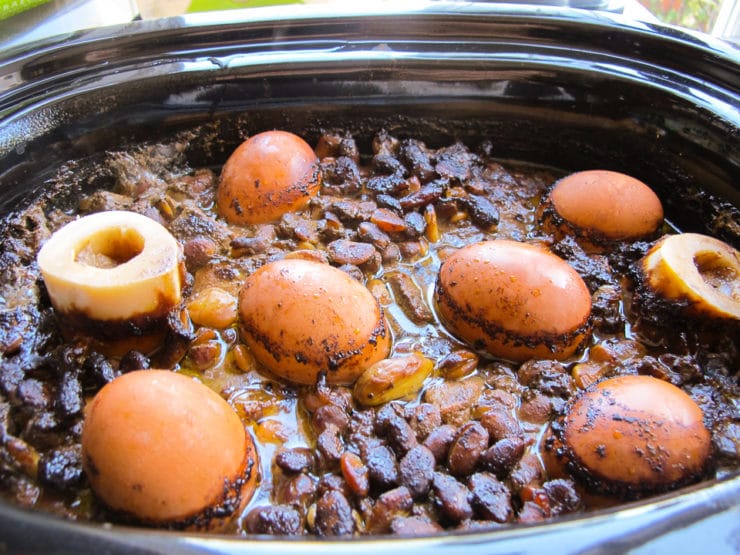
- Cover the slow cooker. Cook on low heat for 16 hours. Check occasionally as it's cooking; add additional water and stir a bit if it's looking too dry. Most cookers will auto-switch to warm when the cooking is complete. If yours doesn’t, set it to warm until ready to serve.
- It will look a bit medieval when it's done cooking! Don't worry, just dig in and you'll see that it's perfectly cooked below the surface. Peel the eggs before serving the cholent.
- To cook this recipe in the oven, layer the ingredients in a large heavy 7-8 quart Dutch oven. Make sure you have enough liquid to just cover all ingredients. Cover with lid and cook cholent at 200 degrees F for 12-16 hours.




NOTES
Nutrition


I made this cholent today and it was great, except for the eggs which tasted really bitter. I ended up throwing the eggs away. How are they supposed to come out?
Thanks
Strange Peter, that has never happened to me. I’m not sure why yours became bitter.
Can I add red wine instead of water /or half and half of water and wine?
I don’t recommend it, I think it would throw off the taste with all the spices. But since I’ve never tried it I can’t say for certain.
Thank you for the recipe I’m going to make it today… what a shabbos treat… I do have a question though. Is it possible to make without the bones? If so should I substitute some beef broth for water? I just don’t have the time to get bones and i already have the meat…
Thanks again!
No problem, you can omit the bones. They’re just there for added flavor.
Hi. I’ve been making crock pot chulent for over 10 years now. I put all the ingredients in together then leave it on high for 12 hours. I also add ketchup, a spoon of coffee (yes coffee!) and a spoon of honey. Its heaven. It gets licked clean every week!!! And its a 6 litre.
sorry in advance for the stupid question… do you cook the eggs first and put them into the pot (without shell) – or do you put them raw (with shell) in the pot and cook them together with the rest at the same time – I have difficulties to believe that I can keep the eggs for so long in the shell in the oven – don’t they explode… and don’t they dry out totally???
Add the to the pot raw, they’ll cook as the cholent cooks and become rich with the flavor of the cholent. Enjoy!
I never even heard of cholent growing up in Great Neck (go figure). Ours was a household of chicken soup, matzoh balls, maybe kreplach at Grandma’s. But here’s my brisket recipe:
1. If you have a Romertopf or other clay Dutch oven, soak it in cold water for 15 minutes. If not, use any oven-proof casserole.
2. Layer the following ingredients in the dish. I like to put onions on the bottom because they caramelize nicely, but that’s an option:
* A 2 or 3 pound piece of brisket of beef, fat side up
* A medium onion, sliced or diced if you like
* An equivalent amount of chopped celery
* Bay leaves to taste
* Fresh parsley
* Carrots (I often use those pre-cleaned little baby carrots, but lately I’ve found gigantic, sweet Belgian carrots at the farmer’s market)
* Daikon radish (optional)
* A splash of sherry or vermouth (optional)
* Water (optional)
* Kosher salt to taste (I salt the meat and the fat, which I score with a sharp knife)
3. Put the Romertopf in the oven at 350 degrees. (If the clay oven has been soaked, then it releases a blast of steam when it reaches 212).
4. After the first half hour, turn the heat down to 200 or 225 and let it cook for several hours.
5. Turn off the heat and let it remain in the oven until morning.
You can tweak the ingredients to make this more like a traditional cholent or more like the traditional brisket, with more onions, skip the carrots and daikon. My Bialystoker grandmother used a pressure cooker and cooked it until it was really dead, adding raw garlic and black pepper. It was usually a tough and stringy enough to accompany those leaden kreplach. My Hungarian grandmother was big on celery and onions and, FWIW, a much better cook. But I digress: The cholent method is an excellent way to produce a very tender, flavorful brisket. Serve with kasha (varnishkas if you’re partial, like I am, to the Hungarian side) or latkes.
Not to worry – I grew up in the 5 towns and only heard of cholent a few years ago.
Heyy
This recipe sounds fab! I am going to make it in a 6.5litre slow cooker is that large enough? Also how many people does it feed? X
Hi Jo– this recipe feeds 6 people with some leftovers 🙂
Makin’ it right now, just put it in the oven. 12 hours to go and we’ll see . . . . .
Thanks so much Rich! You picture really helped with ideas on texture and amount of broth. Yours looks incredible.
Great article, and awesome illustration. I’ll be making my first cholent shortly… although with more marrow bones.
Thanks!
Hi! Stumbled on your site while looking for Passover recipes, and I love it! I just wanted to add that my father used to make cholent (until he had to lower his cholesterol!) with marrow bones, flanken, potatoes, red beans, barley, salt, pepper, and whole garlic cloves. He used to cook it on a blech, then check it every couple of hours overnight to see if it needed some more boiling water (eventually he bought a slow cooker). But I have very fond memories of waking up on a Saturday morning to the aroma of cholent—and only being able to eat about half a bowl because it’s so filling.
Here’s a picture of my cholent. We ate it with kashe varnishkes and it was delicious. Thanks for the inspiration and recipe.
https://www.facebook.com/home.php#!/photo.php?fbid=1842914107187&set=a.1386044045721.54823.1070628888&theater
Rich, that looks AWESOME. I feel like I can smell it through the screen, yum! So glad you enjoyed it! 🙂
I made your cholent recipe this morning. Can’t wait until it’s done. Should be about 10PM tonight. I don’t remember anybody making it in Brooklyn where I grew up. My grandmother cooked a lot of great Jewish food. On Friday night, the apartment building she lived in smelled like chiken soup. She useed to make stuffed helzel which was better than the kishka from the deli. Wish I had some kiska to throw in the cholent. “Give me kiska or give me death” 🙂
Oh Rich, I’m jealous! Bet it smells amazing. Wish we had cholent cooking in the oven here, it’s a cloudy cholent kind of day in my neck of the woods. Enjoy!
Hi There,
With the rainy weather we are having I am going to try and make my first cholent for Shabbat dinner this week. What side dishes would you suggest serving with it? Looking forward to your suggestions!
Thanks!
Susan- thanks!
Britney- wow, your first cholent– congrats!! Not sure where you live, but where I am (Southern California) it is totally cholent weather– cold, drizzly. I would suggest serving a green veggie; something light, since the cholent is somewhat heavy. Roasted asparagus might be a good choice, or my green bean pepper salad. I’ve pasted links to both recipes below. Let me know how it goes! 🙂
https://toriavey.com/toris-kitchen/2010/03/oven-roasted-asparagus/
https://toriavey.com/toris-kitchen/2013/04/green-bean-pepper-salad/
What made you think that you’d have room for any side dishes, Britney?
My most recent favorite Jewish food is the cabbage soup I made for dinner tonight. Lots of other veggies and shredded cabbage with tomato and veg broth base. I added some sweet (stevia) and sour salts to make it taste like my mom’s used to. Yum
please share recipe
Love this! Your recipe looks amazing. I make a variation of Cholent called Adafina, both slow-cooked yummy meals.
Hello, italian jew married to an ashkenaz…..
I never cooked cholent, but ate it and loved it: do you put fresh eggs in it or do you boil them before?
Thank you
Anna
Hi Anna, add them fresh do not pre-boil. They will cook as the cholent cooks.
Yum!! I’m definitely trying this one this week 🙂
oh!!! yummm and with the weather that we have around here Dafina is what I’m craving now, I cook for me the vegan version and for my kids the normal one, I’m going to try your recipe, I can’t wait, thank you! <3
Hahaha, you knew I would comment!
Great posting! My mother and I (and most Orthodox Jews that I know) use a crock pot for chulent, but one of these days I am going to try it “the old fashioned way.”
Funny tidbit about chulent. I had a gastic bypass 7 months ago. About 3 or 4 months post op I was having a lot of trouble getting my protein requirement in and my nutritionist suggested that I cook beans and beef in the crock pot because the long slow cooking process could make it all easier to digest. Well, what do you know, chulent has become my post gastric bypass Shobbos meal of choice! It’s literally one of the only dishes that go down well for me.
Funny how links take you to an unintended but desirable place! 🙂
I consider myself spiritual but very proud of my Jewish genes. I was feeling a little nostalgic for my grandmother’s cooking and searched for cholesterol on this site. Unbelievable coincidences!!
I am 8 weeks post bypass after a horror year where my stomach broke down. I too am having problems getting enough protein and now intend to introduce my gentile husband to the delights of my Jewish heritage.
Thank you all! 🙂