

Schalet is the food of heaven,
Which the Lord Himself taught Moses
How to cook, when on that visit
To the summit of Mount Sinai…
Schalet is the pure ambrosia
That the food of heaven composes—
Is the bread of Paradise;
And compared with food so glorious…
From the poem Princess Sabbath by Heinrich Heine,
translated by Edgar Alfred Bowring
Since Biblical times the Jewish people have scattered and settled all over the globe, adapting their foods to suit the regions where they’ve settled. Over the centuries countless regional ethnic dishes have been made kosher to fit the Jewish religious standards for pure eating. This means that “Jewish food” is really world cuisine; there are very few dishes that are uniquely Jewish. Bagels? A Polish baked bread originally created for Lent and later embraced by the Jews. Gefilte fish? A German dish adopted by Yiddish cooks. But cholent– well, cholent is one of the few foods that is totally and completely Jewish.
In Joan Nathan’s fabulous book Jewish Cooking in America, she writes about this distinction:
“Throughout their wandering history, Jews have adapted their life-styles to the local culture. Food is no exception. Following the same dietary laws, Jews, relying on local ingredients, developed regional flavors. Because they have lived in so many places, there is no ‘Jewish food’ other than matzah; haroset (the Passover spread); or cholent or chamim (the Sabbath stews that surface in different forms in every land where Jews have lived).”
Cholent is uniquely Jewish. It was created because Jewish law does not permit cooking on Shabbat. To adhere to this prohibition, Jewish cooks began to create meat and bean stews in heavy pots that would slowly simmer inside a low-heat oven overnight. They would prepare the stew on Friday before sundown, cook it partially, and place it into the oven to continue cooking throughout the night. That way, there would be no need to kindle a fire or light a stove during the hours of Shabbat; they would simple remove the stew from the oven at mealtime and it would be fully cooked and ready to serve.

Cholent is partially cooked before the Shabbat candle lighting at sundown on Friday evening, then placed in the oven to slowly finish cooking overnight.
According the The New Jewish Holiday Cookbook by Gloria Kaufer Greene, the word cholent may have come into usage in medieval Europe:
“The medieval word cholent (with ‘ch’ pronounced as in ‘chair’) may have come from the French chaud-lent, meaning ‘warm slowly,’ or, less likely, from the Yiddish shul ende which describes when the cholent is eaten — at ‘synagogue end.'”
My friend, food historian Gil Marks, refutes this notion of shul ende being the root of the word, because the word cholent was used in France before Yiddish developed as a language in the mid 1200’s. In his Encyclopedia of Jewish Food, he contends that the word most likely evolved from the French chaud (hot) or from the Spanish escallento (warm), since the dish probably made its way to France from Spain. Still others believe that the word cholent is derived from the Hebrew she’lan, meaning “that rested” and referring to the pot resting in the oven overnight.
While nobody knows the exact source of the word cholent, it is without a doubt one of the most beloved dishes in Jewish cuisine.
A Cholent By Any Other Name
Shabbat stews are cooked all over the world in different ways and under many different names. Here are a few of the many varieties of cholent:
Schalet – The Yiddish word for cholent, referred to in the German poem at the beginning of this blog. Schalet refers to an Eastern European-style cholent with meat, beans, barley, and sometimes kishke. Spicing is minimal; often only salt and pepper are used.
Hamin/Hamim/Chamim/Chamin – From the Hebrew word “hot.” The Sephardic version of cholent is known as hamin. Popular throughout Israel, hamin is often made with chicken rather than meat and usually contains eggs. It is also spiced more exotically than Eastern European cholent.
Dafina & Skhina – In Spain, the Maghreb, and Morocco, cholent is referred to as dafina or skhina. It is generally cooked with chickpeas, meat, potatoes and eggs along with spices native to the Maghreb.
Osh Savo – A sweet and sour Shabbat rice stew served by Bukharan Jews.
Tabeet & Pacha – Iraqi Jews have two popular Shabbat dishes. Tabeet is made with a whole chicken stuffed with rice, herbs, and seasonings. Pacha is tripe stuffed with lamb, seasonings, and rose petals. Both are slowly cooked overnight for Shabbat, which makes them regional ethnic variations on the cholent theme.
Batia Restaurant in Tel Aviv

With Miri, the manager of Batia restaurant in Tel Aviv.
On a trip to Israel in the summer of 2010, our friend Hagai brought me to a restaurant called Batia in Tel Aviv. It’s a traditional Ashkenazi restaurant, well known for their cholent. While there I met the manager, Miri. She gave me a tour of their kitchen and I got to snap a shot of their massive cholent pot, which is the size of about twelve normal cholent pots. Check it out:
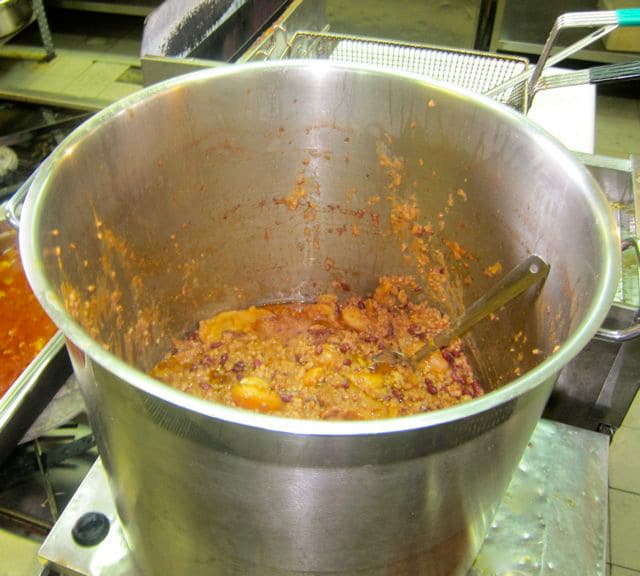
Huge cholent pot at Batia Restaurant – Tel Aviv, Israel.
Miri told me that even with all of this cholent, they never fail to run out towards the end of the day. It is absolutely delicious. Their cholent is made in the Israeli style with eggs, similar to mine but with less spices. They also add a kishke to their cholent and sliced meat if you ask for it.

Batia’s famous cholent, complete with kishke.
Cholent: A Family Affair
Tamar Genger from the website Joy of Kosher talked about the warm memories and feelings that a pot of cholent can conjure. “People have an emotional response to the word ‘cholent’ — it may be a memory of a meal at a grandparents house, kiddush after shul or that unmistakable smell that warms the entire home on a cold winter morning.”
I totally relate to this emotional response, even though I didn’t grow up eating cholent. For the past decade, cholent has made a regular appearance on our Shabbat table. During the winter, it doesn’t feel like Shabbat unless a pot of cholent is slowly cooking in the oven, filling the house with its tantalizing, savory aroma. Cholent and challah are the official flavors of Shabbat in our home.
Cholent recipes vary greatly from region to region, and even from family to family. No two cholent recipes are exactly alike. It’s one of those dishes that evolves over generations, with spices and ingredients being added or changed to suit family tastes. Some cholent recipes have a hint of sweetness in them from the addition of honey or ketchup. Our family prefers a savory cholent, the recipe for which appears below.
Ashkenazi cholent recipes sometimes include kishke, or stuffed derma, which is a particularly unique Jewish delicacy. We never include a kishke, but you could certainly buy a kishke and add it to the pot. Couldn’t hurt!
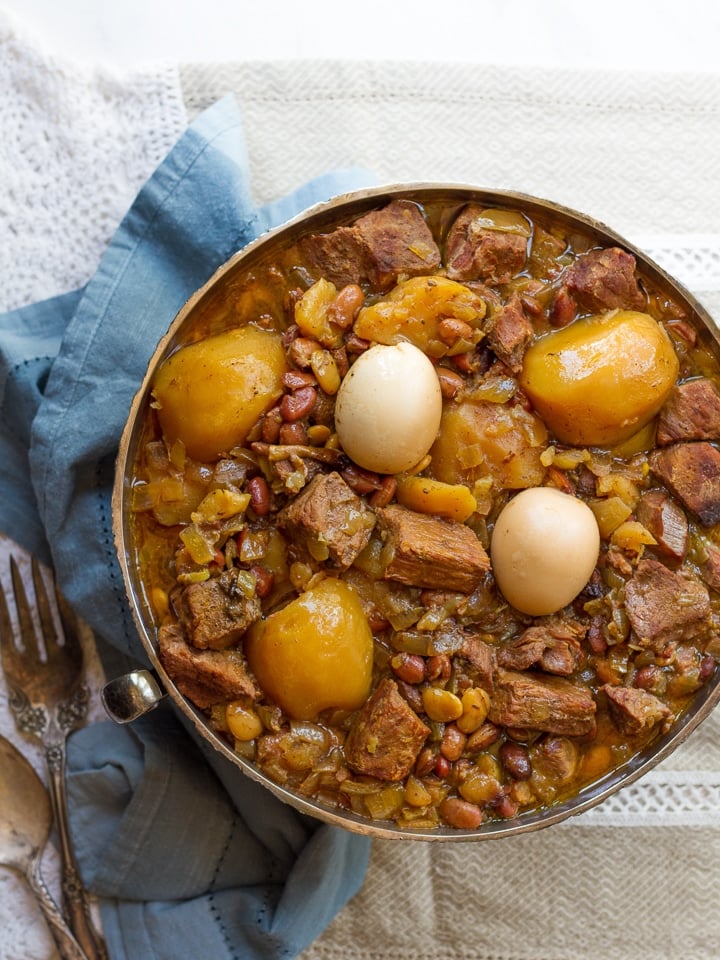
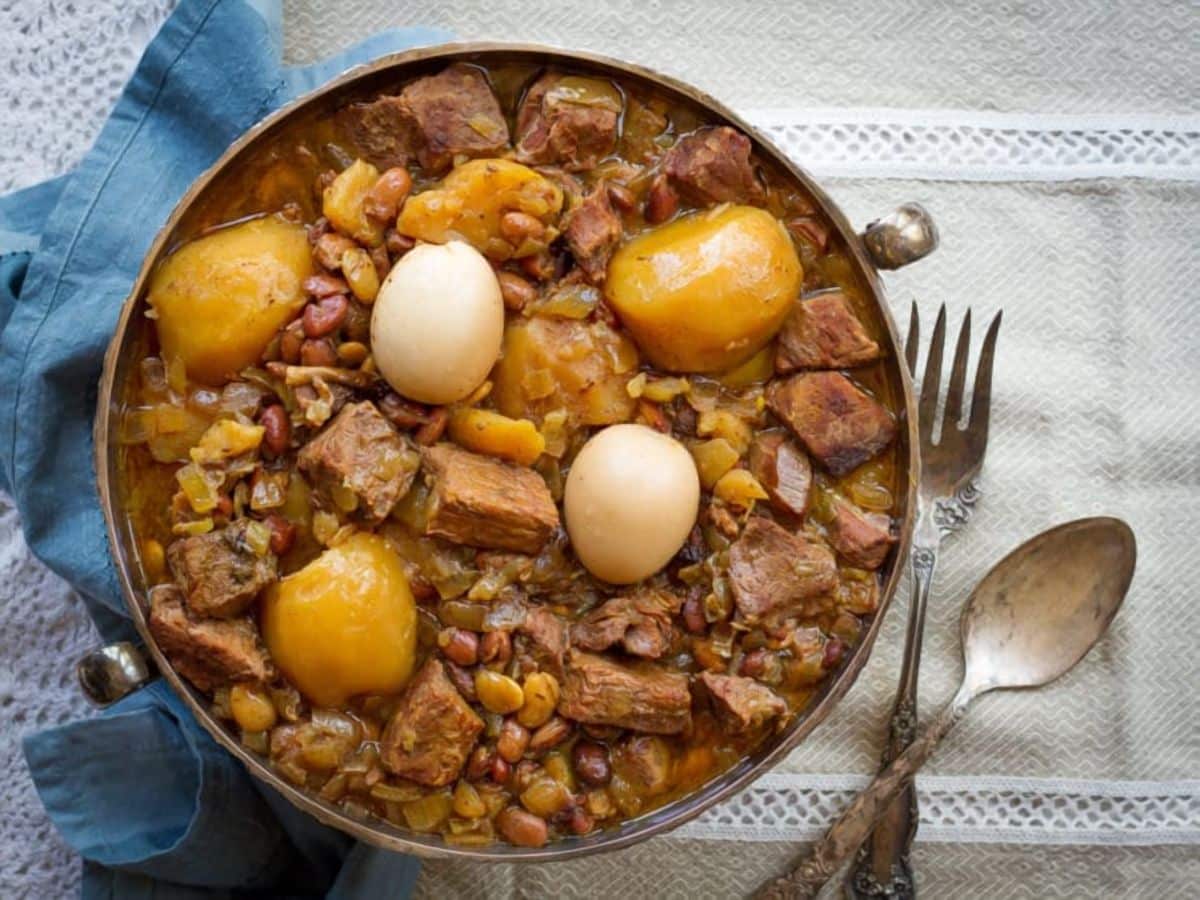
Our family’s cholent recipe is a reflection of the heritage of my fiance’s parents; his mother was Sephardic, his father Ashkenazi. The dish uses the basic ingredients of an Ashkenazi cholent– meat, beans, potatoes, and sometimes barley or kasha– with added Sephardic spices for flavor. We also add whole eggs to the pot, another Sephardic custom. The eggs slowly cook in the broth, soaking up the flavor of the cholent and turning a lovely brown color.
I sometimes use chickpeas, as is the custom in Moroccan dafina. Other times, I use a combination of kidney, pinto, and lima beans, which are more often used in Ashkenazi cholent. It just depends on what we have in the pantry on Friday. I use red potatoes because they have a lower starch content, so they won’t dissolve during the long slow cooking process. When we want a lighter cholent, I leave out the barley grains and let the potatoes take starchy center stage. Cholent is flexible that way. The result of combining all of these different flavors is an irresistible savory cholent that is always a hit on Shabbat.
Over the years I’ve refined this cholent recipe. I used to overnight soak the beans, pre-boil the ingredients and often cooked it in the oven. Now I always use a slow cooker, and I only give the beans a quick soak. If I’m in a hurry I skip the soak entirely– the quick soaked beans are easier on digestion, but the slow cooking process will fully cook the raw beans. Remember, this dish cooks overnight, which requires some forethought. The traditional way is to start the cooking on Friday before sundown so that the pot is cooking before Shabbat begins. Enjoy!
Recommended Products:
We are a participant in the Amazon Services LLC Associates Program, an affiliate advertising program designed to provide a means for us to earn fees by linking to Amazon.com and affiliated sites. As an Amazon Associate I earn from qualifying purchases.
Food Photography Beauty Shots & Styling by Louise Mellor
Cholent
Ingredients
- 2 1/2 pounds large red potatoes, peeled and halved (for a smaller slow cooker, use 2 lbs)
- 2 whole onions, chopped
- 2 1/2 pounds beef stew meat or brisket, cut into chunks (for a smaller slow cooker, use 2 lbs)
- 2 marrow bones
- 1 cup dried beans - lima, pinto, chickpeas, red beans (not kidney), or a mixture
- 1/2 cup pearl barley or coarse-grain kasha (optional - for gluten free, do not use pearl barley)
- 3 whole garlic cloves
- 6 eggs (optional)
- 1/2 teaspoon black pepper (if spice sensitive use 1/4 tsp)
- 1 quart low sodium chicken broth
- 1 tablespoon kosher salt
- 1 1/2 teaspoons paprika
- 1 1/2 teaspoons turmeric
- 1 teaspoon cumin
- 1/4 teaspoon cayenne (if spice sensitive use just a pinch)
- 1 kishke (optional - we never add this, but many families like it)
- Water (varies)
Instructions
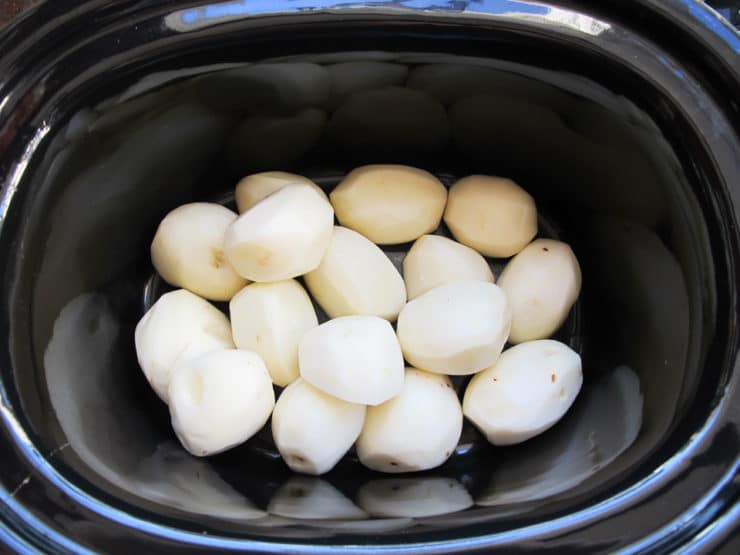
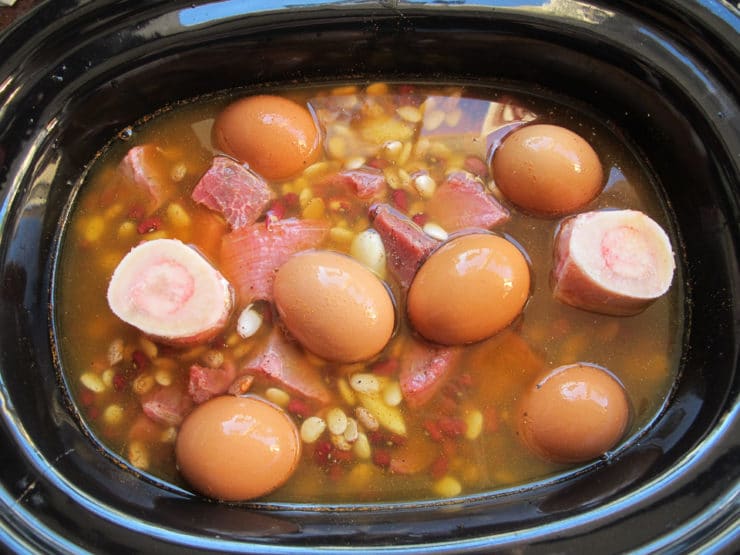
- In a large slow cooker (the larger the better!), place the potatoes in a single layer on the bottom of the cooking vessel.

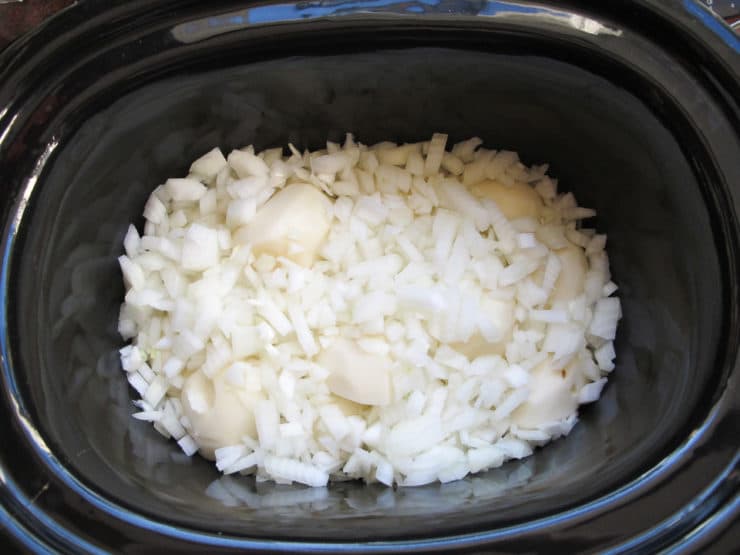
- Sprinkle the onions over the potatoes.
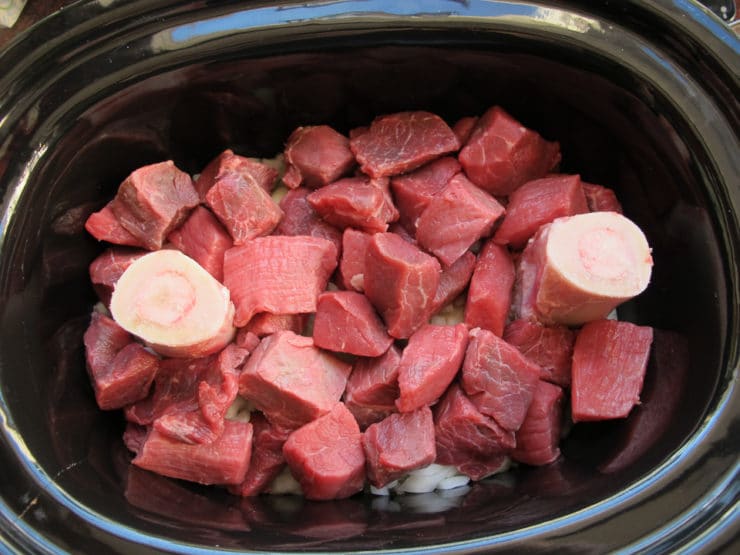
- Place the beef in a single layer on top of the onions and potatoes. Place the two marrow bones in the meat. If you're adding a kishke, now would be the time to put it in the cooker.
- Rinse the beans clean, checking for any stones or impurities. If using barley or kasha, do the same with the grains. Sprinkle the beans (raw or pre-soaked) and optional grains over the top of the meat. Place the three whole garlic cloves into the meat, evenly spaced. Sprinkle the whole mixture with the black pepper.
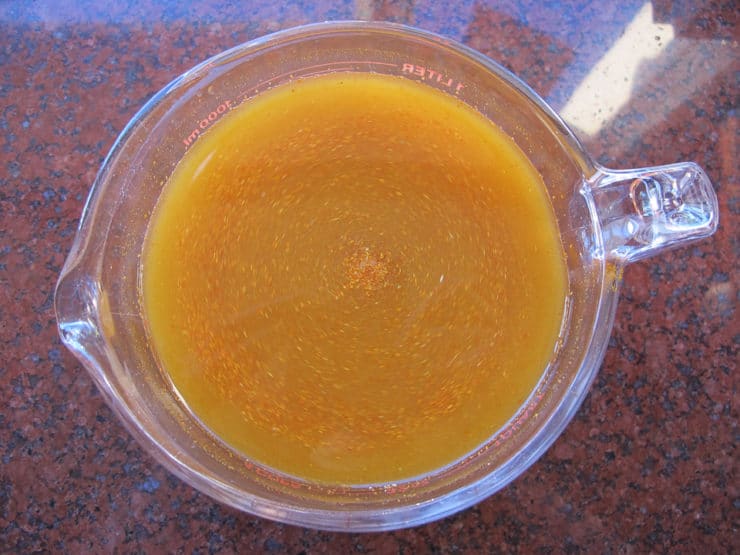
- If using eggs, rinse them well and then tuck them into the meat. In a 4-cup container, whisk together the low sodium chicken broth, kosher salt, paprika, turmeric, cumin and cayenne.
- Pour the liquid over the cholent. Add additional water until all of the beans and pieces of meat are covered. For us, it's usually another 1-2 cups of water in our slow cooker-- it will vary; I usually add a bit more liquid if using grains, because they will soak it up.
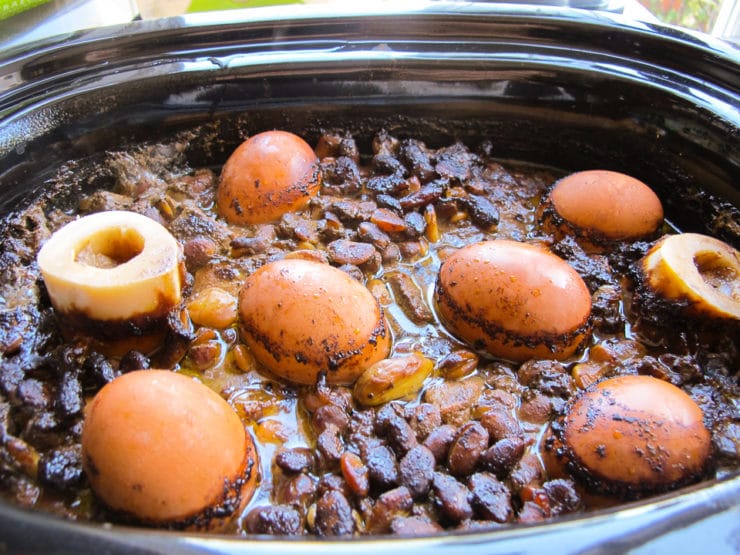
- Cover the slow cooker. Cook on low heat for 16 hours. Check occasionally as it's cooking; add additional water and stir a bit if it's looking too dry. Most cookers will auto-switch to warm when the cooking is complete. If yours doesn’t, set it to warm until ready to serve.
- It will look a bit medieval when it's done cooking! Don't worry, just dig in and you'll see that it's perfectly cooked below the surface. Peel the eggs before serving the cholent.
- To cook this recipe in the oven, layer the ingredients in a large heavy 7-8 quart Dutch oven. Make sure you have enough liquid to just cover all ingredients. Cover with lid and cook cholent at 200 degrees F for 12-16 hours.




NOTES
Nutrition


Shalom from Mexico!
my grand mothers always did it with eggs
but I don´t know the reason… taste?
vitamins… secret tricks…?
Toda uveteavon !
Leibale
This is seriously the BEST shkina ever!! It’s so easy to prepare and the taste is divine!! The eggs are highly recommended as they come out with a beautiful nutty flavour!
We just made this and I will share a pic! YUM. So we couldn’t find marrow bones and we forgot the eggs, but the crockpot was so full that they probably wouldn’t have fit anyways. Our house is small so it all smells like Cholent. I’m gonna break a Kosher rule though when we have dinner and put some cheese with it (cause that is what we do and we are not Jewish!) 😉 Thank you for this lovely recipe. Delicious. I love teaching my kids about all the recipes that we get to make off this site. Thank you for the history too. It is enjoyable to learn and to read. My kids are adventurous eaters and enjoy trying new foods… although my son still has trouble with broccoli.
Tori…..what changes would I have to make to use chicken instead of beef? Any help with directions will be greatly appreciated. Thanks!
Can anyone comment on using chicken instead of beef please. Any help is appreciated. Thank you!
Barb, I don’t usually include chicken in cholent, so I don’t have any specific advise to offer here. I think if you want to throw in a few chicken pieces it should work out fine, however replacing all of the beef with chicken may be problematic… again, I haven’t tested it so it’s hard to say for certain.
i have made chulent and entirely replaced the beef with chicken bottoms, its not the same, some of that fatty heaven is missing but if you add some extra marrow bones instead it pretty much covers up.
I loooooove your website and especially your real jewish recipes that my grandmother and mother used to make.
I have a good recipe for slow cooker cholent that I am making for years very similar to yours. In my recipe I use brisket ,add I am precooking the chopped onion before adding it to the dish and spices only salt, paprika and black pepper, no marrow bones and cooking time only 8h on low. I would like to try your recipe too as I am sure that the marrow bones will add a wonderful flavor to it. I have two questions: can I use chicken breast with beef ( My husband doesn’t like beef and I always put a chicken breast just for him ) and can I cook it just for 8h on low as in my own recipe after 8h is done and everything is perfect cooked. I am afraid that after 16h. it will be too mushy.
8 hours, in my experience, won’t make the meat tender enough. However you can certainly try it out and see, you might not like the meat as tender as we do. Also we often use grass fed brisket, which tends to become tender more slowly than other beef briskets. For the chicken– chicken breast tends to dry out with long, slow cooking. If you make it with your other recipe and like it,you will likely have a similar result with this recipe. But personally, I would worry that the breast might become too dry. The only way to know for sure is to test it out. Good luck Mihaela!
Can you post the old recipe again please. I’ve been making it every week for years!
Hi Issac! I’m so pleased you’ve been enjoying the cholent for all these years. Here is the old recipe. It’s very similar to the new one, but I used to cook it in the oven rather than the slow cooker, and I now use chicken broth, along with a few other minor changes. However, if you like the old one– as they say, if it ain’t broke, don’t fix it! 🙂
—
CHOLENT
INGREDIENTS
1 cup dried beans (lima, pinto, chickpeas or a mixture)
3 tbsp extra virgin olive oil
2 1/2 lbs beef stew meat or brisket, cut into chunks
2 onions, chopped
2 marrow bones
6 eggs (optional)
2 1/2 lbs large red potatoes, peeled and halved
2-4 tsp kosher salt
1 1/2 tsp paprika
1 1/2 tsp turmeric
1 tsp cumin
2 garlic cloves (optional)
1/2 tsp black pepper
1/2 cup pearl barley (optional)
YOU WILL ALSO NEED: A large heavy pot – a 7 or 8 qt. heavy Dutch or French oven works best.
Servings: 8
Kosher Key: Meat
In the morning on the first day of cooking, cover beans with 3 inches of cold water. Let the beans soak all day until you are ready to cook the cholent. Drain and rinse.
Heat the olive oil over medium in your large pot. Rinse the meat, then add it to the pot. Brown the meat on all sides. Remove meat from the pot, leave the fat in. Saute the onions in the fat until brown and caramelized. Add meat back into the pot and stir. Add the soaked beans and stir again. Place the marrow bones evenly spaced in the meat, marrow side up. Rinse the eggs clean, then nestle them within the meat, evenly spaced. Put a layer of potatoes on top of the meat. Cover all ingredients with water and bring to a slow boil. Skim the foam that rises to the top.
Add seasonings to the pot and stir the water gently (do not agitate the layers of potato, meat and beans – just stir enough to disperse the spices in the liquid). If adding barley, sprinkle it evenly across the top of the broth; it will trickle down and settle amid the other ingredients. Let the mixture simmer slowly. While it’s cooking, preheat the oven to 200 degrees F.
After 15 minutes, taste the broth and add additional kosher salt and pepper, if desired. Add kosher salt carefully, there’s nothing worse than over-salted cholent! Cover the pot tightly and place it in the warm oven.
Close the oven door and let the cholent cook overnight for 12 to 15 hours. It is done when the potatoes have turned dark brown and the liquid has reduced by about half. Check the cholent periodically to make sure it’s not becoming too dry. Don’t let the liquid reduce by more than half. If it seems too dry, add hot water to the pot (see note). If towards the end of cooking your cholent seems too soupy, remove the lid for the last hour or so to let the excess liquid evaporate.
Serve each portion of cholent with meat, potatoes, and an egg if desired.
Note: Adding hot liquid to the pot may be considered “cooking” under certain circumstances (work is forbidden on Shabbat), so if you’re strictly observant it’s best to check with your Rabbi about the proper method of adding liquid to your cholent pot.
Thanks!
Looks yummy. I prefer a crock pot, the meat is so tender! And not a lot of clean up
My grandmother made the Hungarian Jewish version. I’m going to make it soon. Thanks so much for sharing.
@ Eva Beames
long ISO a Hungarian cholent, like Shari nani Klein’s on Davidson Avenue (Bronx nyc)
small white beans, no potatoes, a nice golden cast in color. any help much appreciated.
@ Eva Beames
My mother died without leaving any of her wonderful recipes in writing. Please share your recipe. I have some of the ingredients in memory, but not all. Tori’s recipe is like the Israeli recipe my older sister recently gave me.
I remember small white beans, marich beiner, and barley. That is as far as my memory goes. Last visit (2005) was the last time my son and I had my Mom’s cholent. I am trying to recreate all of her recipes and write them down for my son to hand down to his children.
@ fayga mindl
I lived on Davidson Avenue from 1966 – 1967.
I read the article. Very informative and it sounds delicious. I love all forms of low and slow ethnic stews:)
Looks amazing! Can’t wait to try it! Good Shabbos <3
Hmm salivating already & just reading about cholent, sounds very yummy. I will have to make this dish & create some variations as I don’t eat rice, potatoes or barley & yes Im aware that their starchiness tends to ‘thicken’ the fluids they are in. Thank U for Ur site & recipes. Jack
After 9 years of marriage my husband finally gave me the thumbs up for this cholent recipe. Excellent!!!!
This recipe is amazing and is perfect for feeding a crowd. The spice combination is perfect. I am definitely making this again!
It was the first food I ate for my first shabbath when I was in Israel .. A Jewish mom taught me how to do it as well but forgot to ask her ..I would like to ask if I can use pressure cooker and how much time will it take :)?
If I may offer a belated reply that is probably more important than ever now because of the Instant Pot craze:
The answer is NO. You can combine these ingredients in a pressure cooker and get a fine soup, but it won’t be cholent.
Cholent gets its distinctive flavor from the long and slow cooking and the oxidation that takes place over that time. This is one case where you can’t substitute pressure for time.
I was pretty sure of this just based on my understanding of the food science involved, but someone has run the experiment and proven me right. Please see
http://foodaism.com/instant-pot-cholent-v-le-creuset-
Sometimes the old ways really are best. Happy cooking!
I make cholent using my mothers recipe. Ground or chopped onions, marrow bones, two or three flank steaks, a layer of potatoes, meatballs (pre cooked to remove fat), another layer of potatoes, two pounds of large Lima beans, and lots of white pepper for the hearty warmth on a winters day. Ingredients in order of recipe. Pepper each layer as added, salt to taste. Cover with water and simmer overnight. My family came from Russia and my wife’s friends all had different recipes, including a Hungarian who used smoked meat. But I prefer my moms simple recipe of meat, potatoes, and beans. I might try adding eggs next time, as that seems a popular ingredient.
Hi Tori, I am a Christian black woman with no other Jewish ties but I discovered your site while hunting for recipes. I am so making this dish. I am one who loves different cultures and good food. I saw your hummus and falafel recipes and am making them right now. I have bookmarked and shared your site. Thank you for sharing your passion of culture and food.
Happy you’re here Pamela! 🙂
P Lease put me on your mailing list to receive your newsletter and comments.
Thank you for the recipe!
I will try it next Shabbes but since it’s winter now sundown is very early on friday (here in Switzerland) and I will have to let it cook for about 20 hours until lunch time. Shall I reduce the heat of the oven or add more liquid?
Best
Perl
Thank you for sharing this recipe. I made it yesterday in the crock pot, it came out wonderful. I had forgotten the onions and it was still delicious.
Hi, do you have a similar vegetarian cholent recipe you can recommend? Thanks!
Hi Andrea, I am working on that. Will post when I come up with something great!