

In this post I will teach you how to make ginger beer the old fashioned way, no soda machine or brewery required. This drink is nice and refreshing on a warm day; it’s also one of the main ingredients in the popular Moscow Mule cocktail. It’s easy, really, and surprisingly fizzy. I’ve outlined the recipe and process below, including a how-to video and photo tutorial.
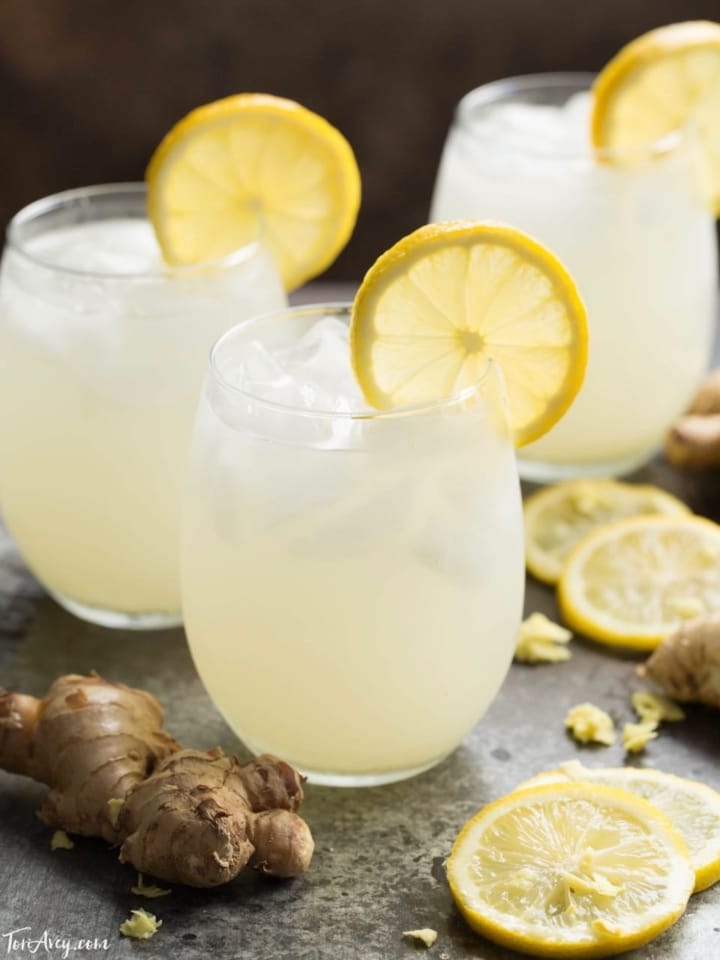
Ginger, with its zippy and refreshing taste, is listed among the world’s oldest spices. As far back as 500 BC, this native plant of China and India was used for medicine, food, and flavoring. For most of the Western world, ginger was used to spice up drinks. Up until the Victorian era, beer was the drink of choice in England, especially herbal and spiced low-alcohol “small” beers such as ginger beer.
I would be willing to bet that most us were introduced to the flavor of Zingiber officinale through ginger ale. I don’t know about you, but the zingy soda pop was my mom’s go-to cure for tummy aches. This non-alcoholic ginger ale made its American debut in 1866 when a Detroit, Michigan pharmacist named James Vernor installed a soda fountain in his drugstore. Vernor began playing around with ginger extracts, and in 1870 perfected his recipe, which included mellowing the syrup for four years in wooden casks. It’s not surprising that a pharmacist would chose ginger, as the rhizome was (and still is) known as a stomach soother. In fact, Vernor’s ads often touted “Mothers tell their children to ask for Vernor’s Ginger Ale because it’s wholesome and healthful.” Vernor’s Ginger Ale remains just as popular today.
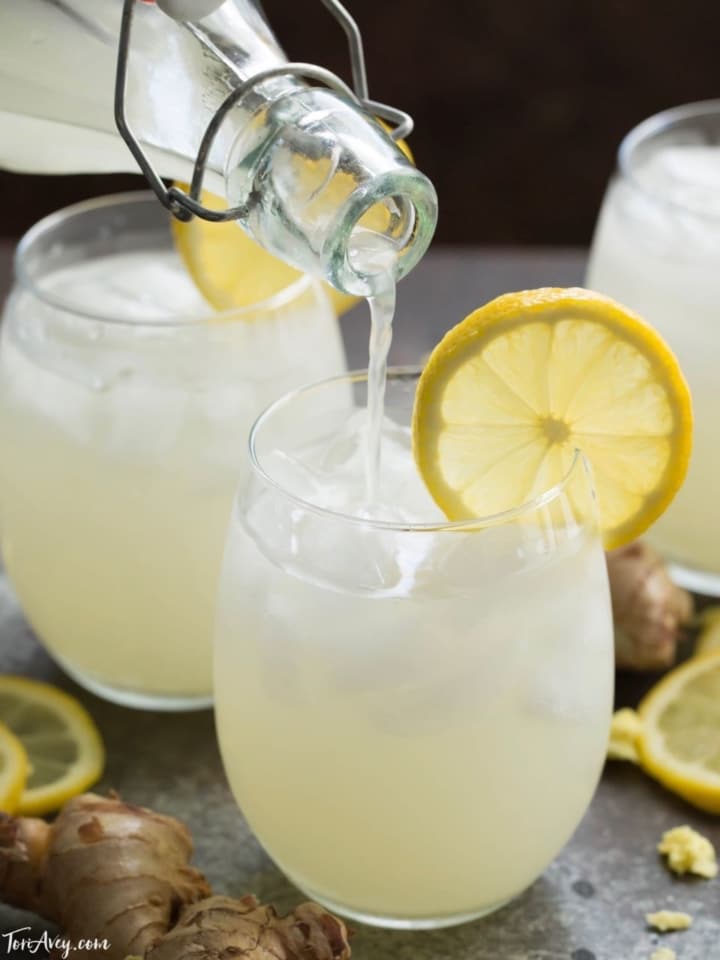
Ginger ale and ginger beer are both basically the same thing. It’s easy and inexpensive to make old-fashioned ginger beer at home, and you get more of a gingery taste than you do from the store-bought stuff. A bit of fermentation is involved, which produces a very slight alcohol content (not noticeable, but important to point out for those sensitive to alcohol). Some manufacturers ferment the mixture longer and make other adjustments to increase the alcohol content, but for our purposes this ginger beer is more akin to ginger ale. If you’re concerned, make the ginger syrup as noted below, but skip the fermentation process and mix it with seltzer water instead to produce a fermentation-free beverage.
Once you master the process of creating ginger beer, you’ll be hooked. It’s fun to ferment. Enjoy!
Recommended Products:
Video by Entice Films
We are a participant in the Amazon Services LLC Associates Program, an affiliate advertising program designed to provide a means for us to earn fees by linking to Amazon.com and affiliated sites. As an Amazon Associate I earn from qualifying purchases.
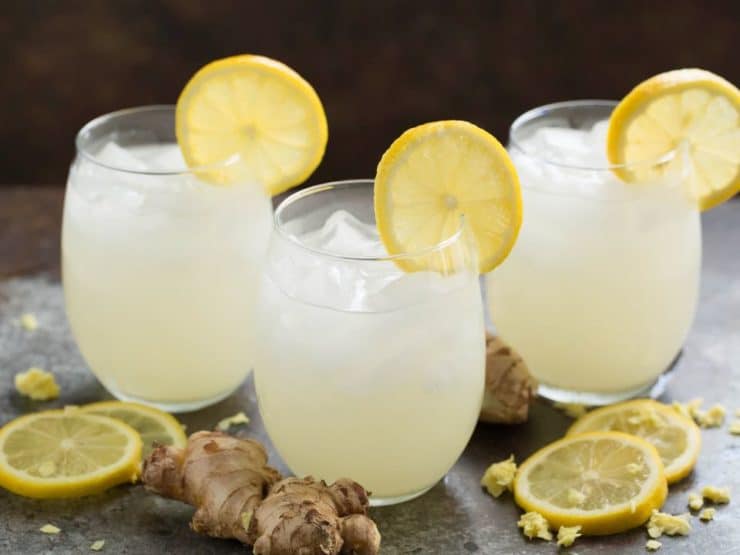
Homemade Ginger Beer
Ingredients
Ginger Syrup Ingredients
- 1 cup granulated sugar
- 1/2 cup water
- 2 tablespoons grated fresh ginger
Ginger Beer Ingredients
- 1/8 teaspoon active dry yeast or brewer's yeast
- Ginger syrup (ingredients above)
- 3 tablespoons lemon juice, freshly squeezed
- 7 cups filtered water
Instructions
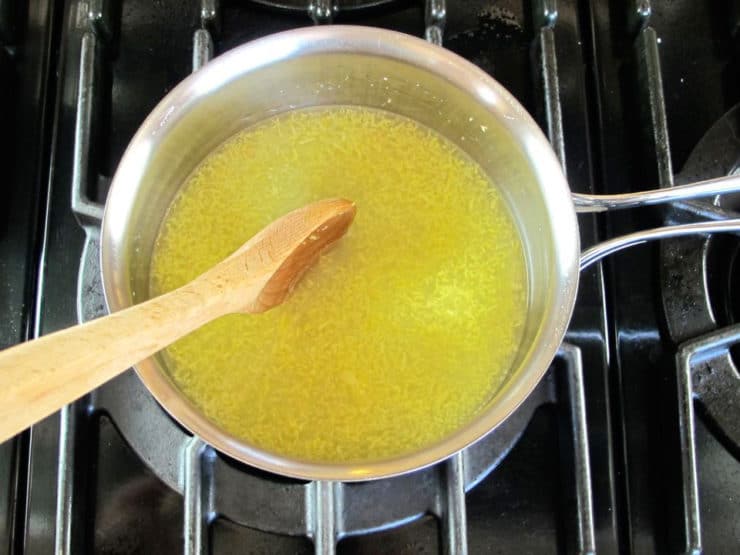
- Peel a chunk of the ginger with the tip of a teaspoon—the papery skin scrapes right off—and grate it, using the fine side of your grater. Place the ginger, sugar, and water in a saucepan over medium heat and stir until the sugar is dissolved. Turn off the heat and allow the mixture to steep for an hour.

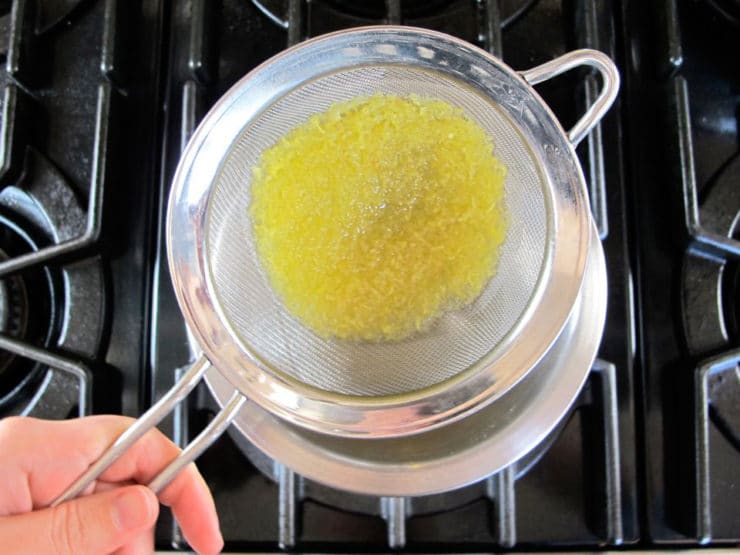
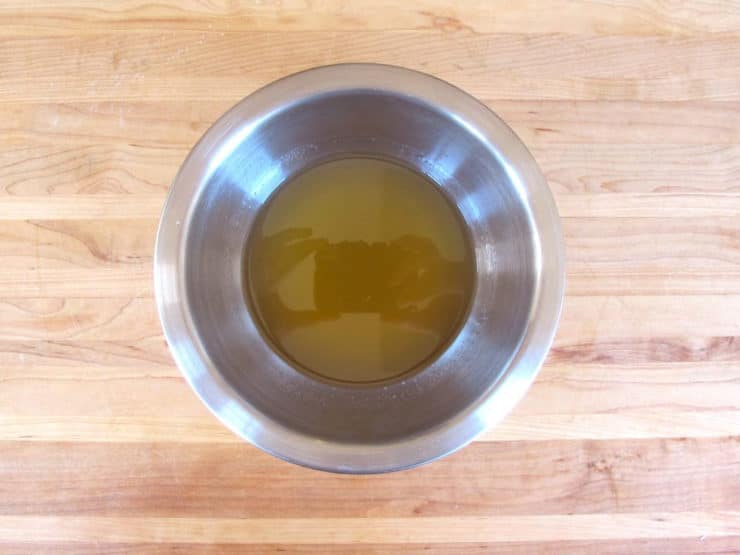
- Strain the mixture (discard the ginger solids) and allow to cool.
- You’ve now made ginger syrup (or gingerette, as the Brits call it). Stop right here if you’re looking for a short-cut to ginger ale and you don’t want to mess around with the fermentation process. Pour three or four tablespoons (more or less depending upon how gingery you like it) of your syrup over ice and add 8 ounces of seltzer water or club soda. Bottle the rest of the syrup and store it in the refrigerator.
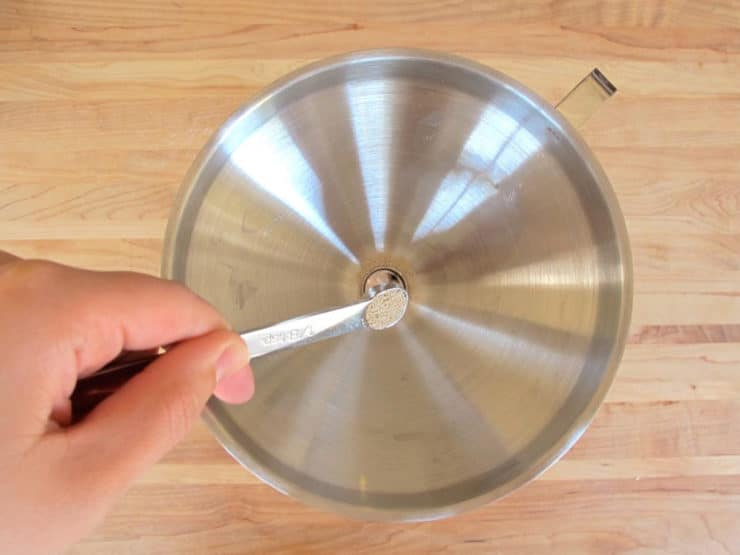
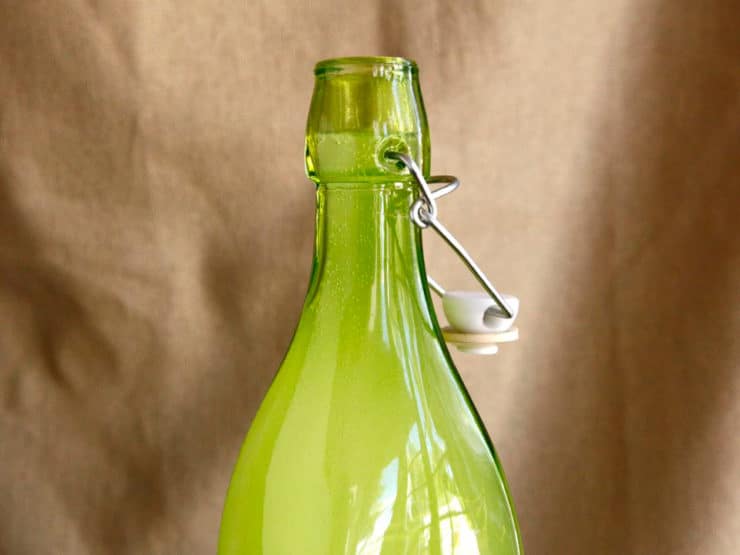
- For the full ginger beer experience, place a funnel in the top of the bottle. Sprinkle the yeast in, followed by the syrup, lemon juice, and water.
- Put the lid on the bottle and shake the concoction until the yeast is dissolved. Stow it on a shady shelf or in your pantry out of direct sunlight for 2-3 days, or until fizz is achieved. At this point it is ready to drink, and must be stored in the refrigerator to prevent further fermentation. Don't forget about the bottle, or the pressure will build up so much that it may explode!As with any yeast-powered beverage, the fermentation process continues unless you prevent it from happening. Refrigerating will slow the process down but not stop it completely, that's why it’s best to treat ginger beer as a perishable beverage. Consume within 1-2 weeks.
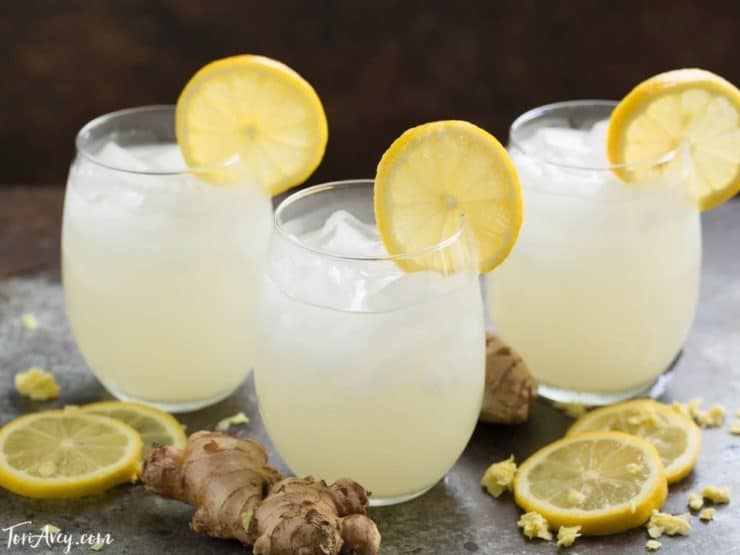
- Serve over ice and savor the spicy taste of your very own homemade ginger beer!
NOTES
Nutrition

tried this recipe?
Let us know in the comments!


What simple, thorough instructions and gorgeous photos! Thank you so much for sharing! My family is enjoying lots of this strong, spicy brew. Since I hate food waste of every kind, I also make a second and third batch of syrup from the cooked ginger, and we have progressively milder-flavored brews. 🙂 Oh, and we also experiment with different sugars and honeys, so it’s always a little different. Thanks again!
So happy you like it Naomi! 🙂
Just saw this and looking forward to trying it out. However I’d like some clarification. The instructions says to “place a funnel in the top of the bottle and pour in the filtered water. Sprinkle the yeast in, followed by the syrup, lemon juice, and water” The ingredients list only says 2 cups filtered water. Do I just add extra water at the end to fill a 2-liter bottle?
You can also use Pat Mack’s Caps on the 2 liter bottle.
These allow carbonation of the drink without the risk of explosion- I have used them myself and find them perfect for small batch brewing such as this.
The use of a balloon tied off on top of a glass bottle will let the gas expand
What fun! If this works & i use the same bottle size & balloon size, will I be able to tell when it’s ready by the size of a balloon? If the balloon gets so full that it floats off the counter, then the brew might make you high? (NOTE:for those long on chemistry & short on humor i know its not going to take flight just being silly.)
Can dried ginger root be substituted for the fresh ginger? If so, how much?
I’ve ben successfully making ‘real’ root beer, and I want to make ginger beer. The recipe looks good!!
This recipe is similar to one I used when I was about 10 years old. I could only get powdered ginger back then but it tasted ok. I only used raisins ( 3 per beer bottle) instead of yeast. It took about 3 weeks to the end result. To eliminate the sediment I put the bottles in a refrigerator for 2 days along with extra empty bottles. Then poured off the original into new bottle and recapped to keep the fizz.
My father eventually banned me because by accident about 10 brewing bottles did blow up in a chain reaction when one was knocked over by a door in the wind. And yes, I was obliged to clean up !
Now there are prolific numbers of pressure capable plastic bottles I am inspired to try again.
Thanks
Can you use concentrated lemon? I made this recipe, but after a few days in the fridge it began to smell a bit skunky….could that be because I used concentrated lemon?
Thanks
Bad smells are usually from improper cleaning of the items used and are not sterile. I only use concentrated lemon and never had a problem!
Use an inexpensive air stop available online at brewing equipment stores. This will allow you to ferment in a glass bottle without worring about pressure building.
Hi there, have been fermenting this for 2 days now (using fleishmanns) and like other people have noticed, there is a sulphur smell, is it safe to drink?
What a wonderful website! I found all the comments very entertaining! Especially the stevia questions!! Lol But joke aside…it has left me craving ginger beer even more…where I’m from its called “gemmer bier”. I’m going to get a huge plastic container and raisons is a must!! Wish me luck!! 🙂
Should i change anything at high altitude?
Good recipe but not nearly fiery enough. I’m used to English / Jamaican ginger beer and this tastes more like ginger ale, so think the amount of ginger needs to be tripled at least.
is this brew alcoholic if you use the yeast?
never mind, i should just read. lol
Yes but it is so little.
Esentially you are making beer. Any toxins or chemicals will interfere with the brewing process. With my last batch I didn’t use clean bottles. Boy did I taste the effect. If you ever have the chance go see how they bottle beer… Or wine… Everything is super hygenic.
So a “dirty” brew can either give you a bad taste, or even a brew that never fermented. Flat sugary ginger water.
But if your water is not treated heavily – do it!
Why filtered water? We have 900′ well and our water tastes great, so if it is for the taste I am assuming I won’t need to purchase a special water – correct? Thanks. I am excited to try this.
You don’t need filtered water I use tap water I let it stand over night. If your water is safe to drink you can use it.
hi there,
just wondering if i use all the syrup for the ginger beer?
thanks
Yes and no! Depends on how much Ginger beer you make. Also how strong you make it or like it. If you are following a recipe make that amount.
Any sugar will work as long as it is real sugar. I have seen Turbinado sugar but I have never looked close. I understand that some forms of sugar work a little slower than white sugar. I saw a YouTube someone made and said Honey is one of them. But I have never experimented with any…
As far as freezing I am sure it can but you will want to make sure the freezer is as cold as possible and that the package you have it in has as much air removed as possible and not covered with other items on or over it. Also make sure you use it in a reasonable amount of time. Freezing might make the ginger syrup weaker over time and freezer burn never helps.
two questions:
1) any reason that turbinado sugar would not work?
2) can the ginger syrup be frozen to preserve it longer?
Hi, what is meant by pouring over ice?
Jeanne, that just means putting ice in a glass and pouring the drink into the glass, “over” the ice.
I served my first batch to some friends and without exception they loved it. But one, from Indonesia, says the best ginger beer hurts a little, so I doubled the ginger in the next batch. Even better — a soft drink for grown ups.
For batch 3 I used about 25% more sugar and let it ferment until until CO2 generation nearly stopped before bottling. As Rene noted, this should have produced an alcohol content somewhere below 3% (using baker’s yeast). I’ve made honey wine and this added similar flavors, but I didn’t care for it, as the ginger bite seemed a bit dulled.
I’ll be starting batch 4 tomorrow and might up the ginger even more. One suggestion: if you decide to tweak the recipe, measure the ginger by weight. The amount of grated ginger in a tablespoon depends on how you grate it and how much you pack it down. Two tablespoons of water is 1 ounce by weight (about 30 grams). I figure the density of ginger is similar, so I used 1 ounce of whole ginger, making that batch just a little more intense than the straight recipe. Not a big deal. The quality of the ginger probably is more important.
Made some and the flavour was PERFECT!! However it lacked fizz. I used the right amount if yeast and left it for 48 hours. Any ideas on how to get more fizz in my GB?? More yeast maybe??
Kevin, try leaving it for another day. The longer it sits, the more fizzy it becomes in my experience. 🙂
Maybe more sugar! Also start the yeast in a little water and sugar and make sure it is active. Also what temperature is it setting at. The cooler the longer it takes. Set it in the oven with a pilot light if you have one or turn on the light inside the oven. BTW watch it close in there as the warmer it is the more fiz you will make faster.
I agree with both Hank and Tory.
My last batch I kept running for 6 days before it went to the fridge. My initail batch I added much more sugar as the fermentation process uses the sugar, as I wanted alcohol. After almost 2 weeks there was no sugar left over, though it was still good.
Most people prefer doing this in summer as it is hotter. Also be careful of using anything that has preservatives – for instance if you decide replacing the lemons with bottled lemon juice. This I learned the hard way when I bought massive amounts of fruit juice to ferment, and later distilled to fruit brandy. Some of the juice just didn’t ferment at all.
Thanks guys for all your tips. I think I just need a bit more patience!! Even though it’s been in the fridge there is a bit more fizz and I’m now feeling quite proud of my first attempt at GB. Attempt number two this weekend..