

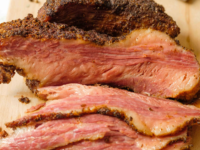
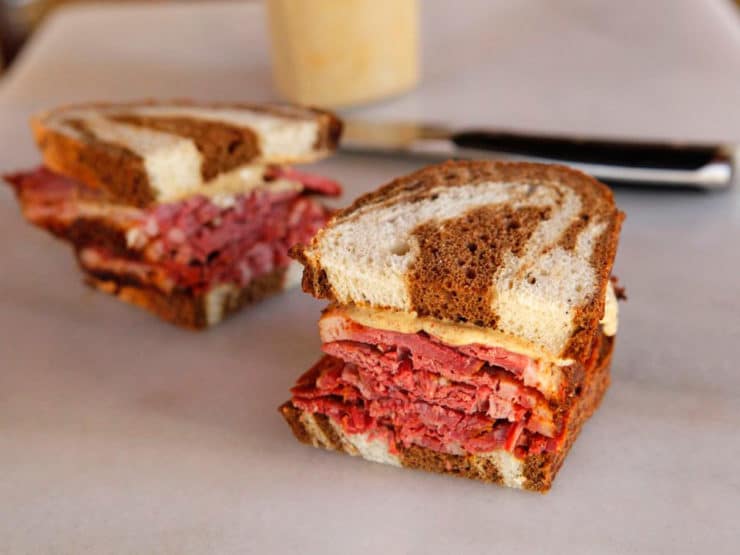
It’s glorious, that first bite of a warm pastrami sandwich on freshly baked rye. If you’ve ever eaten pastrami at a great Jewish deli, you know what I’m talking about. That moist, tender meat topped with spicy mustard is enough to make almost anyone swoon.
When my husband and I took the Queen Mary from London to New York several years ago, we docked at 6:00am and found that we were hungry. Our first stop? Katz’s Deli for a pastrami on rye. It didn’t matter that the sun was barely up. Pastrami is good any time, day or night. When the appetite strikes, you must feed it. Trouble is, many of us don’t live close to a great Jewish deli, and mediocre pastrami can be SO disappointing. What can you do? Make it at home, that’s what!
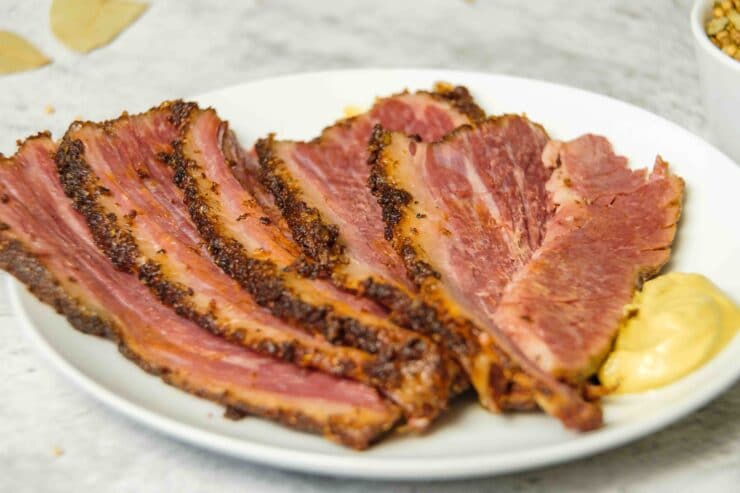
I’ve tried my hand at homemade pastrami several times with varying degrees of success. It wasn’t until a publisher sent me a review copy of The Artisan Jewish Deli at Home that I finally found a recipe worth blogging about.
In their fabulous cookbook, authors Nick Zukin and Michael C. Zusman give workable home kitchen recipes for many Jewish deli favorites. In addition to uncovering the secrets of making these classic recipes at home, Nick and Michael delve into the traditional techniques used in deli kitchens. They also include nostalgic profiles of the most famous deli establishments in North America, including Katz’s in New York and Mile End in Montreal.
Nick Zukin helped to open Kenny & Zuke’s Delicatessen in Portland, one of the first Jewish delicatessens “focused on producing artisanal eats.” Michael C. Zusman is a state court judge who also does freelance food and restaurant writing. His bread recipes are currently used at Kenny & Zuke’s.

Deli-style pastrami emerged in New York during the late 19th century and remains a best seller on most deli menus. Because of its lengthy and laborious process, very few delis still cure and carve their own pastrami. Zukin and Zusman have whittled down the process to a very simple, doable recipe that requires relatively little effort.
After making a simple brine the meat cures in the refrigerator, then it’s rubbed with a spice blend and left to cook in a slow oven for a few hours. According to the authors:
“Delicatessen aficionados might cringe at the idea of making pastrami in the oven, since wood smoking is supposed to be the customary cooking method. At least that’s what they think. In truth, some of the most lauded pastrami and smoked meat involve no wood smoke at all. In his must read chronicle, Save the Deli, David Sax reveals that the smoky flavor in commercially produced pastrami comes from fat dripping down and sizzling on the gas element of the large ovens that are used.”
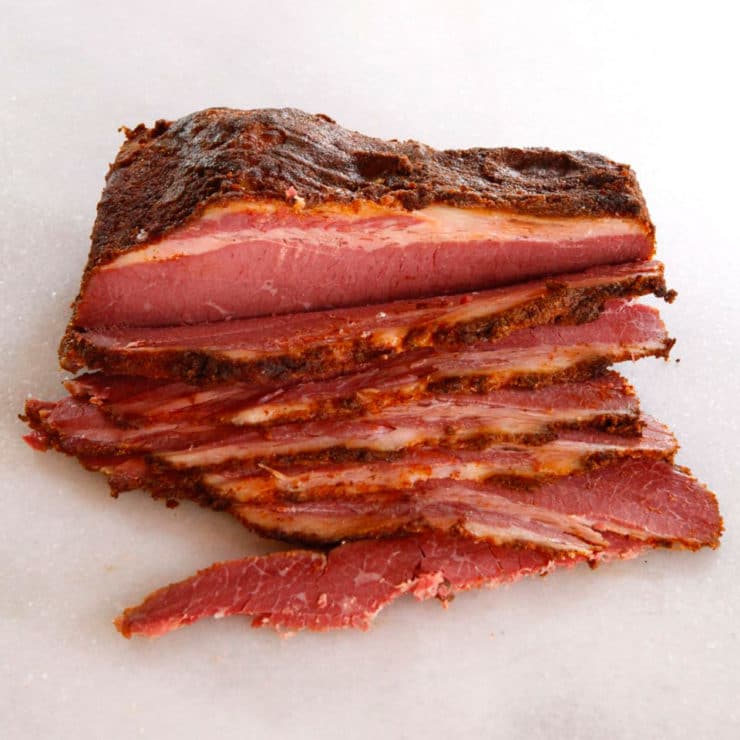
Side note: I love Save the Deli, I actually covered it on the blog a few years back.
To add that smoky flavor to the brisket, Zukin and Zusman use a hefty dose of smoked paprika (one of my favorite spices!). The result is delicious, quality pastrami hot and fresh from your own oven. My house smelled just like a deli while it was cooking. The flavor and texture were delightful– tender and flavorful. I tested the recipe multiple times just to make sure it wasn’t a fluke. It’s not. This is some killer pastrami.
I stayed pretty true to Zukin and Zusman’s recipe, though I did adapt it slightly by cutting back on the salt. My first test round was extremely salty– good for a bite or two, but if I’d eaten a few slices I would have puffed up like a balloon. The next testing round I cut the kosher salt in the brine in half. I thought it might be too much and that I’d have to add some back in, but half the salt actually provided the perfect flavor. My five dinner guests taste-tested it for me, and they all agreed that the lower sodium brine it was plenty salty. So I present the recipe with the kosher salt halved; if you prefer to try it as written in the cookbook, use 2 cups of kosher salt in the brine.
Update: Nick Zukin let me know in the comments that they used Diamond large crystal kosher salt, which has less salt per cup than Morton’s. I didn’t realize that salt content varies from brand to brand. I am updating my recipe instructions to reflect the brand of salt we used. Thanks to Nick for the heads up!
Don’t be daunted by the long prep time, the preparation is actually very simple. Most of the time here is spent on curing the pastrami in the refrigerator. After that it’s no more difficult than roasting a brisket on a rack. The results are totally worth the wait.
I have to hand it to Nick Zukin and Michael Zusman, this is a genius recipe. Their book has a lot of other great recipes for Jewish deli classics including Classic Deli Sandwich Rye, Onion-Poppy Seed Bialys and Cabbage and Smoked Meat Borscht. If you love deli food like I do, check out The Artisan Jewish Deli at Home. You’ll be glad you did!
What’s your favorite place to get a hot pastrami on rye?
Recommended Products:
We are a participant in the Amazon Services LLC Associates Program, an affiliate advertising program designed to provide a means for us to earn fees by linking to Amazon.com and affiliated sites. As an Amazon Associate I earn from qualifying purchases.
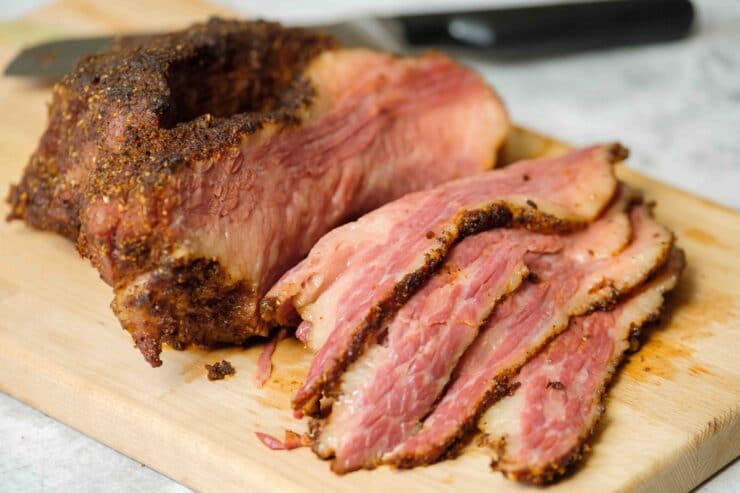
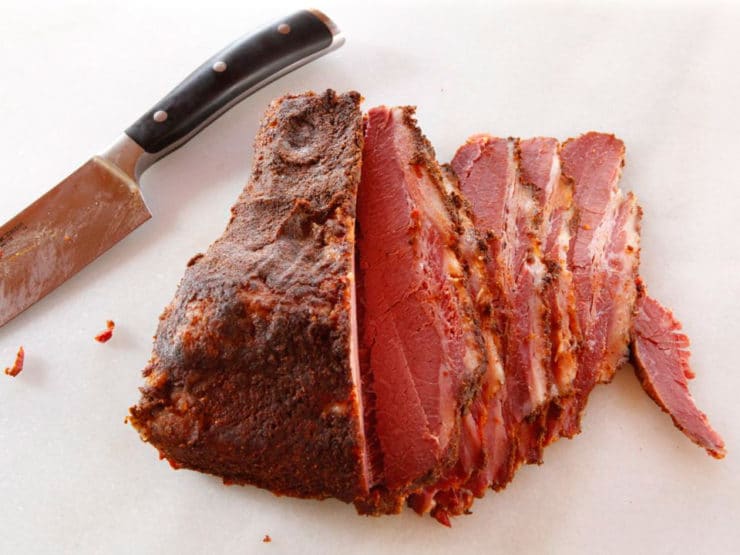
Homemade Pastrami
Ingredients
- 3 quarts water
- 3/4 cup Morton's coarse kosher salt (178 grams) OR 1 1/3 cup Diamond Crystal Kosher Salt (181 grams) - these two brands are NOT interchangeable, the same weight provides two very different cup measurements
- 2 teaspoons pink curing salt (12 grams) - Pink curing salt is also known as Prague Mix #1, Instacure #1 or Curing Salt #1 - NOT Himalayan pink salt. See safety note below.
- 1 cup granulated sugar
- 2 tablespoons pickling spice
- 1 tablespoon whole coriander seeds
- 1 tablespoon whole yellow mustard seeds
- 4 cloves garlic (minced)
- 5 pounds beef brisket
Spice Rub Ingredients
- 1/4 cup ground coriander
- 2 tablespoons freshly ground black pepper
- 2 tablespoons smoked paprika
Instructions
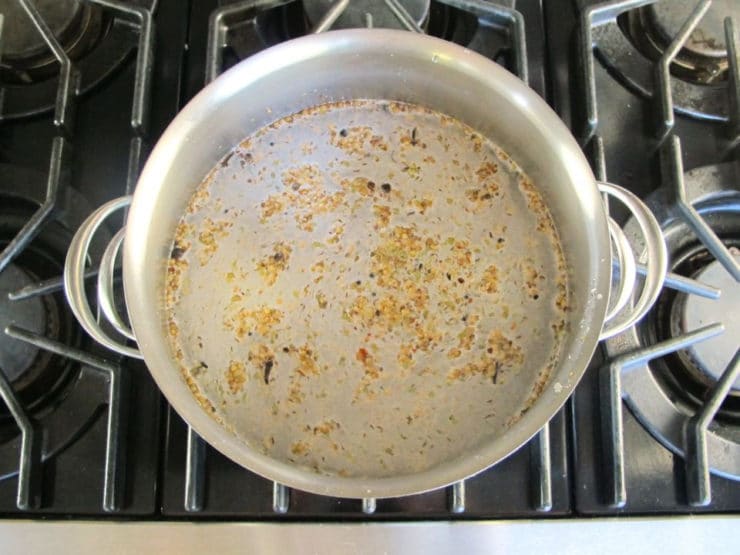
- To make the brine, fill a medium to large stockpot with 3 quarts water. Add the kosher and pink salts, granulated sugar, pickling spice, coriander and mustard seeds, and garlic. Bring to a boil over high heat, stirring often to fully dissolve the salt and sugar in the water. Immediately remove the pot from the heat once the brine boils.Add 3 quarts ice cold water to a 2-gallon or larger food-safe container that will fit in your refrigerator (you can also use a strong sealing 2-gallon marination bag - double bag for extra insurance). Pour the brine into the container and place it uncovered in the refrigerator until completely cool. You can also divide the brine evenly between two separate containers so that it will fit better in the refrigerator.

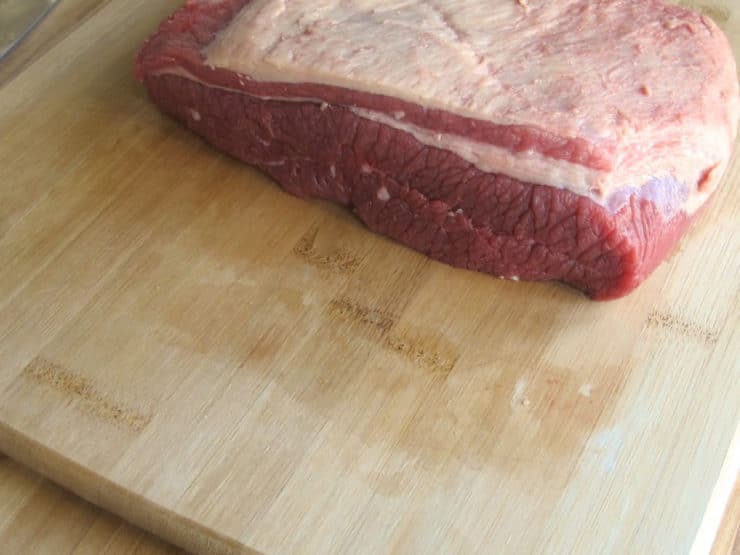
- Trim the fat from the brisket until the fat layer is about 1/4 inch thick.
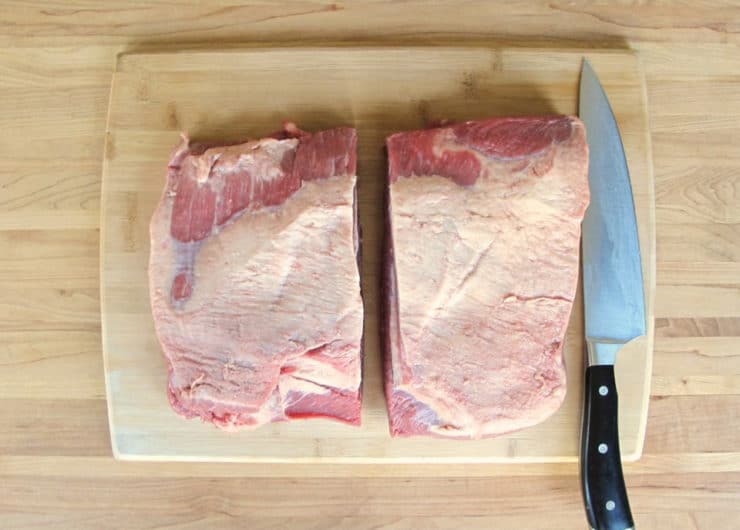
- If necessary, cut the brisket in half so that it will fit into your container(s).

- Submerge the brisket in the cooled brine.Allow the brisket to brine in the refrigerator for 10 to 12 days, flipping it daily top to bottom and stirring the brine. Make sure that if any of the brisket sides are touching one another you regularly turn them away from each other to expose all of the sides to the brine.
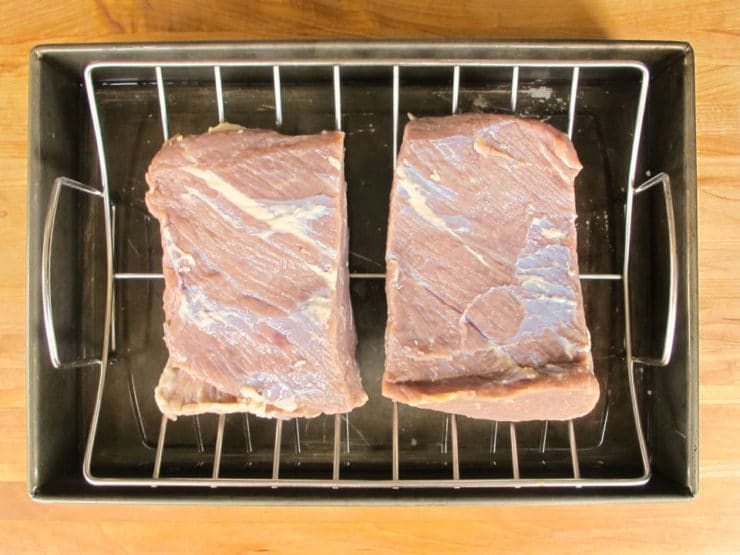
- To cook the brisket, pour 4 cups water into the bottom of a 12 by 15 inch roasting pan. Set a rack inside the pan and place the brisket on the rack, fatty side down.
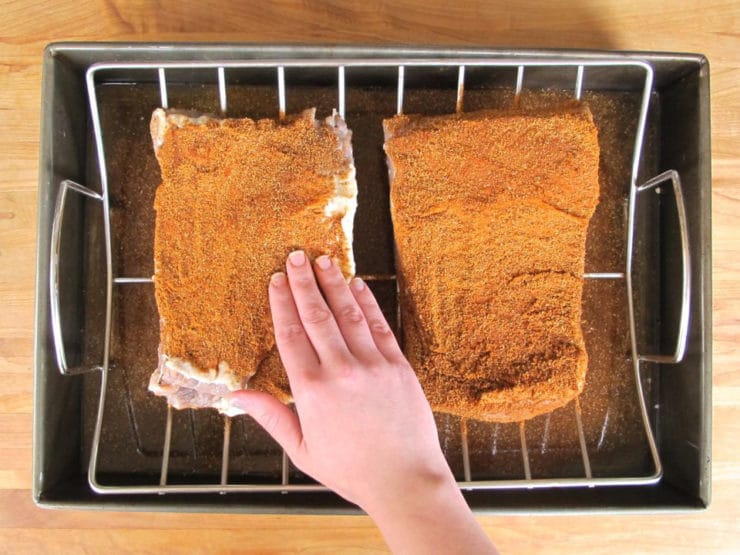
- To make the spice rub, mix together the coriander, pepper and paprika in a small bowl. Evenly rub 1/4 cup of the mixture onto the top of the brisket. Then flip the brisket and rub the remaining spice mixture onto the fatty side. Allow the brisket to come to room temperature, about 2 hours.
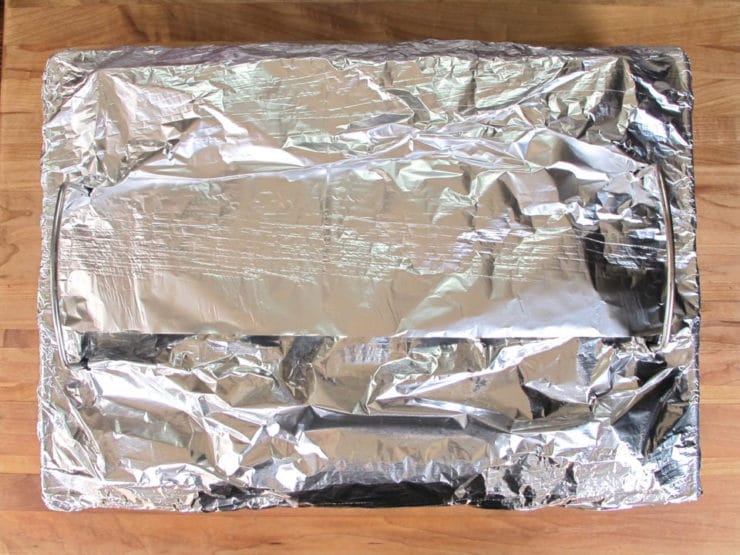
- Preheat the oven to 300 degrees with a rack low enough to fit the pan holding the brisket. Tightly cover the brisket and pan with a double layer of aluminum foil.
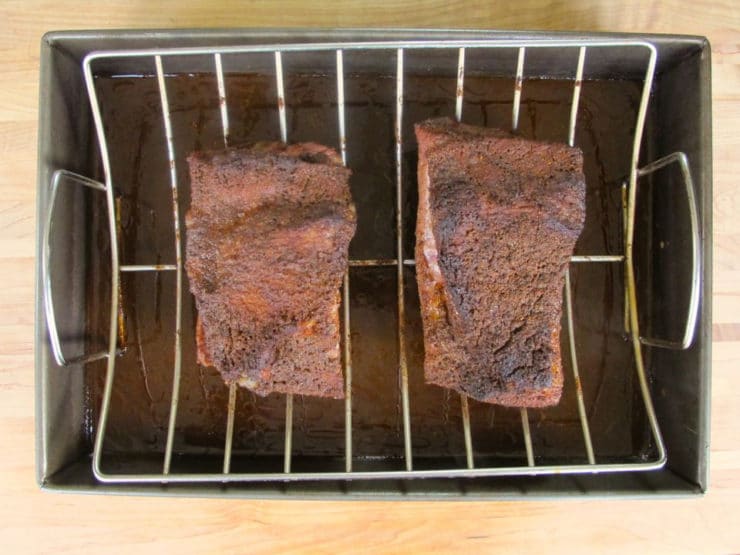
- Bake until the meat reaches an internal temperature of 200 degrees, about 1 hour per pound or 5 hours total. Start checking internal temp at 3 hours and periodically every 20-30 minutes or so to avoid overcooking.
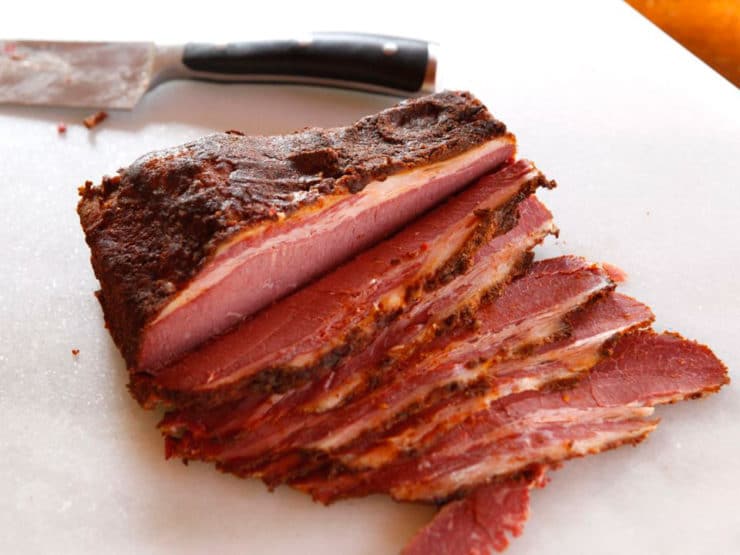
- Without trimming the fat, carve the pastrami into 1/4 inch thick slices, or cut as thin as possible without the meat falling apart. Keep tightly wrapped, or in a sealed container in the fridge, for up to 1 week, or in the freezer for up to 6 months.
- SAFETY NOTE: handle the pink curing salt with care and keep it out of reach of children. It is used in pastrami and other cured meats to kill bacteria, prevent botulism and add flavor. However it is extremely toxic if ingested directly; in fact, it's colored pink to prevent people from mistaking it for regular salt. When used with care in recipes like this, it is very safe and necessary for proper flavor and food safety. That said, you should know the risks and keep the curing salt properly labeled and out of the reach of children.

NOTES
Nutrition

tried this recipe?
Let us know in the comments!

Made the Pastrami recipe! It came out spectacular!! The only thing different that I did was, before adding the spice rub, I dried the brisket off using paper towels, placed the brined brisket in a large container covered with plastic wrap. I then used my smoking gun with a mixture of hickory and applewood. I did three rounds of the smoking. I then added the spice rub and followed the recipe to finish.
This is so much better than any store bought pastrami. Thank you for the recipe. This will be a go to recipe for me!!
I followed this recipe and had the best pastrami since my younger days at the Jewish delis on the LES of NYC.
My efforts to make pastrami failed 12 times with the new smoker
– all were dried out after 12 hours in the smoker to reach 190 degrees
– that’s 12 hours of in and out of the house to manage smoker temperatures raging from 150 to 350 degrees
GIVE ME AN OVEN!!!
Tory’s oven recipe is so easy, i spend most of my time preparing russian dressing and sauerkraut.
And buying the best rye bread and swiss cheese I can find to earn a place next to this phenomenal pastrami!
Thank you
MJ
This is a wonderful recipe. I’ve made it at least a dozen times. Like so many meat dishes, personal preferences can be added. I was out of garlic once so I used 1/4 cup of garlic powder. It worked great and I have used it ever since. I add a tablespoon or so of liquid smoke to my brine and a dash or so in the pan for cooking. If I have some in the house, onion powder goes in the brine as well. Slow cooking is my thing so 225 degrees for 7 1/2 hours. That’s for a 7-8 pound brisket. I love the comment about how long it last in the fridge. In my house this is a Sunday meal. By Tuesday the leftovers are gone. That’s for five people and an 8 pound brisket. I’ve served this to at least 30 different people over the past few years. All 30 raved about it and I’ve probably passed the recipe on to 20 of them.
Followed your brine recipe exactly. But then we smoked it on the grill for 4 hours to a temp of 170 and it looks, smells and tastes perfect. Thanks ! For the people worried about the amount of salt and Prague Mix, we made the brine exactly as stated, had two briskets (about 5 lbs each) and it worked out perfectly. You don’t rub the Prague salt directly onto the roast, it gets diluted in the brine and little of it gets absorbed into the meat.
We used a mixture of cherry wood and Jack Daniel’s wood to smoke the pastrami. It’s seriously good !
HI Karin, did you serve pastrami at 170 or did you steam it prior to serving?
Thanks, Alex
Do you rinse the brine off of the meat after removing it from the brine before adding the rub?
I didn’t, just let it drip dry for about 30 minutes on a rack. Then I rubbed the spice mixture all over. (It needs a little moisture to stick). Threw it straight on the grill from there.
I am so excitede to try this recipe, thank you so much for publishing it. I love Patrami and have always wanted to try and make it at home; so here goes. Your recipe is wonderful and the pictures are awesome. I will let you know how it goes, please keep up the great work.
Hi Tori, loving the look of this recipe, currently about to put in for the bake so fingers crossed. Just 1 question, I only managed to get hold of Saltpetre, being in the UK I think curing our own meat is too uncommon. I used 2g per litre for the brine base, as per instructions on the pack. Do you think this will affect the outcome?
Hi David,
I managed to get the coarse Kosher salt and the Pink Prague #1 from Amazon.co.uk
Hi Guys,
I use a salt beef/pastrami mix from Weschenfelder in the UK. It’s pretty good and I have had good results on both salt beef and pastrami. I also purchased a brineometer from them which allows me to accurately measure the brine solution. Great recipe Tori!
This is a great recipe! I decided I wanted to try making pastrami at home. We love getting to Katz’ in NYC but like good pastrami more than we have opportunities to get there. My husband was highly skeptical that one could be successful at making it at home, but this recipe was very straightforward to follow and the result was outstanding, more than overcoming even his skepticism. One variation I tried that seemed successful: in addition to the koshering salt and Prague powder called for in the recipe, I added 1/4 cup of smoked salt, to boost the smoky flavor added by the smoked paprika. Otherwise followed the recipe exactly. Thank you!
Tori, just wondering is it 3 quarts water to start the brine and then add that to another 3 quarts cold water or is it 3 quarts total?
Thanks,
Mike
6 quarts total – 3 and 3.
I’m ready to try your recipes. From Australia we have a different cultural life taste but new is always good.
We make corned beef into silverside by brining and then cooking with salt sugar brown vinegar cloves bay leaf. We tend to eat it cold on sandwiches with English piccalilli (yum), or hot with mashed potato and cauliflower with white sauce. I want to try your pastrami recipe
Thank you so much for this recipe!!! We’ve been wanting to try this for a while, and finally got the chance. I wish I could upload a photo with my comment because the photo is basically a scratch and sniff sticker that would make your mouth water!
I wanted to mention that some people complained about the rub turning mushy in the oven, and I was worried about that, so I took the foil off for the last 15 minutes, and it was perfection!
Also, I can’t believe how many mansplainers there were in the comments section, questioning every detail, so I just wanted to tell everybody to just chill and follow the recipe as written — it’s perfect!
Bridget, you are my new best friend! Haha thanks for writing!
thank you,
can I smoke the brisket instead of putting it in the oven?
Yes, if you are familiar with the smoking process. I think if you read through the comments other readers have tried this with amazing results.
Really good and very easy. I followed the recipe and it worked great. I purchased the brisket from Costco, the pink salt from Amazon and the fresh spices (coriander, mustard & picking spice) from Penzys. I brined for about 7 days.
Re “real pastrami.” I love pastrami-back in 1978 I started trying to make my own–I finally found a from scratch recipe in the NYT which have kept for 40 years: Buy your brisket and rub it with a combination of ground coriander, garlic, black pepper and Kosher salt. Place bag in the fridge for a couple of day, then drain the liquid off, and rub any remaining spices back into the meet–hang it in a cheese cloth bag in a cool dry place to deveope a pellicle–Then smoke in a small smoker for several hours–light smoke please. Now it’s ready to simmer until tender and slice thinly for sandwiches.
It’s time consuming, but not really all that hard–and I confered with my Jewish classmates who said it was as good as Wolfy’s pastrami (BTW–the key spice is coriander: crushed and pushed into the brisket)
You said simmer what did you simmer it on and did you use this brine first did you you use the curing salt just wondering im new to this and soaking up all the knowledge i can.
You can find it on Amazon and other online stores.
Trying this recipe for the first time! As of this posting, I have four more days to brine before the rub and cook. My question is this; after the rub is applied to both sides of the brisket, does it go into the roaster with the fat side up or down? Thank you for your time and your recipe! I’ll let you know the results in a few days or so!
Brian B.
I usually cook most slow roasted meats fat side up.
I’m going to try your pastrami recipe
I followed your exact recipe and I just pulled it out of the oven. It looks and smells great.
I let it cool a bit and cut off a slice,
Yummy! It’s my first time making pastrami!!! Thanks!?
The pastrami is DELICIOUS!!!!!
This recipe is easy to follow and completely do-able for novice curing!
I think you mean cups not quarts. That would make way too much brine
No, it is quarts. The recipe is correct.
InstaCure (Prague Powder)consists of 93.75% table salt and 6.25% sodium nitrite. and is used at a rate of 1 teaspoon per 5 pounds of ground meat. If using it for a brine, use 1/2 cup InstaCure No. 1 per gallon of water, plus 1 3/4 cup table salt, 2 1/4 tablespoon sugar and any spices you wish.