


Shakshuka is one of the first recipes I ever shared on my site and has been one of the most popular for years. A simple dish with tomato and eggs, it’s a savory, one-skillet, vegetarian, and gluten-free dish that’s ready to eat in just over 30 minutes and works for breakfast, brunch, lunch, dinner, or “brinner.”
Looking for more easy egg recipes? Try my salmon benedict and matzo brei, too!
What is Shakshuka?
If you’ve never tried shakshuka, I’m thrilled to introduce the concept and a bit of its history to you! Originally a North African dish, it features soft-cooked eggs or poached eggs nestled in a spicy tomato sauce, similar to Italian eggs in purgatory, but with peppers and a slightly spicier taste. Today, this tomato and eggs recipe has grown in popularity and is common throughout the Middle East, and is especially beloved in Israel.
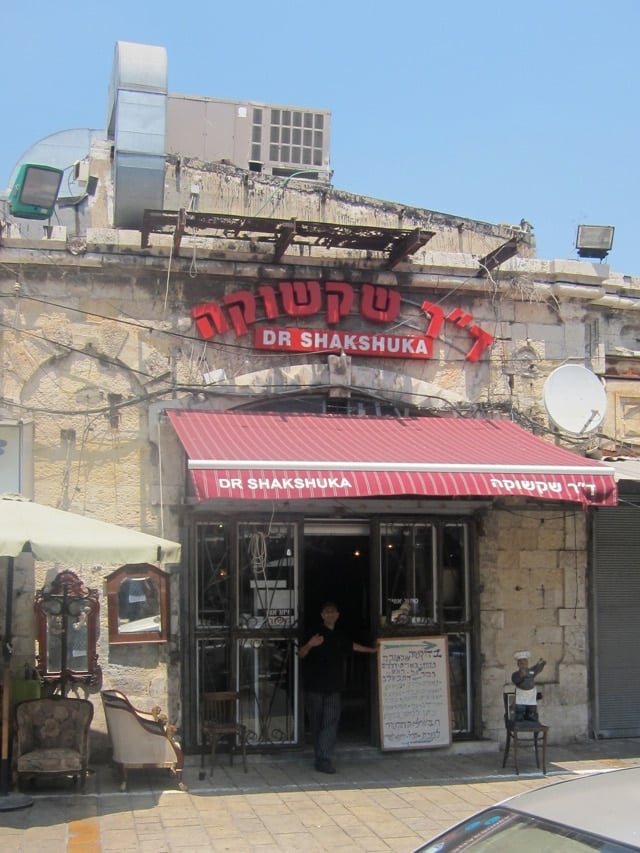
During my visit to the old port city of Jaffa, I stopped by the iconic Dr. Shakshuka, where I ordered their famous version with mushrooms, served bubbling in a skillet with fluffy bread to soak up the sauce. The flavors were unforgettable, inspiring me to create my own shakshuka recipe that was simple, satisfying, and easy to customize with ingredients like green chilies, smoked paprika, or even a spinach-tomato base.
With a five-star rating and hundreds of reviews, it encompasses everything I love about the traditional dish – and it’s easy to make at home!
Ingredients and Notes
Please be sure to scroll down to the recipe card for the complete details!
- Oil – I like to use olive oil to sauté the veggies, but any oil you have on hand, such as avocado oil, will work. You could even use butter, if desired, although I far prefer the flavor of olive oil here.
- Veggies – White or yellow onion and garlic form the base of the sauce, adding a sweet, pungent taste. Then, I add bell peppers, ripe diced tomatoes, and tomato puree to create a savory, thick sauce. You can also use a 28-ounce can of canned tomatoes, but I prefer the flavor of fresh tomatoes.
- Seasonings – Mild chili powder, ground cumin, paprika, cayenne pepper, salt, and black pepper infuse the sauce with the warm, savory flavors shakshuka is known for having. Then, I add sugar to balance some of the acidity of the tomatoes – but that part is completely optional, if you’re watching your sugar intake.
- Eggs – The star of the show! I use six large eggs for this recipe, which is plenty to feed my whole family.
How to Make Shakshuka
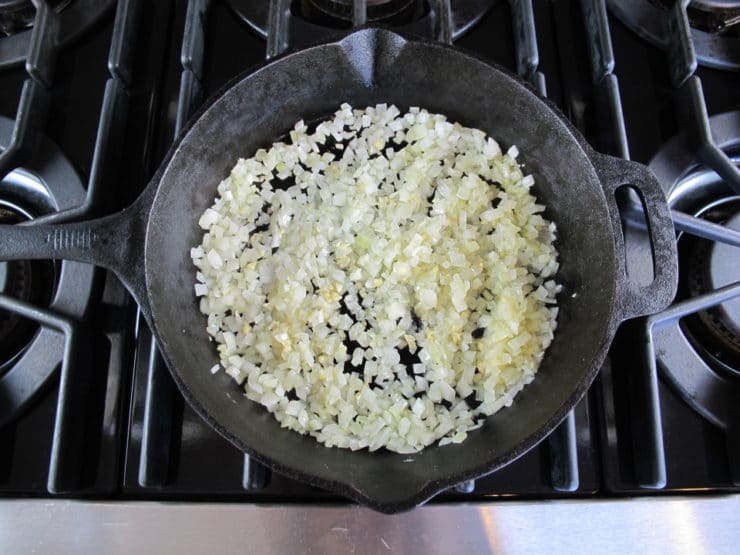
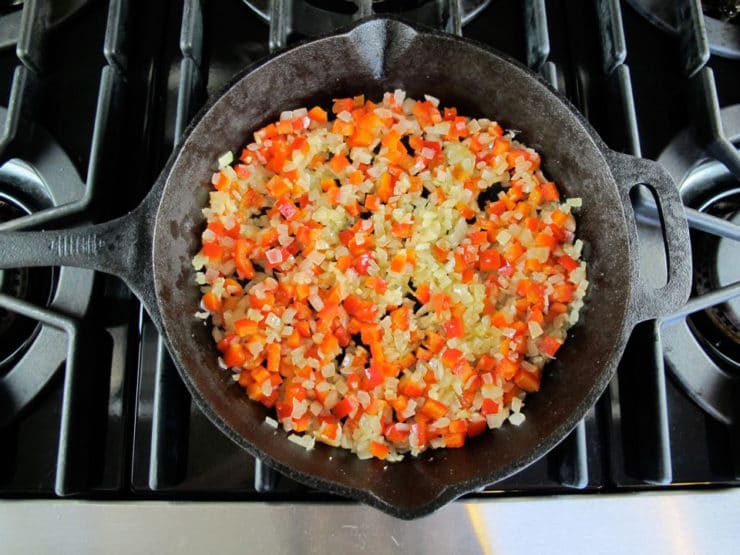
- Sauté. Heat oil in a large skillet or sauté pan over medium heat. Sauté the onion until it begins to soften. Then, add the garlic cloves, and sauté until the mixture is fragrant. This only takes about a minute! Next, add the diced bell pepper, and continue to sauté to soften.
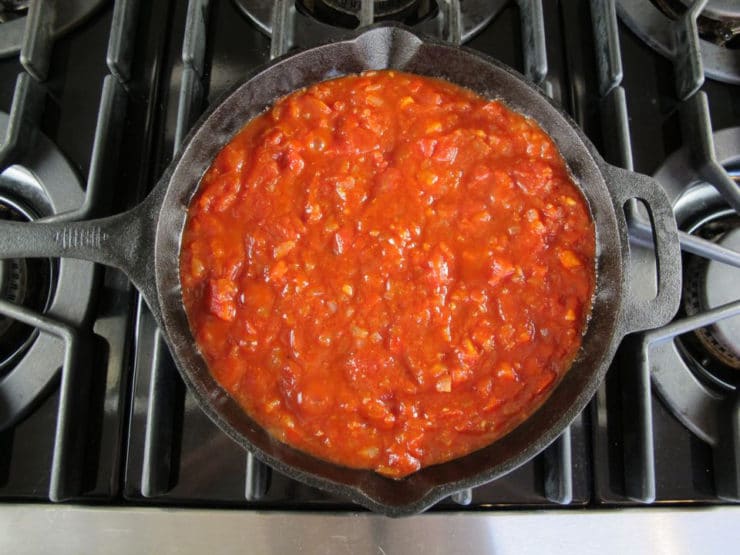
- Simmer. Next, stir in the tomatoes and tomato paste, and add the spices and sugar. Stir to combine, and simmer until the mixture begins to reduce. At this point, I like to give it a quick taste test and adjust as needed.
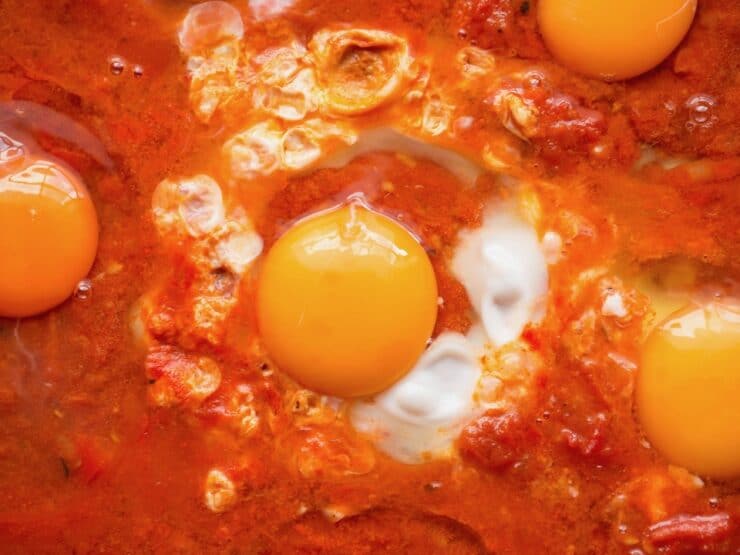
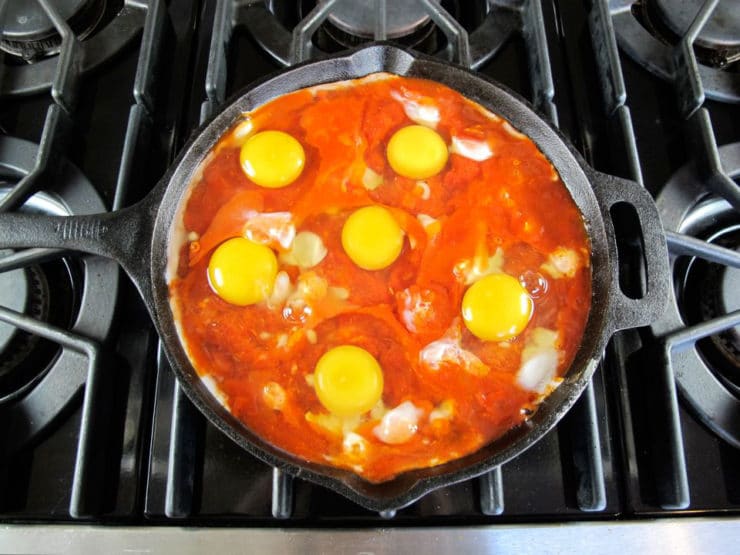
- Add the eggs. Crack the eggs directly over the tomato mixture, spacing them out evenly over the sauce, trying not to let the whites touch. I usually place five eggs around the center of the pan and one in the middle.
- Cook. Cover the pan with a lid and simmer until the eggs cook, the whites set, and the sauce reduces further. Note that the exact cooking times will vary depending on how you like your eggs. Make sure the sauce doesn’t reduce too much, or it will burn!
Tori’s Tips for an Authentic Shakshuka Recipe
- Adjust the flavor. Add more sugar for a sweeter sauce or more cayenne or harissa paste for a spicier Middle Eastern egg dish. Start slowly and be careful with the cayenne and harissa. They are extremely spicy!
- Cook the dish of eggs to your liking. Some people prefer their shakshuka with more runny yolks. If this is your preference, let the sauce reduce for a few minutes before cracking the eggs on top. Then, cover the pan and cook the eggs to taste, making sure the egg whites are set before serving. Otherwise, crack the eggs and cook them to your desired doneness.
- Use a large skillet with a lid. It’s crucial to cover the dish to cook the eggs evenly without burning the sauce.
Topping Ideas and Serving Suggestions
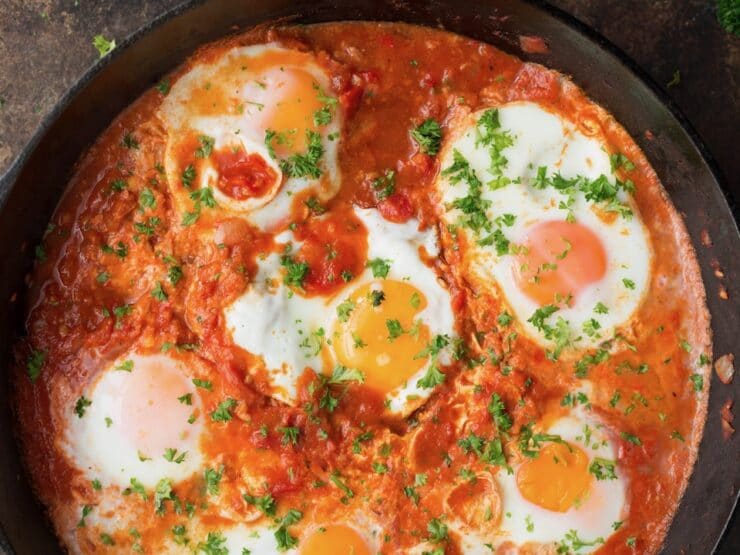
I like to serve my shakshuka topped with fresh herbs such as parsley or cilantro. I often spoon a bit of the sauce on top of the eggs as I eat. Sometimes I add a sprinkle of feta cheese for a salty taste, as well as a side of sourdough pita bread for dipping.
To switch things up, I sometimes add extra ingredients like jalapeños, green chilies, parsley, red pepper flakes, smoked paprika, or extra veggies to the sauce. I’ve even tested a spinach and tomato base that turned out great! Use your imagination and incorporate any items you have on hand. This tomato and eggs dish is always a crowd pleaser!
Video by Entice Films
Shakshuka
Ingredients
- 1 tablespoon olive oil
- 1/2 onion, peeled and diced
- 1 clove garlic, minced
- 1 red bell pepper, seeded and chopped
- 4 cups ripe diced tomatoes, or 2 cans (14 oz. each) diced tomatoes
- 2 tablespoons tomato paste
- 1 teaspoon mild chili powder
- 1 teaspoon ground cumin
- 1 teaspoon paprika
- Pinch of cayenne pepper, or more to taste (careful, it's spicy!)
- Pinch of sugar (optional, to taste - omit for low carb)
- kosher salt and pepper, to taste
- 6 large eggs
- 1/2 tablespoon fresh chopped parsley or cilantro (optional, for garnish)
Instructions
- Heat a deep, large skillet or sauté pan on medium. Slowly warm olive oil in the pan. Add chopped onion, sauté for a few minutes until the onion begins to soften. Add garlic and continue to sauté till mixture is fragrant.

- Add the diced bell pepper, sauté for 5-7 minutes over medium until softened.
- Add tomatoes and tomato paste to pan, stir until blended. Add spices and sugar, stir, and allow mixture to simmer over medium heat for 5-7 minutes until it starts to reduce. At this point, you can taste the mixture and spice it according to your preferences. Add salt and pepper to taste, more sugar for a sweeter sauce, or more cayenne pepper for a spicier shakshuka (be careful with the cayenne... it is extremely spicy!).
- Crack the eggs, one at a time, directly over the tomato mixture, making sure to space them evenly over the sauce. I usually place 5 eggs around the outer edge and 1 in the center. The eggs will cook "over easy" style on top of the tomato sauce.
- Cover the pan with a lid. Allow mixture to simmer for 10-15 minutes, or until the eggs are cooked and the sauce has slightly reduced. Keep an eye on the skillet to make sure that the sauce doesn't reduce too much, which can lead to burning.Some people prefer their shakshuka with more runny yolks. If this is your preference, let the sauce reduce for a few minutes before cracking the eggs on top-- then, cover the pan and cook the eggs to taste, making sure the egg whites are set before serving. Garnish with the chopped parsley or cilantro, if desired. A sprinkle of feta cheese on top is also nice!
NOTES
Nutrition

tried this recipe?
Let us know in the comments!
If you enjoyed this recipe, I’d love it if you left me a star rating and comment below. Also, don’t forget to share and tag us on Facebook and Instagram!
FAQs
As written, this recipe has a medium spice level. Personally, I don’t consider it overly spicy. However, it can easily be adjusted to suit your preferences. If you’re considering adding more heat, start with just a little bit of chili powder or a touch of cayenne, and add more as you cook, tasting as you go.
How do I prevent runny egg whites?
Some people cook shakshuka uncovered, but I find that using a lid is the easiest way to ensure the whites cook and set properly. If they’re a little runny, continue to simmer until they set.
I don’t recommend making this recipe ahead of time, because the eggs don’t reheat well. However, you can prepare the tomato sauce and store it in an airtight container in the refrigerator for up to 2 days or in the freezer for up to 2 months. Then, to serve, thaw, reheat it in a skillet on the stove, and proceed with the recipe as usual.
More Egg-Based Breakfast Recipes

Only change I would make is to add the spices to the oil before the onion or separately and then added, chaunk style. Thank you so much for this recipe.
We make an Italian version . Use Italian seasoning like making a pasta sauce , pop as many eggs as you like and serve over egg noodles .. Great for meatless Friday during Lent..
I just used this recipe last night and it was absolutely amazing. The spices were perfect: I was surprised that I made it! It tasted like it was from a restaurant!
So happy you enjoyed it Donna! We eat it for a weekend breakfast once every couple of weeks, my family just loves it.
I make this dish a lot, but I also make another version of it, instead of tomato paste I put spinach and once I put the eggs in, I put the dish in the oven. It comes delish.
nice!!!!
i lived in israel for 7 years as a shepherd
great food!!!
there street food is amazing
thanks for your blog!! {its great!!!!!
I went to Israel on birthright in March, and we also went and ate at Dr. Shakshuka, and it. was. amazing. It seriously was one of the best things I ate while in Israel. Thank you for bringing up some wonderful memories of that great time, it was a treat! I havn’t tried to make it at home yet, although I promised my boyfriend that I would. Now i’m definately inspired to do so though, probably dinner tomorrow!
This is very similar to a kind of huevos rancheros I’ve been making for years. If you added black beans to this it would be almost identical. Try it!
So like i commented before your blog brings memories back…I made the shaksuka for dinner just last night. I introduced it to my husband and daughter, and they loved it! And so did i taste just like it did when i was a kid!! Thanks so much!
Fabulous Amit! I’m so happy that the blog is bringing back good memories for you, and that you enjoyed the shakshuka with your family! 🙂
Thanks for a walk down memory lane. In 78 I lived on a kibbutz in the Golan, in the kitchen- this was one of the first dishes I learned to make! Love it.
You’re welcome Ilana! My fiance learned how to make it in the Israeli army, and he taught me. Every time I make it, he smiles with memories from his time in Israel. Glad it sparked some sweet memories for you, too!
This dish is very much like an Italian recipe and served over pasta and some ricotta cheece if you so wish topped with grated parmigiano cheece! YUMMMMMMMMY!!!
I thought the very same thing as soon as I read the recipe. We also make it by mixing all the ingredients togeter.Shiksa’s recipe sounds like another great way. Thank you, all for sharing. Also, thank you to Shiksa for sharing your lovely story of your trip to Jaffa, in Israeli. And to Dr. Shaksuka restaurant.
Great blog! Have you done a blog about Iraqi kubba stew? Please do!
Also, which All-Clad pan did you use for this dish? It looks like a saucier maybe?
(Any tips on finding All-clad on sale?!)
I enjoyed reading the account of your visit to Dr. Shakshuka (which I’ll be sure to visit next time I’m in Israel) and seeing your recipe. Since my dad was born and raised in Jerusalem and my mom, though born in New York, grew up in Jerusalem, I’ve been eating shakshuka since I was a kid, although I didn’t learn its real name until much later.
My father used to tell us stories about making it for his buddies in the (U.S.) army during WW II and so when he made it for us, my sisters and I always called it “Army Special.” As you can imagine, with that background I was quite struck by your account of how your husband made it during his army service!
Our family’s version always has lots of parsley in the sauce, but a bigger difference is that my dad used fewer eggs than your recipe and beat them so they could be scrambled into the sauce. The result is a pretty salmon-colored egg-tomato mixture that’s incredibly appetizing on any kind of hearty bread. I like to sprinkle some freshly-ground pepper on top of each slice just before I eat it. I don’t know if the scrambled version was his own idea or a regional variation, but I share your fondness for the dish however it’s prepared.
Keep up the good work!
Hi Moshe! The Dr. Shakshuka version is similar to yours– the whites are semi-scrambled into the sauce, but the yolks are left whole (and as I said in the blog, a bit runny). Both ways are yummy!
So glad you all enjoyed this recipe! It’s definitely one of my favorites. 🙂
Dina, that’s very interesting. I don’t often use green peppers (they’re a little too bitter for me), but I do use them occasionally in this dish. You can certainly use any color pepper you like. As I’m sure you know, shakshuka is very versatile– it’s fun to get creative with new ingredients!
Hello!
I’m glad you had a great time in Israel, indeed shakshuka rocks many’s socks off, including mine. 🙂
I’d like to suggest that you use red or any other color peppers other than green, simply because green peppers are not very good for the body – especially digestion-wise.
Use ripe peppers. Red, Orange, Yellow, even the new purple kind! as long as they’re ripe. Green peppers are picked unripe and contain certain alkaloids that may build up in body tissue.
I like my shakshuka with a couple more veggies grated in – carrot, zucchini, whatever works! 🙂
Waiting for more wonderful stories from your visit. 🙂
Dina, green peppers are not poisonous, as implied by stating that they contain alkaloids. The problem is that some people (myself included) do not tolerate those alkaloids and get indigestion. It’s not anything serious, and the offending alkaloids are destroyed by the heat of cooking- in other words, you should do OK once the green peppers are cooked down. The purple peppers of which you speak are particularly tasty in my opinion, but I have to let them ripen to a deep magenta before picking or they will bother me also.
Great Italian peppers ( long light twisty)will solve the digestion problem as well as the health issue. It’s completely ripe…
I am going to try this one day – sounds TOV MEOD….Todah Rabbah and Baruchah HaBaah to the Tribe…(us)
Tasty!! I’ll have to try this.
I’ve never added chili powder, sounds like a good addition. Will try it your way next time. I love Dr. Shakshouka.
Love your blog (yeshar coach) means more power to you.
i love this recipe…. it looks so good! i am a vegetarian, so i look for recipes from all over the world. i had a stroke in january of this year…. they were so useless at rehab when it came to vegan dishes, to really irritate the cooks, i told them i was kosher vegetarian, and i had to follow kosher dietary laws. i got better food after that, i finally got fresh veggies and fruits, not canned. it was wonderful!!!!!
I love that!! I’ll have to remember that the next time I’m hospitalized! Good thinking!!
as a health care professional, i think that’s just dreadful of you. calling them “useless” because they didn’t have your personal specific dietary “requirements” is just deplorable and disrespectful to the hard working women and men who helped you recover.
awesome. For some reason most health care professionals seem to be completely aloof when it comes to true nutrition. Good for you. Canned fruit is hardly the best nutrition someone recovering should have. You’re completely entitled to your preferences and it stinks when you have to be at the mercy of rehab or hospital food- I’ve seen that food and been completely abhorred by it. yuck!
BTW I cant wait to try this recipe. Looks amazing.
Cheryl…you are so right! As a health conscious RN for over 40 years I have been shocked that hospital food most places is so unhealthy. We add chopped spinach to our Shakshuka, and sometimes sautéed mushrooms. Of course, fresh tomatoes are the best! Good health to you (“labriut” in Jerusalem) !
@marty-she sad useless at vegan dishes. Please read before being rude.
Useless? Perhaps only because vegan diets are complete nonsense. There’s no data to indicate that eating vegan is healthier than vegetarianism, so quit making life difficult for yourself and look for much more straightforward ways of eating (e.g. increasing your daily fruit/vegetable intake (by a lot), minimizing red meat, enjoying unsaturated fats, etc.) I do commend you for trying to fix your diet post-stroke. And before you react, I am a healthcare professional, and one with an interest in healthful eating.
@bobby – Maybe the decision to be a vegan instead of a vegetarian was based on other factors than health (ie: animal welfare or environmental impact?) Or just based on a desire to rely less on animal products? Straightforward does not necessarily mean superior, so there’s no need to tell Cheryl to quit making things harder on herself. Just as I am sure you wouldn’t want to hear a vegetarian/vegan preach about your choice to eat meat, don’t preach about her choice not to. To each their own
I am totally sympathetic. Whether vegetarian or omnivore, there’s just no excuse for the relentless use of canned and packaged foods served in long & short-term care facilities. When my father finally had to go into a nursing home the food depressed him terribly. He was used to his, his mother’s and my mom’s fresh, vibrant and delicious home-cooked meals. EVERYTHING was cooked from scratch and we always enjoyed a wide variety of our beautiful California produce at every meal. My father flatly refused to eat the slop they tried to feed him. He literally WOULD NOT EAT IT! We had to cook and bring food in for him. This HAS to change, especially when you factor in how much people are charged to stay at one of these facilities. I applaud you for mentioning it here.
I just wanted to add, that most people who work in hospitals and care facilities eat good, healthy, food at home.
Why do schools, hospitals, care facilities and the like, serve such unhealthy food to those who are in many ways forced to eat it.
It is MUCH cheaper to eat simple, homemade, meals than prepackaged
food, not to mention a lot less waste!
The food they serve actually contributes to poor health.
It’s down right despicable!
I have to say that blaming the healthcare professionals for the food you were served is hardly fair – they are not the ones in charge of the budget which forced them to shop cheaply for tinned stuff over fresh! They try their hardest within a flawed system… Treating them as personally responsible and blatantly lying to “irritate” them (your words!), is not very nice of you.
So you lied to those hard working professionals who are totally NOT responsible at all for your ridiculous diet? How about have your family bring your special wonderful foods from home to eat and stop treating people who are there to care for you and help you like indentured servants? Disgusting behavior. No wonder so many Doctors and Nurses and technologists I know are bitter and impatient with their patients.
I am closing this comment thread, as it is not relevant to the shakshuka recipe. Thanks all.
I live your blog, I recently eat at Dr. Shakshuka for my introduction to this amazing dish. I can’t wait to try your receipe!!
I love the fact you haved ‘lived’ Tori’s blog. It’s 6.30 am in Australia 6 years later….2016. I’m reading this recipe/blog and dreaming of heading over to Israel to eat at Dr Shaksuka’s as you both have done 🙂 Next best thing is to live it out with Tori’s recipe in my kitchen 🙂
This looks delish! I love that it’s also gluten-free and dairy-free :).
It is not dairy-free. Egg is dairy.
Emerald, in “kosher speak” eggs are not considered dairy– they are neutral and can be eaten with either dairy or meat. On my website dairy free means free of any milk-related products – cheese, yogurt, etc. If you are looking for strictly vegan recipes (no eggs OR dairy), you can find them here: https://toriavey.com/toris-kitchen/recipes/recipes-vegan/
@emerald Dairy as related food is defined as milk and products made from milk. Eggs are in no way dairy, so if it’s a religious thing eat away! if not then the word you are looking for is vegan, as Tori mentioned.
You can always use silken/soft tofu instead of eggs to make it vegan.
ummmm… Emerald — Dairy is from cows! Eggs may be sold near the dairy section, but I am nearly *certain* they come from chickens, not cows. (no eggs are not dairy. I have a dairy allergy so am well acquainted with what is and is not milk!)