

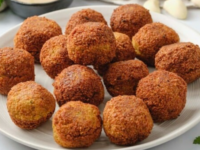
Falafel! It’s one of my all-time favorite snacks. This homemade falafel recipe has hundreds and hundreds of positive reviews. Why? Because it’s just that delicious!
Making authentic, traditional falafel is an interesting process, and it may be brand new to you. Never fear! I am here to walk you through each step, so you can achieve crispy, tender, tasty falafel every single time.
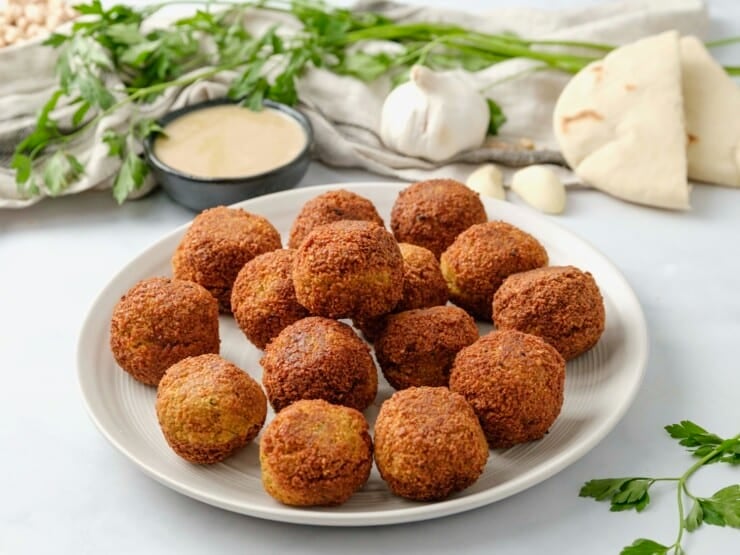
What is Falafel?
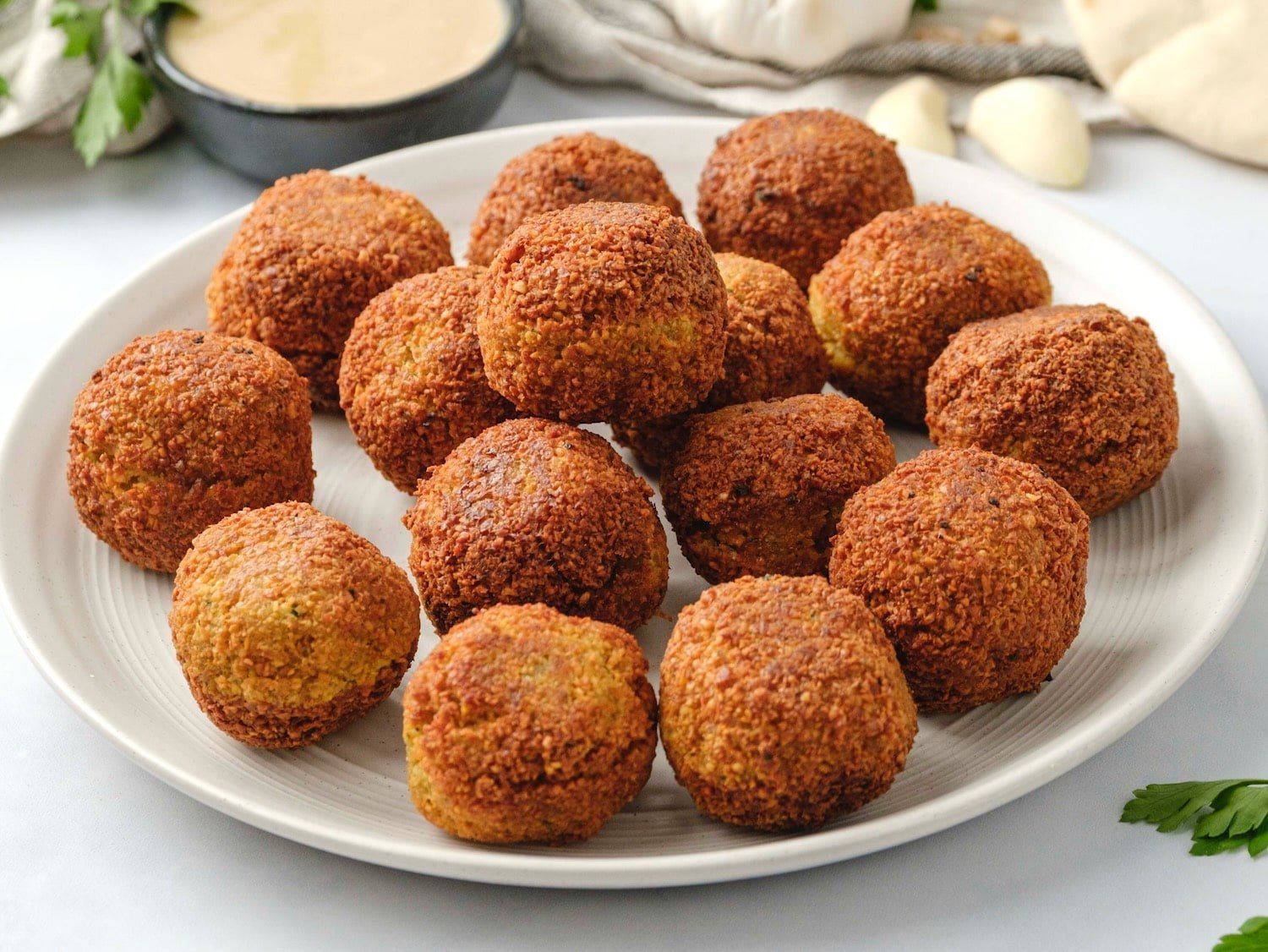
Falafel are crisp and delicious deep-fried legume fritters made with beans, spices, onions, and herbs. Legumes are well-soaked, then ground up and mixed with other ingredients. Next, the mixture is formed into small balls or patties, then fried in hot oil. The pre-soaked legumes are cooked during the frying process.
Most falafel today is made with chickpeas (aka garbanzo beans). However, in Egypt and other areas of the Middle East, fava beans are the legume of choice. It is often served alongside other popular regional Mediterranean recipes like hummus, as well as shawarma made from lamb or chicken.
The History of Falafel
This Middle Eastern food has a very long history. The word falafel may descend from the Arabic word falāfil, a plural of the word filfil, meaning “pepper.” Legume fritters, including versions made with fava beans and lentils, have existed in the Middle East for thousands of years.
According to The Encyclopedia of Jewish Food, written by my friend Gil Marks: “The first known appearance of legume fritters (aka falafel) in the Middle East appears to be in Egypt, where they were made from dried white fava beans (ful nabed) and called tamiya/ta-amia (from the Arabic for ‘nourishment’); these fritters were a light green color inside. Many attribute tamiya to the Copts of Egypt, who practiced one of the earliest forms of Christianity. They believed that the original state of humankind was vegetarian and, therefore, mandated numerous days of eating only vegan food, including tamiya.”
Likewise, the Torah, the Song of Songs, the Mishnah, and the Talmud all mention deep-fried lentil fritters, known as “ashishim.” This means early forms of falafel were enjoyed in this region since biblical times, at least. That’s some pretty ancient falafel!
Ingredients and Notes
Please be sure to scroll down to the recipe card for the complete details!
- Chickpeas – I use chickpeas because they’re easy to find, and they’re tasty! Follow my tips to cook and soak dried chickpeas. Do not use canned chickpeas; they will not give you the proper result – you need to start with uncooked chickpeas. If all you have on hand are canned chickpeas, try this very delicious and falafel-like spicy panko chickpea patties recipe instead!
- Onion and Garlic – These ingredients add a pungent, sweet, savory taste. I like white onion, but yellow onion will also work. Then, I use roasted garlic cloves for extra depth.
- Herbs and Spices – Fresh parsley, salt, ground cumin, ground coriander, black pepper, cayenne pepper, and ground cardamom create the warm, savory flavor found in falafel recipes all over the world.
- Flour – Use all-purpose flour or chickpea flour to keep this recipe gluten-free. This absorbs any excess moisture and helps the falafel balls hold their shape.
- Leaveners – I use baking soda in the soaking water for the chickpeas to help soften them. You can also add baking powder in the falafel balls. This helps to create super tender, fluffy falafel.
- Oil – Use a neutral oil with a high smoke point for frying. I prefer avocado oil, but grapeseed oil, sunflower oil, canola oil, and peanut oil all work.
How to Make Authentic Fried Falafel Balls
Homemade falafel can be a little time-consuming. So, make sure to read through the entire recipe and plan ahead accordingly!
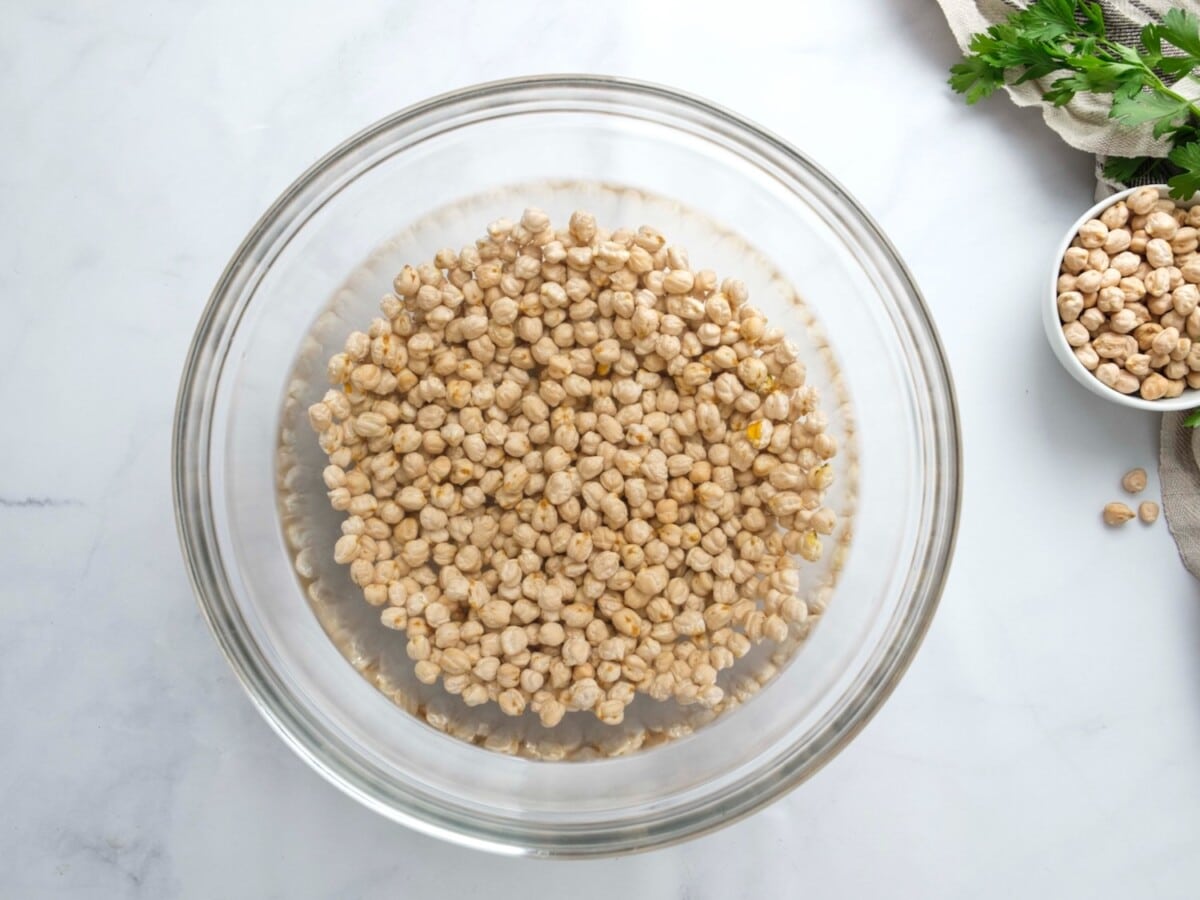
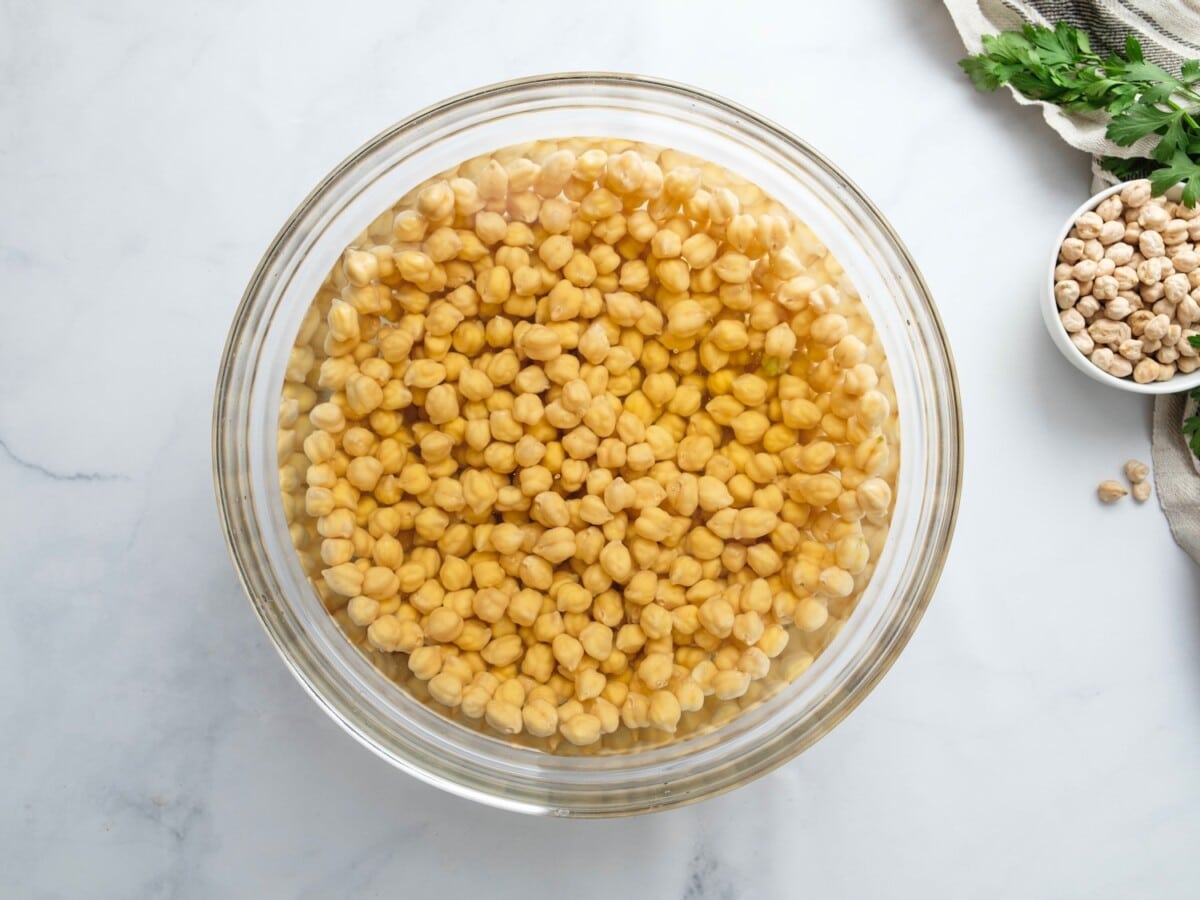
- Soak the chickpeas. Submerge the chickpeas in cold water, and add baking soda. Cover the bowl, and chill in the fridge for at least 12 hours or ideally up to 24 hours. This helps soften them, making them easy to blend.
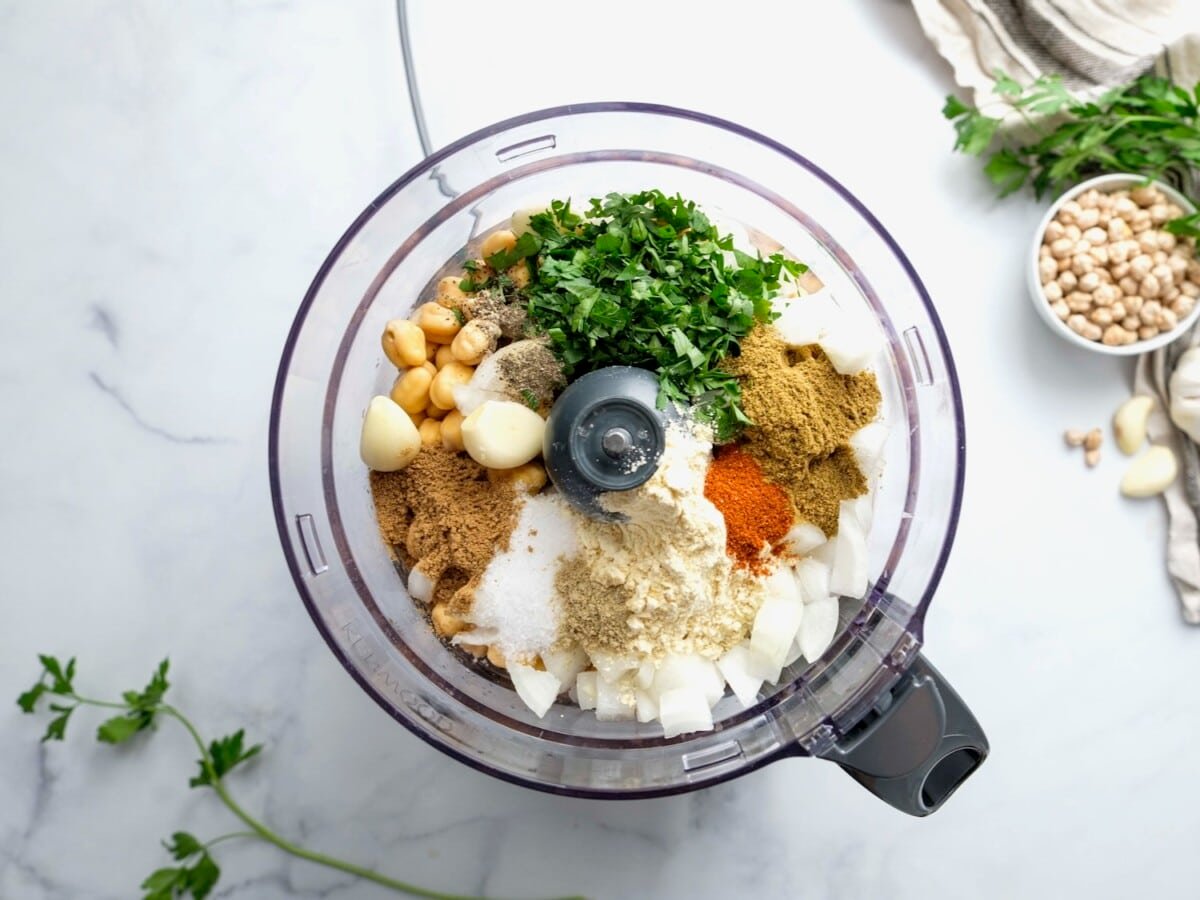
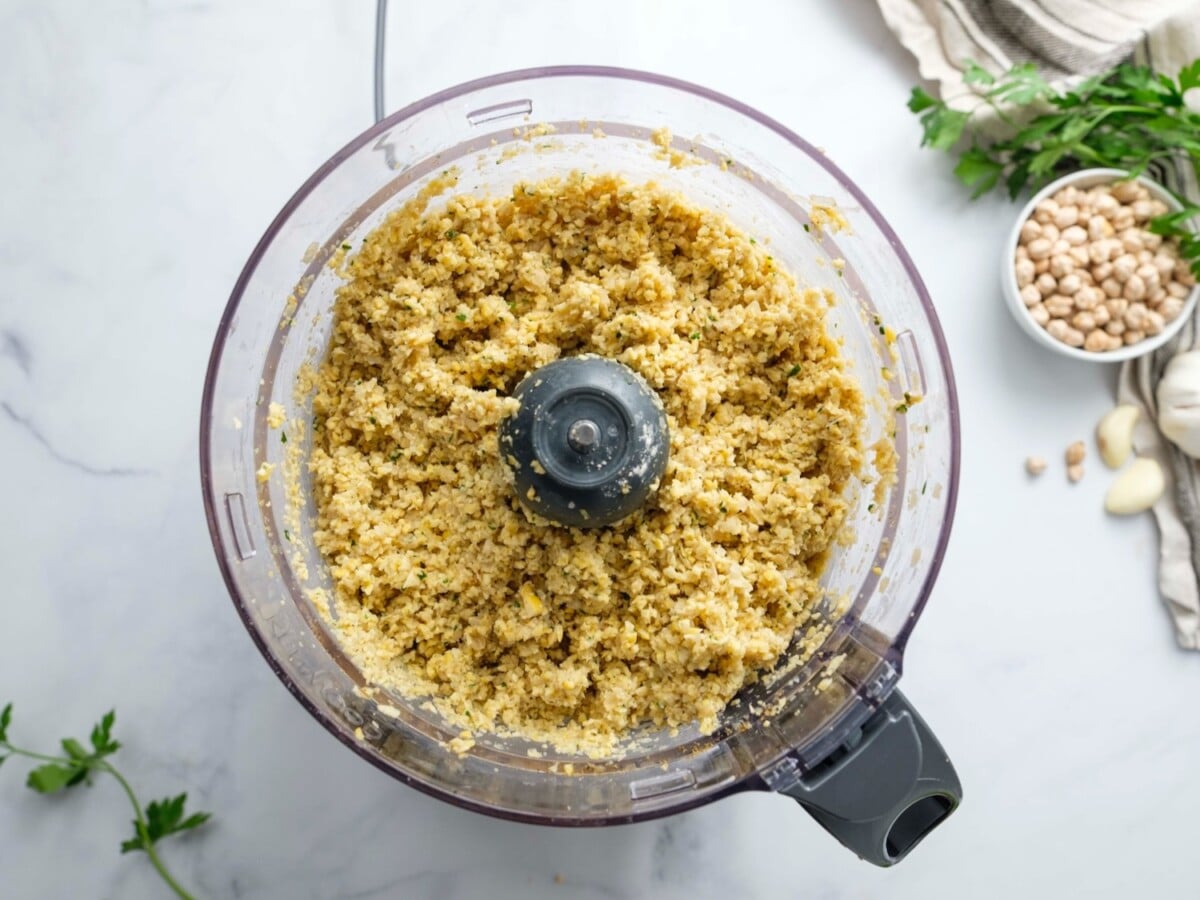
- Combine and blend. Drain and rinse the chickpeas. Then, add them to a food processor along with the other ingredients. Pulse until a rough, coarse meal forms. Stop and scrape the sides of the bowl as needed to ensure all the ingredients are well incorporated. Be careful not to overprocess! The mixture should have a paste-like consistency, but shouldn’t be so smooth that it turns into hummus.
- Chill. Transfer the chickpea mixture to a bowl, and stir with a fork to remove any remaining chunks. Then, cover and refrigerate for 1-2 hours.
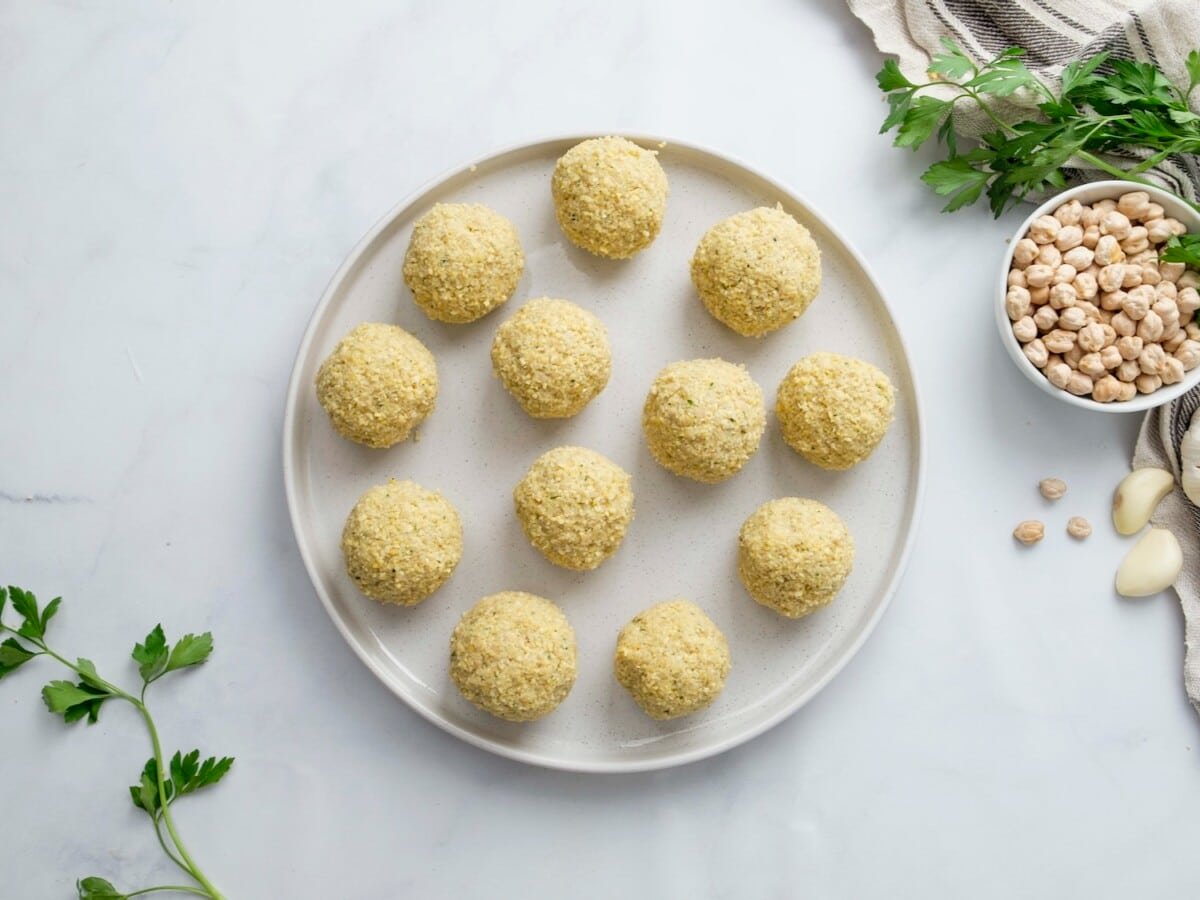
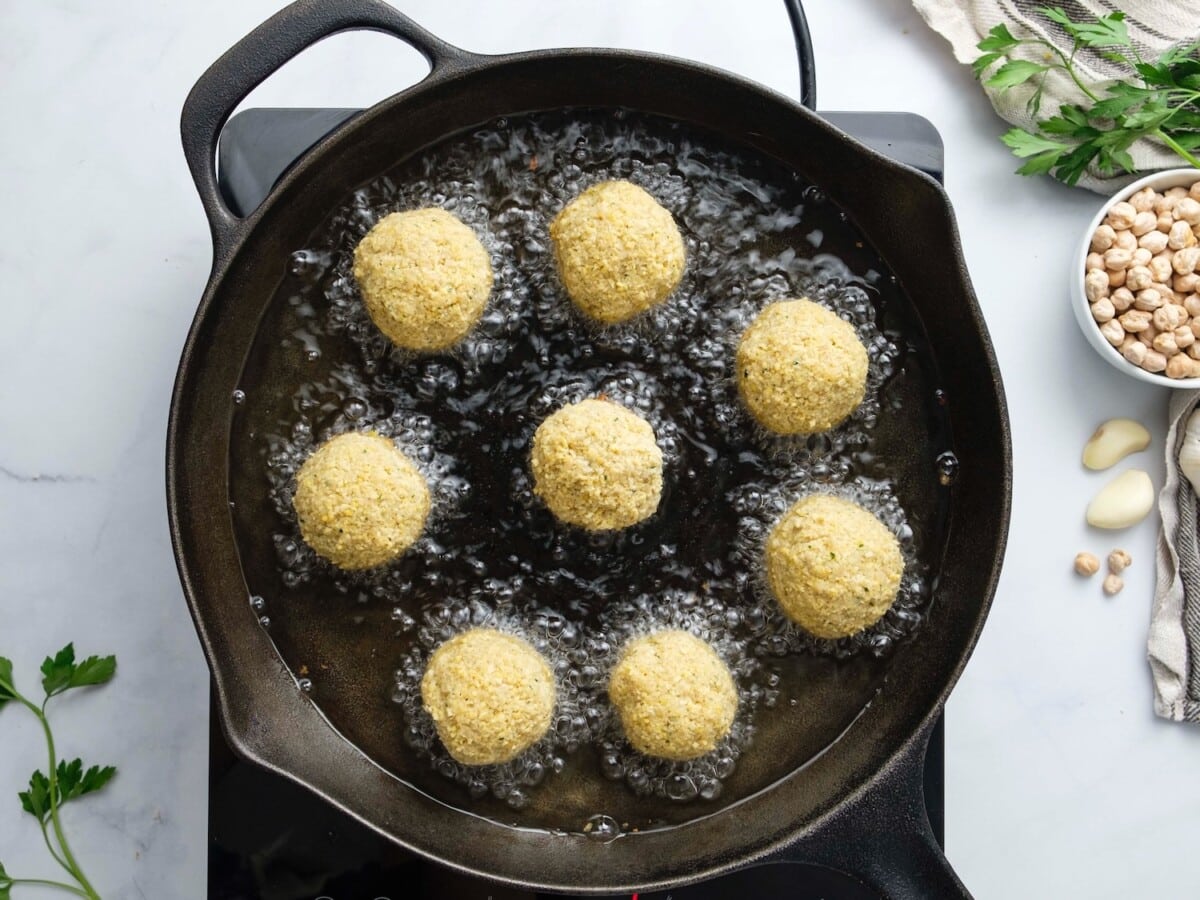
- Fry. Heat oil in a skillet over medium heat. In the meantime, portion the falafel mixture into equal-sized balls or slider-shaped patties. Then, fry on each side until golden brown, working in batches as needed. Drain them on a paper towel-lined plate, and enjoy!
Tori’s Tips for the Best Crispy Falafel Recipe
- Divide the mixture. If you have a small food processor, divide the falafel ingredients in half before pulsing.
- Use a deep fry or candy thermometer. The ideal temperature to fry falafel is between 360 and 375 degrees Fahrenheit. The best way to monitor the temperature is to use a deep fry or candy thermometer to check the oil before frying.
- Portion evenly. I like to use a tablespoon or a falafel scoop to portion the falafel balls into equal-sized pieces and roll them between wet hands.
- Test a single falafel before frying the rest. I like to fry a test one in the center of the pan. If the oil is at the right temperature, it will take 2-3 minutes per side to brown (5-6 minutes total). If it browns faster than that, your oil is too hot, and your falafels will not be fully cooked in the center. Cool the oil down slightly and try again.
- Add flavor. I like to dip my falafel balls in sesame seeds before frying for a little extra crisp and nutty taste. However, I’ve also tested different flavor variations, adding chopped parsley or fresh cilantro or turmeric, and they all taste great. (See the recipe card below for details!)

Serving Ideas
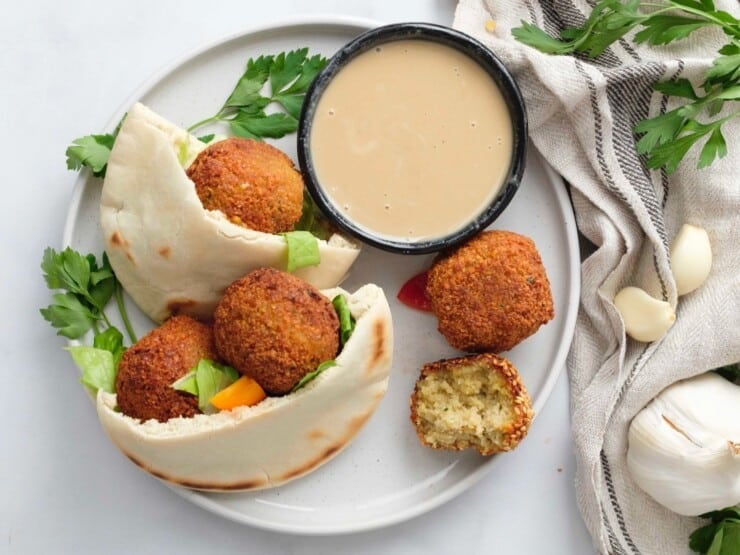
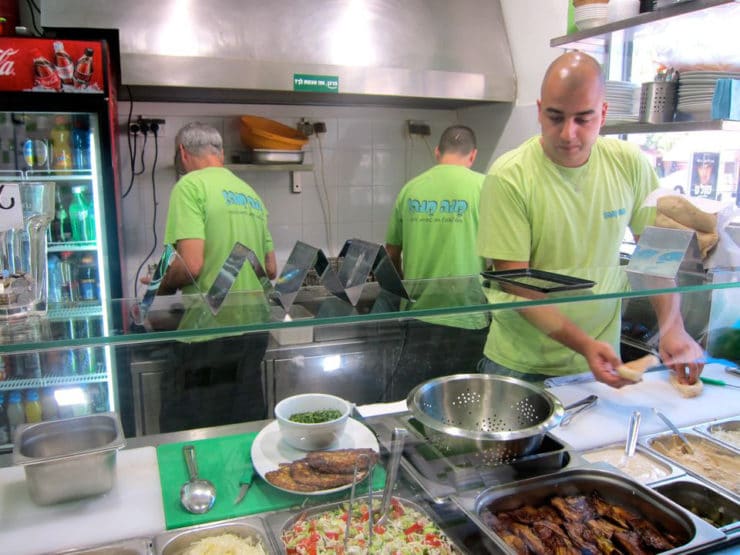
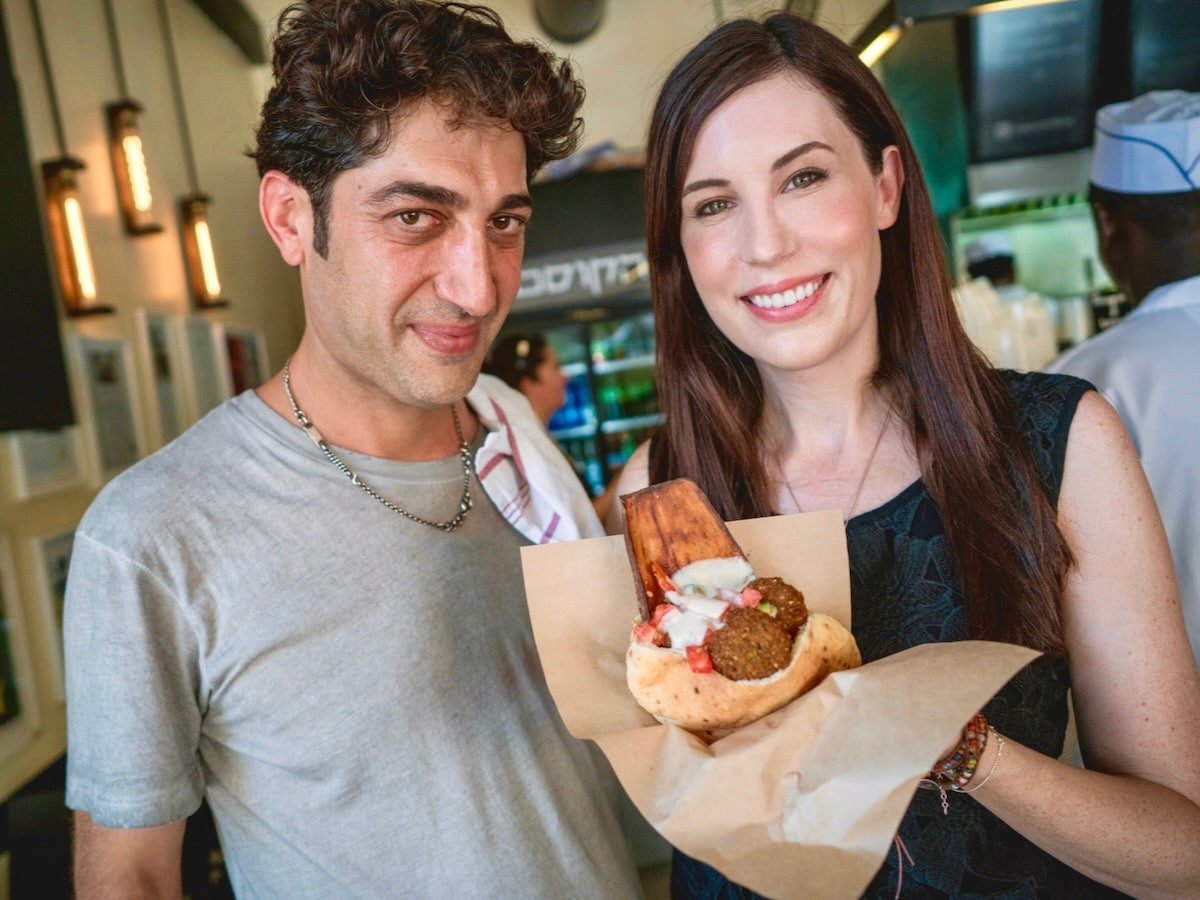
My favorite way to serve homemade falafel is as a falafel sandwich. To do so, I use flatbread or slice warm pita bread in half to form two “pockets.” Then, I stuff them with the falafel balls and add-ons such as tahini sauce, Israeli salad, hummus, baba ganoush, or tabouli, and vegetables like shredded lettuce, tomatoes, red onions, and dill pickles.
Sometimes I also like to add sprouts, cucumber slices, roasted peppers, roasted eggplant slices, sunflower seeds, French fries, feta cheese, and yogurt or tzatziki for extra taste and texture.
Or, start with a large bowl and a base of lemony saffron couscous, cauliflower couscous, quinoa, or saffron rice, then add fresh veggies and all your favorite toppings.
Falafel balls are also great to serve as an appetizer or side dish with dips and main courses. Or, add them to a mezze platter for a party spread.
Falafel
Ingredients
- 1 pound dry chickpeas (also known as garbanzo beans) – you must start with dry, do NOT substitute canned, they will not work!
- 1/2 teaspoon baking soda
- 1 small onion, roughly chopped
- 1/4 cup chopped fresh parsley
- 3-5 cloves garlic (I prefer roasted garlic cloves)
- 1 1/2 tablespoon flour or chickpea flour
- 1 3/4 teaspoon salt
- 2 teaspoon cumin
- 1 teaspoon ground coriander
- 1/4 teaspoon black pepper
- 1/4 teaspoon cayenne pepper
- Pinch of ground cardamom
- 1 teaspoon baking powder (optional – makes the falafel more fluffy)
- Vegetable oil for frying – avocado oil, grapeseed oil, sunflower oil, canola oil, and peanut oil all work well (I prefer avocado oil)
Instructions
- One day ahead: Pour the chickpeas into a large bowl and cover them by about 3 inches of cold water. Add 1/2 tsp of baking soda to the water and stir; this will help soften the chickpeas. Cover the bowl and let them soak overnight in a cool, dark place or chill in the refrigerator. The chickpeas should soak at least 12 hours and up to 24 hours, until tender (change soaking water for fresh water after 12 hours).

- They will double in size as they soak – you will have between 4 and 5 cups of beans after soaking.
- Drain and rinse the chickpeas well. Pour them into your food processor along with the chopped onion, garlic cloves, parsley, flour or chickpea flour (use chickpea flour to make gluten free), salt, cumin, ground coriander, black pepper, cayenne pepper, and cardamom. Note: if you have a smaller food processor, you will want to divide the ingredients in half and process the mixture one batch at a time.
- Pulse all ingredients together until a rough, coarse meal forms. Scrape the sides of the processor periodically and push the mixture down the sides. Process until the mixture is somewhere between the texture of couscous and a paste. You want the mixture to hold together, and a more paste-like consistency will help with that… but don't over-process, you don't want it turning into hummus!
- Once the mixture reaches the desired consistency, pour it out into a bowl and use a fork to stir; this will make the texture more even throughout. Remove any large chickpea chunks that the processor missed.Cover the bowl with plastic wrap and refrigerate for 1-2 hours.Fill a skillet with oil to a depth of 1 ½ inches. Use cooking oil with a high smoke point (oil suggestions can be found in the ingredient list). Heat the oil slowly over medium heat. The ideal temperature to fry falafel is between 360 and 375 degrees F; the best way to monitor the temperature is to use a deep fry or candy thermometer. After making these a few times, you will start to get a feel for when the oil temperature is "right."Meanwhile, form falafel mixture into round balls or slider-shaped patties using wet hands or a falafel scoop. I usually use about 2 tbsp of mixture per falafel. You can make them smaller or larger depending on your personal preference. The balls will stick together loosely at first, but will bind nicely once they begin to fry.
- If the balls won't hold together, place the mixture back in the processor again and continue processing to make it more paste-like. Keep in mind that the balls will be delicate at first; if you can get them into the hot oil, they should bind together and stick. If they still won't hold together, you can try adding 2-3 tbsp of flour or chickpea flour to the mixture. If they still won't hold, add 1-2 eggs to the mix. This should fix any issues you are having.Before frying my first batch of falafel, I like to fry a test one in the center of the pan. If the oil is at the right temperature, it will take 2-3 minutes per side to brown (5-6 minutes total). If it browns faster than that, your oil is too hot and your falafels will not be fully cooked in the center. Cool the oil down slightly and try again.
- When the oil is at the right temperature, fry the falafels in batches of 5-6 at a time until golden brown on both sides. Once the falafels are fried, remove them from the oil using a slotted spoon. Let them drain on paper towels.
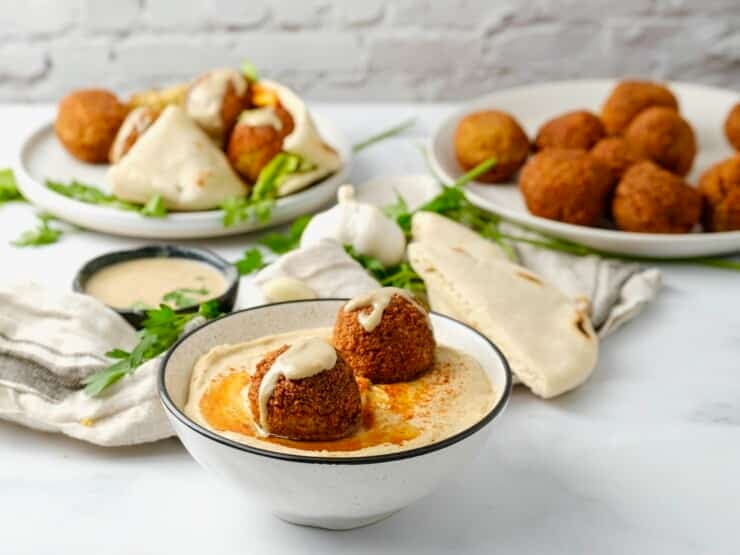
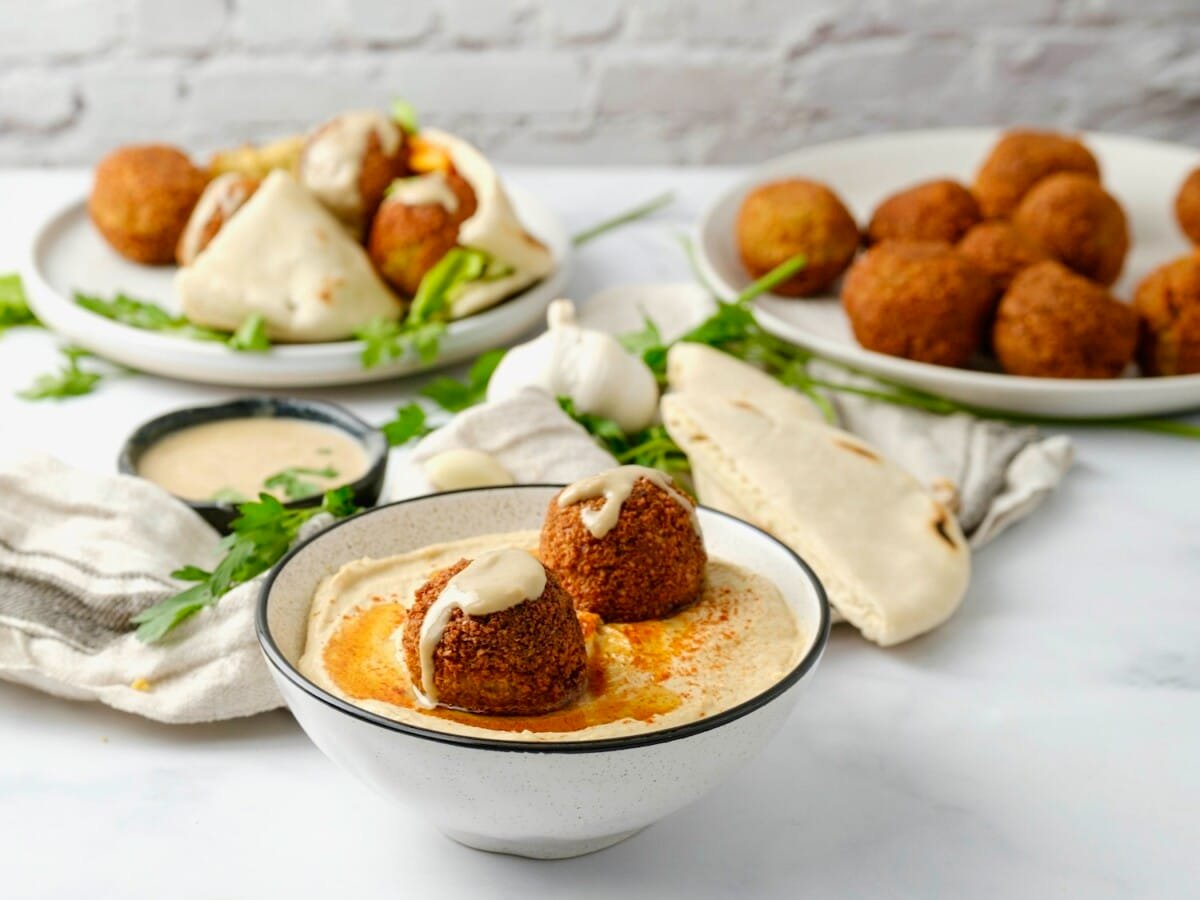
- Serve the falafels fresh and hot; they go best with a plate of hummus and topped with creamy tahini sauce. You can also stuff them into a pita.
- SESAME FALAFEL VARIATION: After forming the balls or patties, dip them in sesame seeds prior to frying. This will make the falafel coating crunchier and give it a slightly nutty flavor.

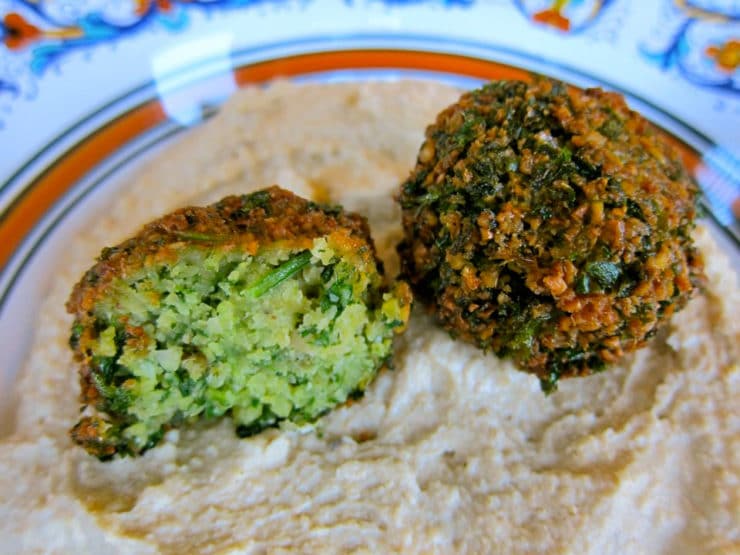
- HERB FALAFEL VARIATION (GREEN FALAFEL): Add ½ cup additional chopped green parsley, or cilantro, or a mixture of the two prior to blending.
- TURMERIC FALAFEL (YELLOW FALAFEL): Add ¾ tsp turmeric to the food processor prior to blending.
- HOW TO MAKE A FALAFEL PITA: Making a falafel pita is actually really simple. The two main ingredients are pita bread and falafel. Cut the pita bread in half to form two “pockets.” Each pocket is a serving size. Stuff the pocket with falafel, as well as any add-ons you fancy.Here are some traditional add-ons that can be added to your pita: tahini sauce, shredded lettuce, diced or sliced tomatoes, Israeli salad, onions, dill pickles, hummus, tabouli.Here are some less traditional add-ons that are also tasty: sprouts, cucumber slices, roasted peppers, roasted eggplant slices, sunflower seeds, french fries, feta cheese, yogurt, tzatziki.




NOTES
Nutrition

tried this recipe?
Let us know in the comments!
If you enjoyed this recipe, I’d love it if you left me a star rating and comment below. Also, don’t forget to share and tag us on Facebook and Instagram!
FAQs
This recipe is best served right away. However, you can store cooked leftovers in an airtight container in the fridge for 2-3 days.
I’ve never tried freezing this recipe, but some readers have had good luck with freezing both the uncooked chickpea mixture and the cooked falafels.
Personally, I don’t like baking this recipe, finding that it tends to dry out. However, if you want to give it a try, prepare and shape the falafel dough into patties as usual.
Then, arrange them on a greased or parchment-lined baking sheet, and brush the top of each falafel patty with extra virgin olive oil. Bake in the oven at 400 degrees Fahrenheit for 20-25 minutes, turning halfway through, until golden. If you read through the comments, you’ll see tips from some readers who have tried this method with some success.

I use a meat grinder to macerate everything. Perfect texture every time. Great
Couldn’t have turned out any better! I made this for some of my friends without a hitch, and they all loved it. I made the variation with the addition of cilantro, which yielded that lovely green color. Skipped the step about picking out larger bits of the chickpea that didn’t get chopped, and that didn’t seem to affect the quality in my opinion. Transported me back to my Jordan / Israel / Palestine trip and will definitely be making this again!
Gorgeous. I used parsley and sage and a merciless amount of roasted garlic. Texture is great, not sense and doesn’t fall apart (although I can’t say I used the exact quantities and I did add water to the mix and used rice flour). No need for baking soda.
I love your recipes.. I have tried several and they are all delicious!! Thank you…
I have tried this recipe twice with little success.
The first attempt saw the falafel balls crumble in the oil. This result was totally disheartening.
The second attempt was more of a success since I oven baked the falafel in about 1/4 inch of oil. The texture was crunchy on the outside and somewhat dry on the interior.
This may not be the best recipe, or food, for me. Going forward, I will visit the local Falafel Stop and support the people who own this restaurant. LOL
I’ll give these a go as I’ve not been successful just yet
Will let you know how I make out
Ty
Thank you for this wonderful caring recipe. We cook a lot from many cookbooks. And, love falafel when we can get it. For some reason, I turned away from falafel recipes I came across-something about them discouraged me. In heaven with this one. Among many things, will certainly be serving it with aperitifs. What are your favorite dishes to serve with it. Cheers.
Hi Tori, I’ve made your falafel recipe many times, to rave reviews. I’m wondering if you think dried pinto beans could be made into a southwestern style falafel? It sounds delicious to me, but I’m wondering if pinto’s would hold up.
Thank you for all the amazing recipe’s as well as all of the food knowledge and techniques you share. You’ve truly upped my cooking game. People are starting to think I actually have a bit of talent in the culinary arts. Hahaha It’s all you!
Haha thanks Jill! Glad you’re enjoying the recipe. Soaked pintos might be quite a bit softer than soaked chickpeas– I can’t say for certain though. It’s worth a try, but couldn’t really advise you on it as I’ve never tried it myself.
These are the best falafels I have eaten! Thank you so much for posting this recipe.
I pretty much followed the recipe except I used garlic salt instead of fresh garlic and did not used any chickpea flour. The results were delicious!
Good to note, I used a hand blender as I do not have a food processor and it still worked fine. I also let the mixture rest in the fridge for about 6 hours.
Thanks again!
Finally ! A falafel recipe that actually works – it’s a really great recipe -have made it about ten times – so great – thank you Tori
Just like the gorgeous street falafels I used to buy in Tiberius in the early 80’s
Have you ever tried slightly flattening the “balls”, baking on an oiled sheet pan, and turning over half way through the total bake time? I notice others talk about baking but do not include this detail. The falafel against the sheet pan with oil gives much of the crunch you obtain with frying.
I baked one batch in the oven for about 10 minutes each side. I made another batch simultaneously and fried them in oil in a skillet. I wanted the two batches to look the same, so I browned the oven batch up even nicer in a couple of tablespoons of oil in the skillet. My falafel loving dare said she couldn’t tell a difference.
I am trying to do this in my culinary class but don’t have time for the mixture to refrigerate for 1-2 hours. Do you think it will work without this step?
The refrigeration helps it hold together better. If you must skip it, I recommend having an egg and some extra flour or chickpea flour on hand to help it hold together, just in case.
I’ve made these at least 5 times, soooooo good!! For leftovers I just microwave for 1 minute, then sauté in a pan. Better than fresh! (In my opinion) ? Thank you!
My family was first asking me where I ordered this wonderful falafel, incredulous that it could be cooked at home. It turned out better than in a restaurant rated “best in town”.
These were AMAZING!! I did bake them instead of frying and they were still crunchy enough. I did add 1/4 cup of cilantro and the 1/4 cup of parsley and the turmeric, hey why not!! Definitely making these again!!
I got all the compliments for these falafels on Friday night. I usually use a recipe that allows for canned chickpeas, but I had some time on my hands and opted to try this recipe out and it was a smash hit with my friends. Other than having to prep the chickpeas, this is a straightforward and easy recipe. I will definitely try this again.
I”ve made these several times before and they are delicious! One question, could I make the mixture the night before and refrigerate to fry the next day?
Yes that should work, but if it loses moisture the mixture may start to fall apart… so make sure that you cover it tightly.
I do this often – I put the mixture in a plastic bag in the fridge then fry them up the next day – yum yum
Melissa, I put the mixture in a sealable container and stored in my refrigerator. I ended up frying the falafel a day and a half later. They turned out great. I then formed them into slightly flattened balls as well as elongated for use in pitas. My grandsons have been accustomed to eating the falafel purchased at Costco and then heated in the microwave. Mine got rave revues, of course. I did make sure to cook them in oil that registered 350 F for about a minute. Thanks to Tori’s recipe, they were delicious!
That’s how I made these, and it was my first time. No problems whatsoever. I covered the bowl in plastic wrap and placed in fridge until the following afternoon. I didn’t even worry about really sealing it tight. The next day, I formed and cooked them (in oil) and it worked perfectly.
Love the recipe! Best one I have tried. However, can you add information regarding freezing to the actual recipe? When people ask about how to freeze this wonderful recipe, you tell them to look through the comments to find the answer. However there are almost 500 comments! If you have slow Internet it is not really possible to scan all 500 to find the answer.
Some readers have had good luck with freezing the mix, then thawing it the night before in the refrigerator before frying. Sometimes a little more flour or chickpea flour is needed to hold the mixture together after freezing, but generally people have good results with this. Some readers have had luck with forming the balls, freezing those, then frying them straight from the freezer. Some have successfully frozen the finished cooked falafel and defrosting as needed. I have personally not tested any of these methods, which is why they are not listed above… I can add a note with these suggestions, just know that I have not personally tried it (and I don’t like recommending something without trying it first myself!).
The best ever recipe. Taste was so good, the only problem l had, they were falling apart during frying that was sorted by an egg.
Thanks xx
This problem is fixed by adding more flour (leave the eggs for the mama chicken. . . )
This recipe works amazingly well! Every other recipe so far was a failure, and thanks to these very detailed instructions I now understand why. We tried both the herb and turmeric versions and a winner is yet to be picked, so we always do 50/50 🙂 Thanks so much for sharing this, as well as your other amazing recipes.