


Stuffed cabbage leaves, also known as holishkes or prokes, may just be the ultimate comfort food. A slowly cooked, savory cold-weather dish, stuffed cabbage is a classic, and many families seem to have their own way of making it.
Today, I’m sharing a traditional Jewish stuffed cabbage recipe that’s a favorite for my family.
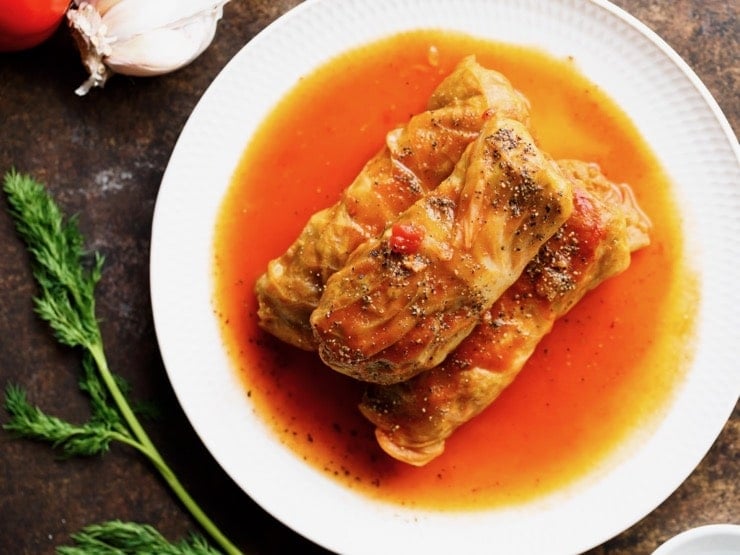
Stuffed cabbage is one of those nostalgic dishes that brings back memories of family, tradition, and comfort. While I didn’t grow up with a Jewish “bubbe” to teach me her version, I’ve spent years diving into the dish’s history and testing recipes from Polish and Israeli friends, classic cookbook authors like Joan Nathan, and even 2nd Avenue Deli.
I’ve made it sweet with raisins and preserves, tangy with sauerkraut and tomato, and everything in between.
My favorite take? A savory, well-seasoned filling with a slightly tart sauce. It’s less sweet than some versions, but packed with flavor. This is the version my husband loves, and the one readers return to again and again.
Everyone’s bubbe has her own way, and that’s the beauty of Jewish cooking. Below, I’m sharing my version, along with a step-by-step video and all my tips and tricks.
Perfect for cozy fall and winter meals, this dish is naturally gluten-free (when using certified GF products), high in protein, and full of fiber. For a quicker take, check out my Unstuffed Cabbage recipe.
Ingredients and Notes
Please be sure to scroll down to the recipe card for the complete details!
-
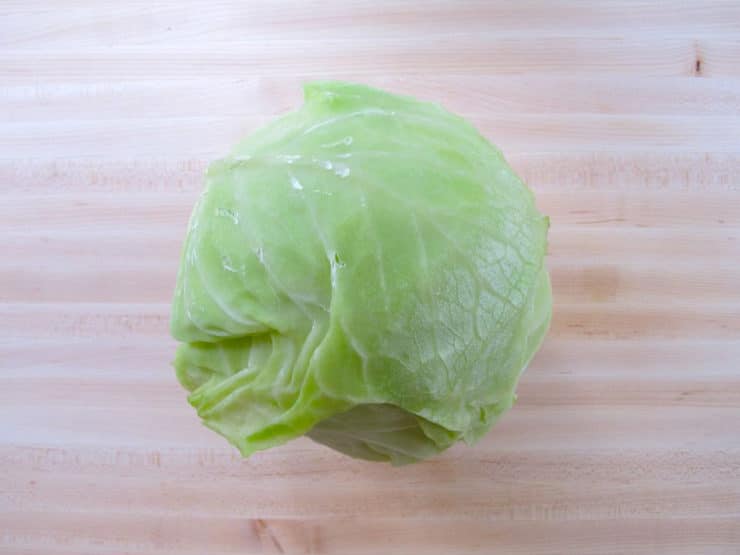
- Cabbage – I prefer to use green cabbage for this recipe. 1 large head of cabbage is typically enough, but you may want to grab a second just in case.
-
- Protein – I like to use a mixture of ground beef and ground chicken, but you can choose one or the other, if preferred. Feel free to use ground pork if not following a kosher diet. I recommend using fairly lean meat to avoid soggy stuffed cabbage rolls.
-
- Rice – Use long-grain, white, or brown rice. Just make sure it’s cooked ahead of time.
-
- Onion and Garlic – This adds a sweet, pungent, slightly savory flavor. I recommend using white or yellow onions and whole garlic cloves, not pre-minced varieties.
-
- Herbs and Spices – Fresh dill, paprika, allspice, kosher salt, and pepper add a savory, warm flavor with bright, herbaceous notes that create a well-balanced bite.
-
- Large Egg – This acts as a binder, holding the filling together.
-
- Sauerkraut – I often have homemade sauerkraut on hand, but any store-bought option will also work.
-
- Tomatoes – A combination of tomato sauce, diced or crushed tomatoes, and tomato paste forms the base of the filling, creating the savory, slightly acidic taste we want in a stuffed cabbage roll recipe.
-
- Lemon Juice – Freshly squeezed lemon juice is best, but bottled varieties also work if you don’t have lemons on hand.
-
- Brown Sugar – This helps balance the acidity of the tomatoes. I find that two tablespoons is plenty, but you can add more if you prefer a sweeter taste.
-
- Stock – I use chicken stock for a slightly more savory flavor, but water will also work, if preferred.
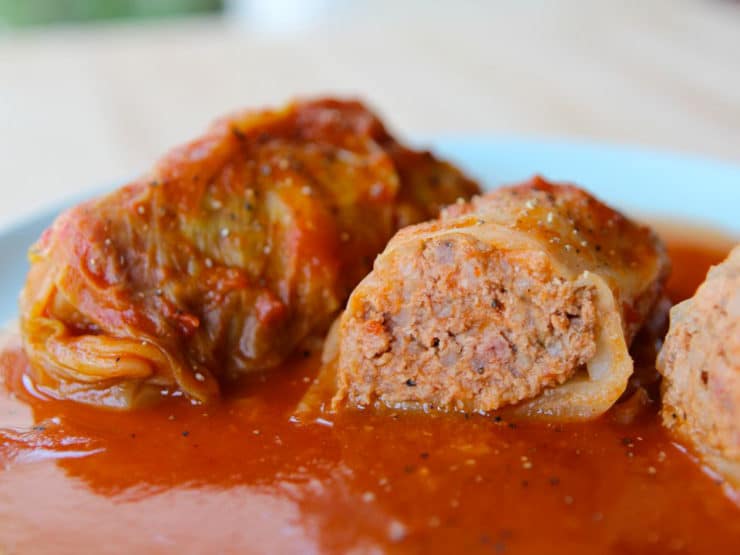
Step-by-Step: How to Make Stuffed Cabbage Rolls (Holishkes)
-
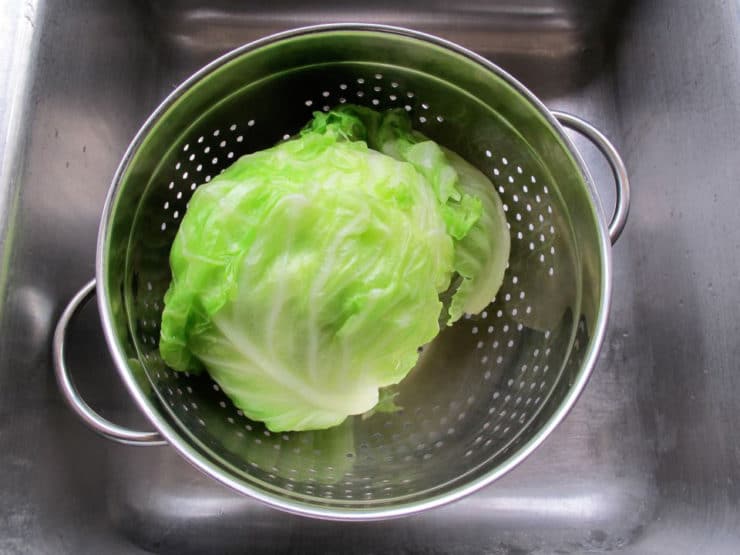
- Soften the cabbage. Rinse the cabbage, and immerse it in a large pot of boiling water until the leaves are soft and pliable. Then, drain the cabbage in a colander and set it aside to cool.
-
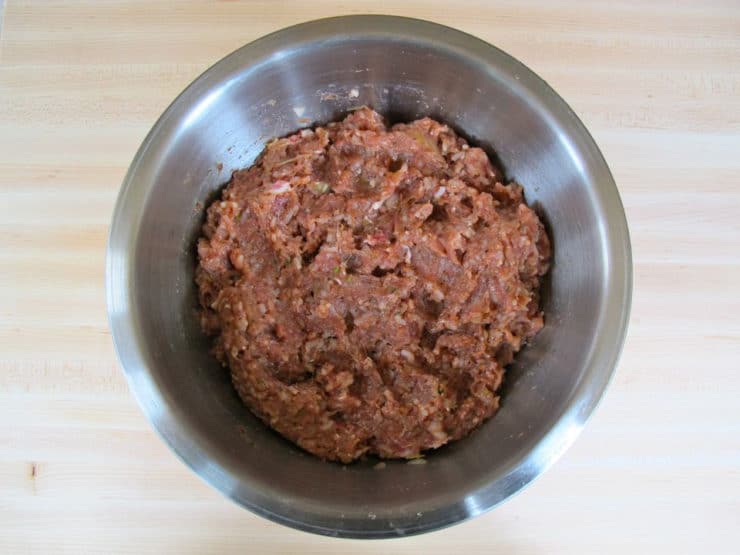
- Prepare the filling. Mix all the filling ingredients in a large bowl. Then, adjust the seasonings if needed.
-
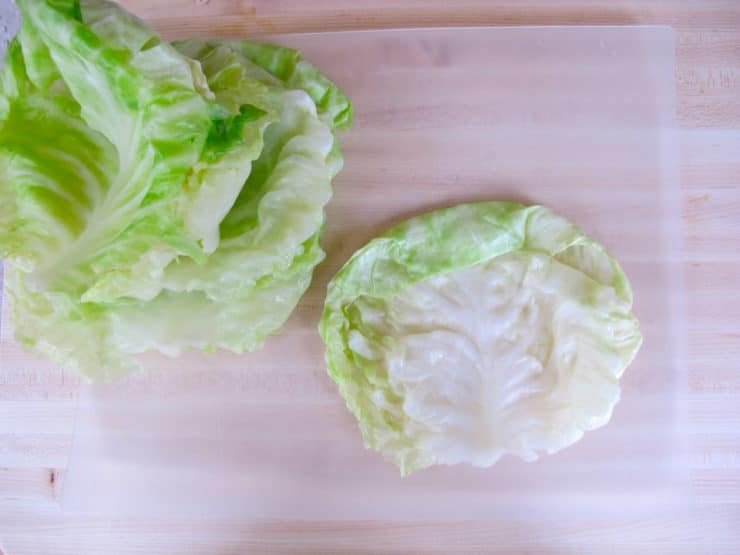
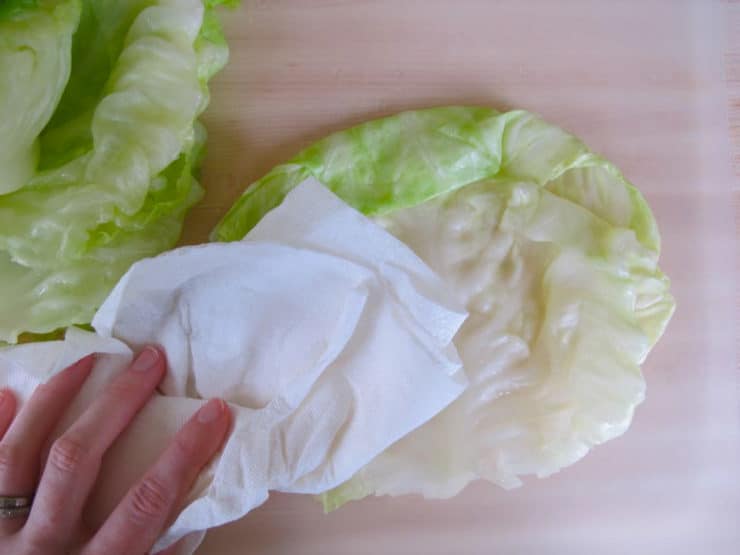
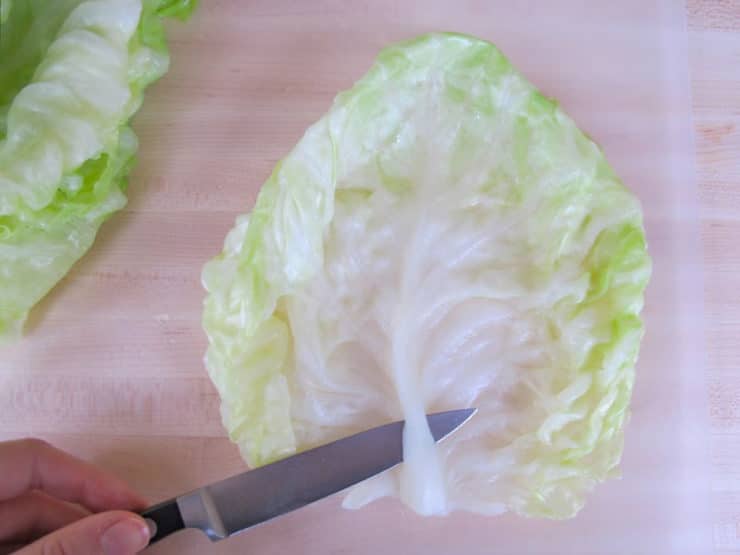
- Roll. Place whole cabbage leaves on a cutting board, and pat them dry with a paper towel. Use a paring knife to shave the tough, thick part of the stem. Then, place about 1/4 to 1/3 cup of filling, depending on the size of each leaf, in the center of the cabbage. Fold the base of the leaf up, covering the filing. Then, fold the edge inward and tuck the loose leaf inward, creating a pocket. Repeat, rolling all the leaves.
-
- Heat. In a small saucepan, combine the tomato sauce, diced or crushed tomatoes, lemon juice, brown sugar, and spices. Warm over medium heat until bubbling and fragrant. Then, season to taste.
-
- Combine. Add sauerkraut and chopped cabbage to the bottom of a pot, and spread the mixture out in an even layer. Pour broth on top, and place half of the stuffed cabbage leaves over the mixture, placing them seam side down. Next, layer the tomato sauce on top, and repeat with the remaining cabbage leaves and sauce.
-
- Cook. Bring the mixture to a gentle boil over medium-high heat. Then, reduce the heat to a slow simmer, cover the pot, and cook until the cabbage leaves are tender.
-
- Serve. Carefully remove the cabbage from the pot. I like to use tongs for this! Then, spoon some of the sauce on top, add a generous sprinkle of black pepper, and serve hot.
We are a participant in the Amazon Services LLC Associates Program, an affiliate advertising program designed to provide a means for us to earn fees by linking to Amazon.com and affiliated sites. As an Amazon Associate I earn from qualifying purchases.
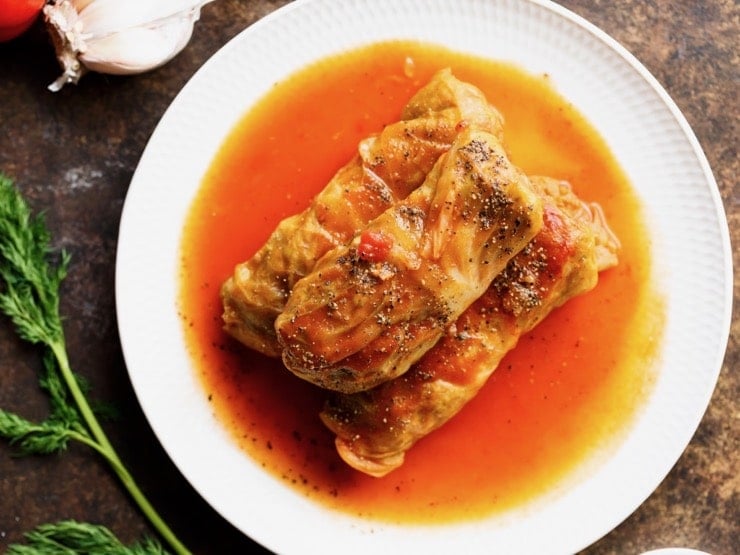
Stuffed Cabbage Leaves
Ingredients
- 1 large green cabbage (3.5-4 lbs.)
- 1 pound ground beef, ground chicken, or a mixture (I use half and half)
- 1 cup cooked long grain rice, white or brown
- 1/3 cup finely minced onion
- 2 tablespoons fresh minced dill
- 1 large egg
- 1 1/2 cups sauerkraut divided
- 28 ounces tomato sauce, divided (2 cans)
- 14 ounces diced or crushed tomatoes (1 can)
- 2 tablespoons fresh lemon juice or more to taste
- 2 tablespoons brown sugar or more to taste
- 2 tablespoons tomato paste
- 1 tablespoon paprika
- 1 clove garlic minced
- 1/4 teaspoon allspice
- 1/2 cup chicken stock or water
- Salt and pepper to taste
Instructions
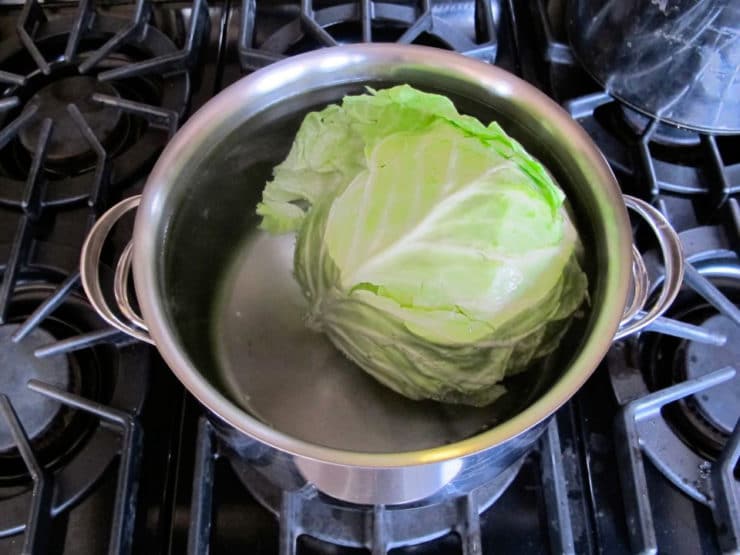
- Rinse the cabbage clean, then immerse it in a large pot of boiling water and cook it for 4-5 minutes until leaves are soft and pliable, but not overly soft.

- Drain the cabbage in a colander and let it sit until cool enough to handle.
- Alternatively, you can freeze the cabbage overnight (or up to 3 days). Defrost the cabbage for about three hours. This will make the leaves pliable in the same way that parboiling does.
- Prepare your filling. In a bowl, mix together ground meat, cooked rice, minced onion, minced dill, egg, ½ cup sauerkraut (drained of juice), 1/3 cup tomato sauce, salt and pepper to taste. I use roughly 1 tsp of salt and 1 tsp pepper—kosher meat needs less salt. To test the seasoning of the meat, you can fry up a small portion in a skillet or pop it in the microwave until it’s thoroughly cooked, then taste it. It’s easy to under-season the filling, so err on the side of adding seasoning. Alternatively, if watching your sodium, you can add much less salt during this step, and season the finished dish to taste.Tip: You can make this filling ahead and refrigerate a few hours to overnight; this will allow the flavors to marinate and make it firmer and easier to handle.
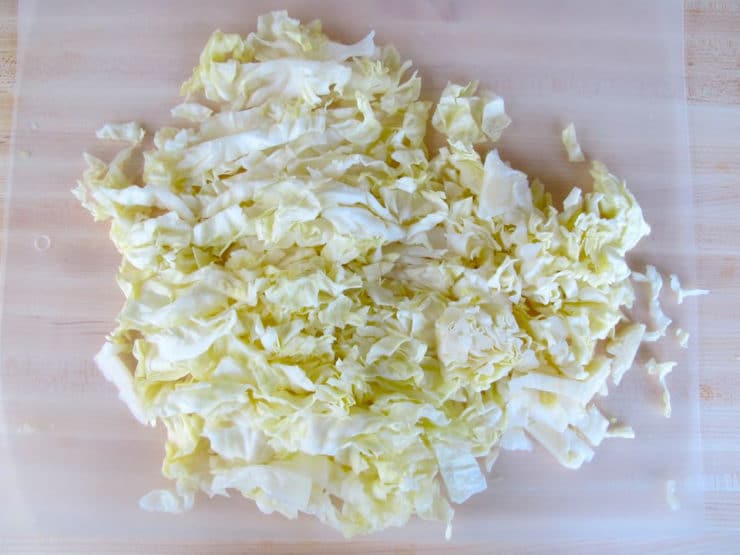
- Peel off the large cabbage leaves from the head of cabbage, keeping only the leaves that are whole/intact and big enough to stuff. Chop up the remaining smaller leaves along with the core of the cabbage. Reserve.
- Place your large leaves on a cutting board.
- Take a leaf and pat it dry with a paper towel.
- Shave down the tough, thick part of the stem at the base of each leaf using a paring knife, being careful not to cut through the leaf itself. Repeat process for the remaining leaves.Now it’s time to stuff the leaves. Place a leaf on the cutting board, stem end closest to you. The leaves tend to curl in one direction, so make sure that the curl is facing upward—in other words, it should have a bowl-like shape with edges that curl up, not down.
- Place 1/4 to 1/3 cup of filling at the base of the leaf, centered, about 1/2 inch above the edge. Do not over-stuff the leaves; you want a substantial amount of filling, but a good amount of cabbage leaf around the edges makes for easier rolling.
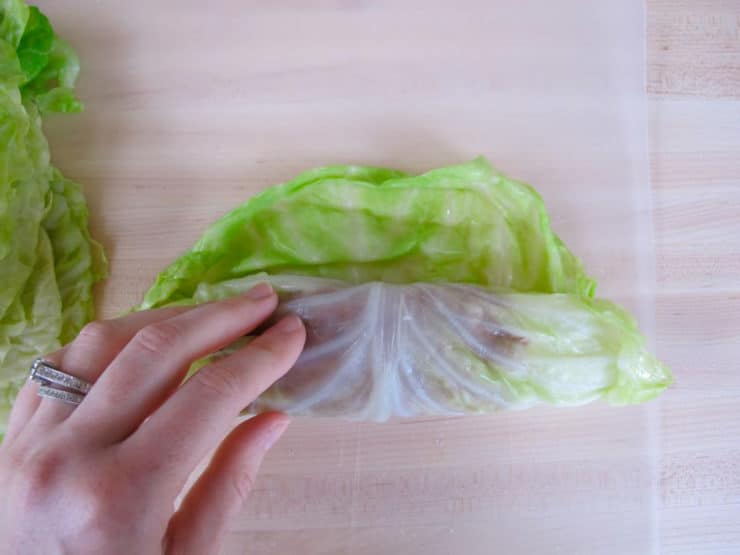
- Fold the base of the leaf up and over the filling until it’s completely covered.
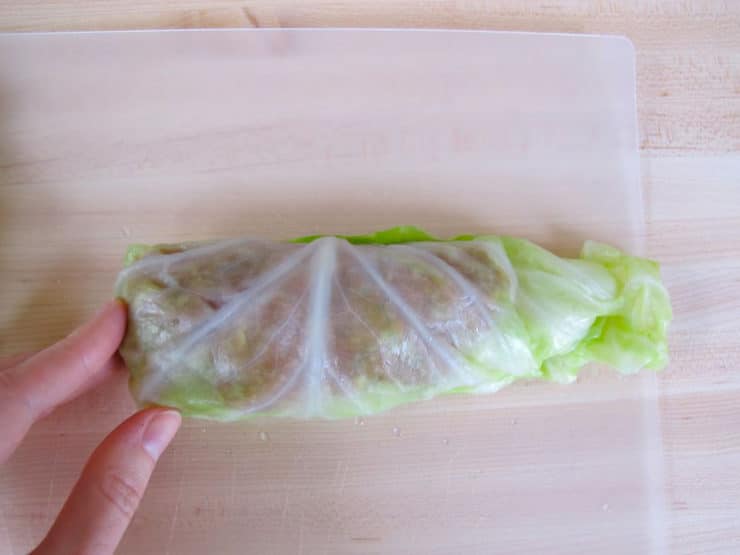
- Fold the left edge of the leaf inward. Leave the right side of the leaf open.
- Continue rolling the leaf until it’s completely rolled up (with the right end still loose/open).
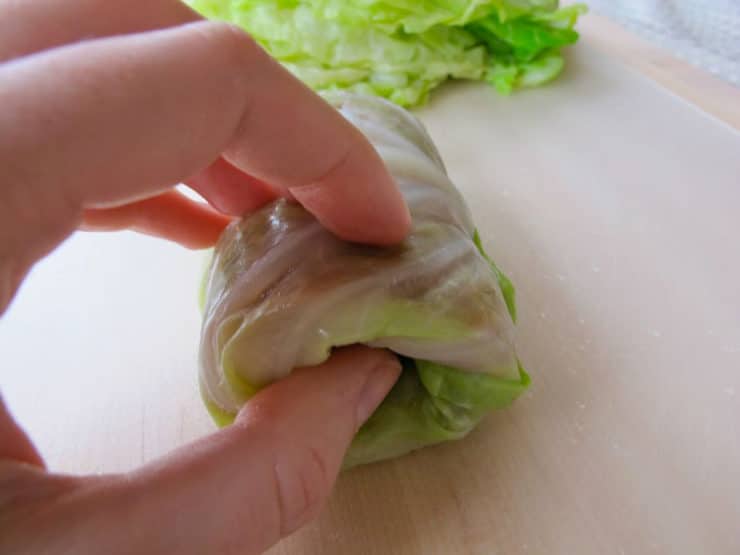
- Tuck the loose end of the leaf inward, pushing it into the filled center of the leaf.
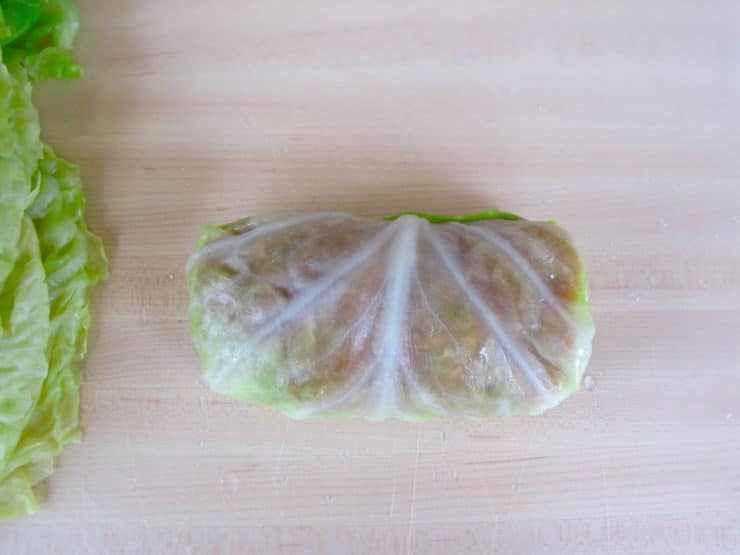
- This will create a neat package that has a better chance of holding together in the pot.
- Continue this process for the remaining leaves. Depending on how many useable leaves your cabbage has, you may find you have some leftover filling. Simply roll that filling into meatballs; you can place them into the pot along with the stuffed leaves, so you don’t waste anything.
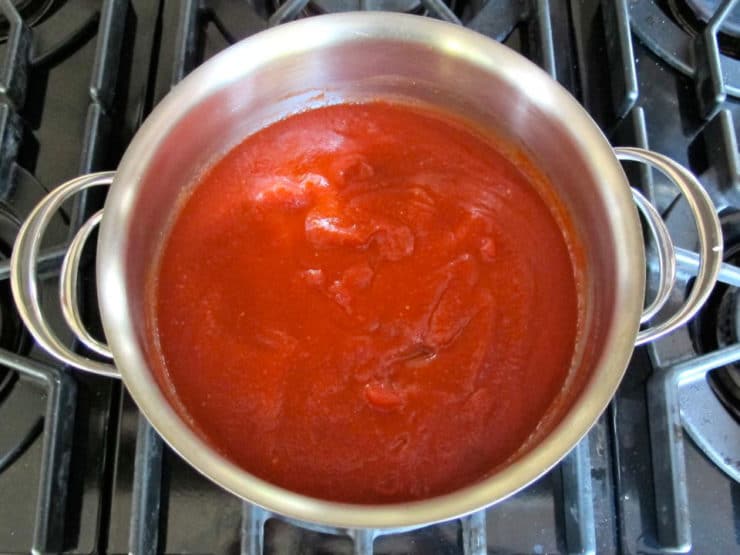
- In a small saucepan, combine the rest of the tomato sauce with the diced or crushed tomatoes, lemon juice, brown sugar, tomato paste, paprika, garlic and allspice. Warm up over medium heat until bubbly and fragrant. Taste the sauce; season with salt and pepper and more brown sugar or lemon, if desired.
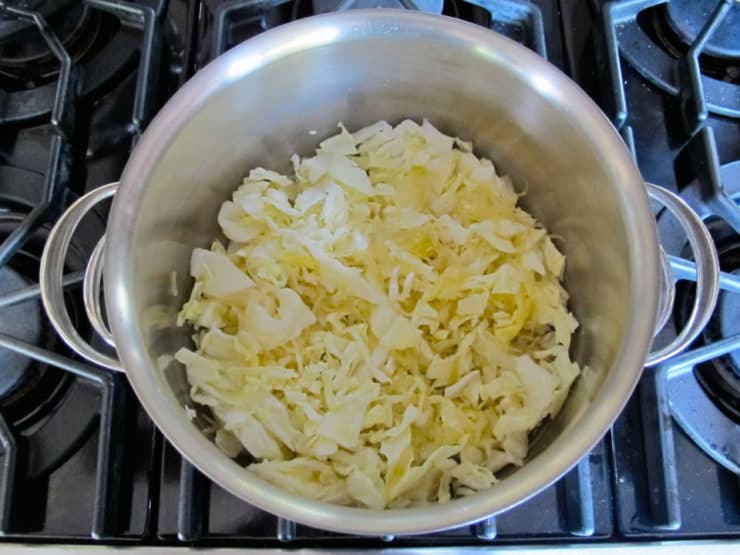
- Put remaining 1 cup of sauerkraut and the chopped cabbage leaves/core into the bottom of a pot. Spread the mixture out to create an even layer, then pour ½ cup of chicken broth or water over the top of the leaves.
- Place half of the stuffed cabbage leaves on top of the sauerkraut mixture.
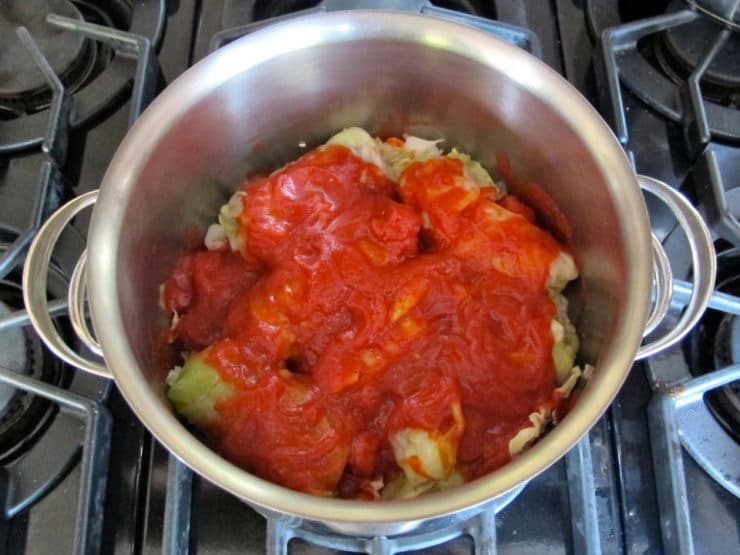
- Pour 1/3 of the warmed tomato sauce over the first layer of stuffed cabbage leaves.
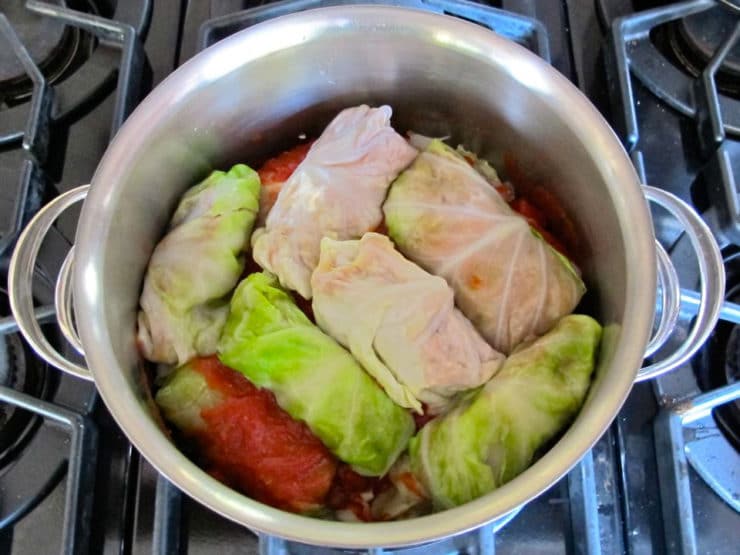
- Put another layer of stuffed leaves on top...
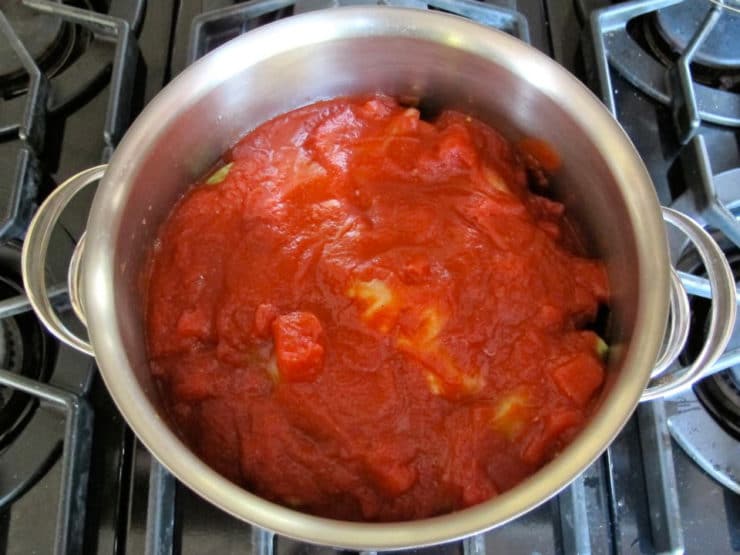
- ...and top with the rest of the sauce.
- Heat the pot over medium high and bring the sauce to a gentle boil. Reduce heat to a slow simmer and cover the pot. Let the cabbage leaves cook for 2-2 ½ hours until the thickest parts of the leaves are tender. Check the pot periodically to make sure it’s not boiling too vigorously—this can make the leaves fall apart. A slow, even simmer works best.When finished cooking, remove the stuffed cabbage leaves from the pot carefully with tongs. Top the stuffed cabbage with some of the sauce and a very generous sprinkle of black pepper. Serve hot. Leaves can be refrigerated for 4-5 days or frozen and reheated before serving.




NOTES
Nutrition

tried this recipe?
Let us know in the comments!
If you enjoyed this recipe, I’d love it if you left me a star rating and comment below. Also, don’t forget to share and tag us on Facebook and Instagram!
FAQs
I like to serve Jewish stuffed cabbage leaves with a starchy side like olive oil mashed potatoes, classic potato latkes, or smoked paprika potatoes. They’re also great with Borscht or matzo ball soup. Or, for a light meal, I pair them with Israeli salad or a crunchy pickled salad.
Yes, I find that leftover stuffed cabbage leaves keep fresh in an airtight container in the fridge for 4-5 days. Or, you can also store them in the freezer for up to 2-3 months. To serve, thaw in the refrigerator overnight. Then, reheat in the oven, microwave, or in a large skillet over medium heat.

it’s great. looking forward to more recipes.
A great big THANKS for your quick response…
It was very interesting to learn this dish has Jewish origins. (Now I know who to thank for inventing my favorite food)
Like you, I prefer the less sweet variety, which is how mum made it. I know that mum used only the very outer leaves (her stuffed cabbages were BIG). She did not boil the cabbage first to soften it, she wrapped the stuffing in the leaf, folding it the way you do. She put it in a pan, poured the sauce over it and baked it in the oven. She made her own sauce from a tomato base such as hunts. And here is what you may find really interesting…instead of rice, she used kasha. I’ve since learned that most people don’t know what that is, at least, none of my friends do, but I’m sure you do. The other thing I find interesting is that kasha is sold in the Jewish section of my favorite supermarket, and now I learn that stuffed cabbage has Jewish origins!
I don’t know what she seasoned the stuffing with, so I’m going to use your recipe.
Thanks again, you made my day!
This is your basic recipe for stuffed cabbage that always brings me compliments. I bake this recipe in the oven rather than cooking it stove top. I also cover the cabbage rolls with additional leaves. This way the actual cabbage rolls stay moist and don’t get burned. I do parboil my cabbage, cutting a few leaves off at a time as they cook. I do add 1/2 to 3/4 cup tomato juice to the meat. This is something my Polish mother always did. I do make a different sauce. After all the work of making homemade stuffed cabbage rolls, I find it hard to pour tomato soup on top. For one pound of meat, I mix an 8oz. can of tomato sauce, 1 Tablespoon brown sugar, 1 Tablespoon lemon juice and 1 teaspoon Worcestershire sauce. I mix well and pour over cabbage rolls. Sometimes I double the sauce if I want a lot extra. I often serve these with noodles, so it is nice to have plenty of sauce to pour on the noodles.
Thank you for this great recipe. The pictures and explanation to go along with it are wonderful! Before I found your recipe, I had just finished making a pot of stuffed cabbage. I had done pretty much how you do yours, I was looking how long to cook them. I like the idea of putting the sauerkraut and extra cabbage at bottom of pot. I am saving this page in my favorites bar.
You’re welcome Martha!
Looks great! About to give them a try, am in England though and not sure what you mean by a can of tomato sauce! Is that ready made like pasta sauce, chopped tomatoes or ketchup?? Help!
Hi Ana, tomato sauce is sold in cans here in the U.S. It’s a simple cooked and thickened puree of skinless cooked tomatoes, sometimes mixed with a few basic seasonings. It may be sold under another name in England, I’m not sure. Hope that helps!
I made this for Rosh Hashanah. Had a large group–varied backgrounds–everyone loved it. The sauce was perfect. My mom used to make stuffed cabbage rolls but never wrote down a recipe.
You’ll have lots of new followers–I told them all about you!
Thanks for spreading the word Stephani! I appreciate it so much. Glad you enjoyed the cabbage leaves. 🙂
My husbands mother made stuffed cabbage, she was Slovak , I am Irish. She used half ground beef and half pork, sautéed chopped onion, and bacon, salt pepper, and caraway seed, uncooked rice, tomato juice and crushed tomato. Chopped up unused cabbage in sauce. Cooked several hrs. and we ate them with mashed potatoes.
I absolutely love cabbage rolls. I have been eating them my entire life. My Mother made them, but she never wrote it down, I had to watch her and remember the flavors. She never used any sauerkraut, and I think it would have been awesome. She used ground beef and pork, chopped onions, rice that had been slightly toasted in a frying pan, some tomato paste, garlic, salt and pepper. She filled the leaves, then rolled them and put them in a deep sided frying pan on top of a bed of the cut up cabbage that was left. She covered all with a hearty chicken stock and simmered them on top of the stove. I cook mine like hers except I don’t use ground pork. I’m going to try this recipe with the tomatoes, and sauerkraut.
I don’t know if this will help the person looking for the coleslaw recipe but my husband’s grandmother used to have a deli in Philadelphia and here is what she told me.
The proportions of mayonnaise to water, white vinegar, and sugar is 4:1:1:1
I used the bagged coleslaw mix and mixed two bags with 12 tablespoons of mayonnaise
3 tablespoons of water, 3 tablespoons of white vinegar, and 3 tablespoons of sugar. Just put the slaw mix in a bowl, sprinkle with a little salt, and stir in everything else. You can add a little finely chopped celery if desired. The mix will look dry, but as the salt releases water from the mix, it will be the perfect consistency.
If you decide to use a head of cabbage, just finely shred it, shred 1-2 carrots and follow the same directions. If your cabbage is large, you may need to increase the mix in the same ratio. This is best made the day before you want to serve it. I hope this recipe is similar to what you are looking for.
Dear Elise, Thank you so much for replying to me about a coleslaw recipe. That is very kind of you and I appreciate it. I will copy your hubby’s Grandmother’s recipe and give it a try. Have a wonderful day. ♥
Never got an opportunity to ask my beautiful mother for her recipe for stuffed cabbage and also for her coleslaw recipe. She was the very best cook and managed to cook a different menu every night for months on end, even when she was not feeling well. Unfortunately, time and ill health took her too soon from us. I have most of her recipes but not this. I love how you were very concise and descriptive with beautiful photos on how to prepare this meal. Thank you, thank you. I can’t wait to make it.
Like you, I have an ever growing set of Jewish cookbooks with different culinary and cultural backgrounds and history. Also like you, I like taking from each of them and creating what I like best. Thank you for your blog and recipes. Right now I don’t need to buy anything, but when I do, I’ll see if you offer it.
Keep up the good work!
Hadster
I threw together some stuffed cabbage leaves without a recipe..I used ground deer meat, ricotta cheese, onions, garlic, salt and pepper and used jarred spaghetti sauce..It was really yummy. My husband wants me to try it with red cabbage leaves..any thoughts?
Hi,
Thank you for sharing this recipe. I made these tonight and they are simmering on the stove top. I can’t wait to try them! They smell so good!
I made these tonight and they were delicious. I just placed the rolls in a baking dish and covered them with the sauce. I baked them for 1 1/2 hours at 350 (covered the baking dish with foil). I then baked them for about 20 mins. with the foil off.
I assume that the paprika is used in the sauce. It was listed in the ingredients but isn’t mentioned in the instructions.
Where does the paprika go? I couldn’t find it? I used hungarian sweet and put it in the sauce…Doubled the lemon and brown sugar. They’re bubbling away now!
Hi Tori, I just discovered your blog and I am loving it! My grandparents immigrated from Russian and landed in the Catskill Mountains of NY where they ran a Kosher hotel called “Sunny Oaks”. I spent time there in the summers, growing up. I loved the food, especially my grandmother’s stuffed cabbage. I only wish I had a chance to cook with her and get her recipe while she was alive. I know she froze the cabbage and used sour salt and brown sugar. She also added raw rice to the meat. I plan to write about grandma Fay’s stuffed cabbage for my (very new) blog one of these days. In the meantime, your recipe looks great and you’ve clearly experimented a lot with stuffed cabbage. Cant wait to try it and also to enjoy other recipes on your blog. Lisa
Beautifully written post! I love the reference to the visual reminder of the rolled Torah.
Ok, Moldova it is, then. You’re more than welcome to come and stay with us even. We’ll show you around and give you the best we have to offer. Hopefully, we’ll see you soon. 🙂
My grandmother was from Poland and her stuffed cabbage and cabbage soup were sweet and sour. She used sauerkraut in her cabbage soup sometimes. An easy way to prepare your cabbage for stuffing is to put the whole head in the freezer until it’s frozen solid then when it defrosts the leaves are pliable. If you can get a Savoy cabbage, it’s even easier. Last year my synagogue had a soup and salad evening and two old ladies (I’m 70, they were older) came over to me and said that my cabbage soup tasted just like their mother’s. I asked each of them if their mothers were from Poland, and they were. My cabbage soup has some raisins in it.
We have a traditional Romanian dish called sarmale but we use pickled cabbage leaves, it’s sourish, delightful :).